Author: Heather

  • We converted, and now we’re obsessed.

    We converted, and now we’re obsessed.

    Back when e-readers came out, I worked at Chapters. I thought the Kobo was a cool concept but, like many people, I love buying, holding, having books. It had been suggested that I buy an e-reader, but I’d always declined. In my mind, nothing can beat a real book, in my hand, and then on my bookshelf to be perused and re-read in the future.

    When we moved to Phnom Penh, this became something of a problem. I couldn’t take books with me to Phnom Penh, but I felt silly buying books there because I couldn’t take them with me when I left either. I had lots of time to relax, so I did buy a handful of books, but the selection was terribly limited. In one case, I actually bought a book that I knew was sitting unread in my parents’ garage.

    And that’s when I realized: e-readers are perfect for travelling or living abroad.

    When I came home at Christmas, I went out an splurged on a Kobo. I loaded it up with books, and was reading non-stop once I got to Portugal.

    After a couple of weeks, Kevin picked it up, then asked to borrow it. Within a couple of hours he was hooked.

    I hopped online and looked up e-readers in Portugal. The best option was to buy a Kindle from Amazon.com, and that’s just what I did, saying to Kevin “I’m ordering you a Kindle, but I’m keeping it for myself if it’s better than the Kobo”.

    It is, and I did.

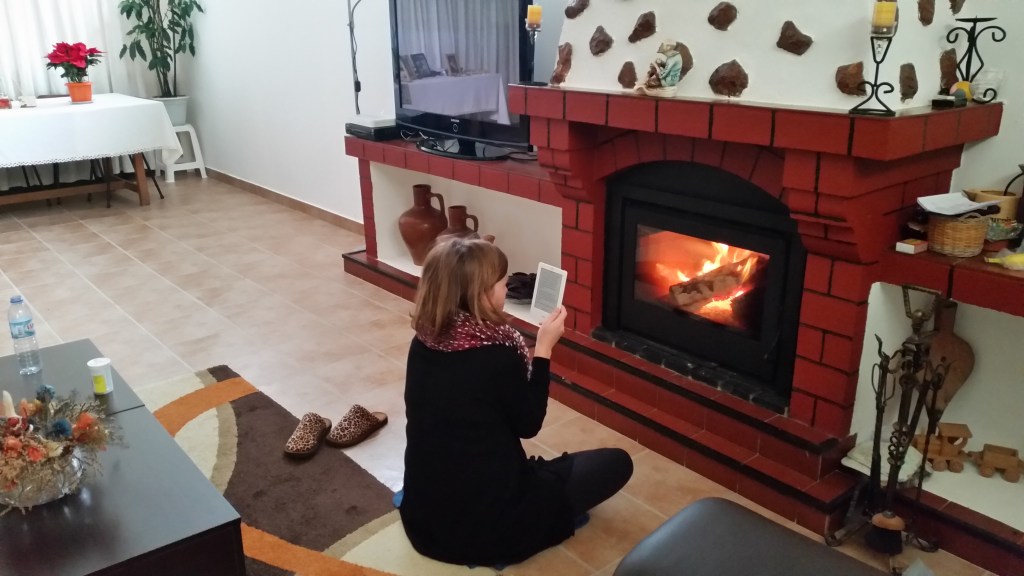
    So now we have a set of e-readers and we rarely leave the house without them.

    I’ve read 34 books so far this year. That’s probably more books that I’ve read in the past 3 years combined.

    Kevin concurs, having read 30 so far.

    We’ve always been big readers. As kids we were total library nerds, and we consume a hefty amount of internet reading, and readings for school. But actual books, fiction in particular? We haven’t read this many in years.

    We never thought we’d say this, but we would never part with our e-readers.

  • Castelo de Silves

    Castelo de Silves

    When it was a bit chilly, Kevin and I drove east to see the Palace of Estoi. A few weeks later, on one of the first truly warm days this year, Kevin and I drove west to see the Castle of Silves.

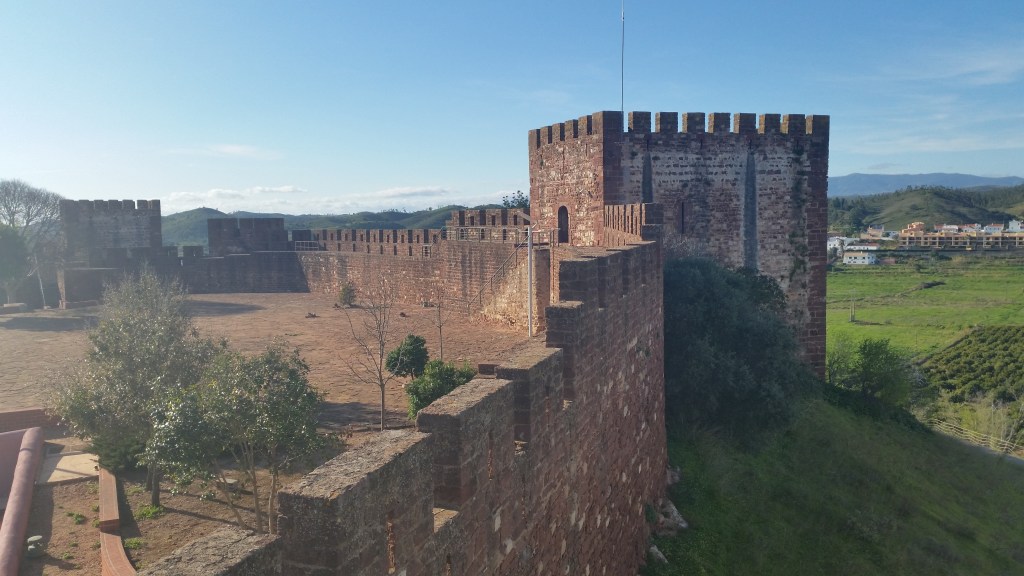
    The Castle of Silves is stunning. I’d seen it many times, lit up at night, while driving through Silves to have dinner somewhere. This day was the first time Kevin and I had been there, and we were quite impressed. The Palacio do Estoi is pretty, but the Castelo de Silves is, like, a really serious/big piece of history in this region. according to Wikipedia:

    “Built between the 8th and 13th century, the castle is one of the best preserved of the Moorish fortifications in Portugal … from archaeological excavations, it is assumed that the first fortress on this site consisted of a Lusitanian castro. It is believed that Phoenicans, Greeks and Carthaginians traversed the site at one time, but that around 201 B.C. the Romans conquered Silves, transforming it into a citadel of their occupation, and commercial center that prospered for the next five centuries.

    Around 716, the Visigothic citadel was conquered by the Umayyad Caliphate who reinforced the existing fortifications with a new series of walls. This new period resulted in a great period of development, under the Moorish occupiers, that include the extensive walls in the west. In 1160, it was sacked by Ferdinand I of León and Castile, but remained only for a short time in the hand of the Christians: it was quickly recaptured by the Moors. King Sancho I of Portugal, supported by the powerful Crusader army, conquered the city, after a prolong encirclement in 1189. But, a grande army, under orders from Amir al-Mu’minin, in 1191, retook the city. The buildings of the Taifa kingdoms of the 11th century, which includes the Palace of Balconies (where Al-Mutamid lived as the poet Ibn Amarhe) progressed in the 11th century. The walls and towers that today represent the Castle of Silves came from these campaigns and public works by Almoravides and Almohads in the 12th and 13th centuries. The castles internal water catchment, and large rain fed underground cistern were used to provide freshwater for the surrounding dwellings (to as late as the 1920s). It would only be in the 13th century, during the reign of Afonso III of Portugal, that forces under the command of D. Paio Peres Correia, would definitively take the fortress.

    So yeah, more than 2000 years ago, the site of Silves Castle was established by Moorish forces, who then passed it back and forth with Christian conquerors for 1400 years, until the Portuguese finally took hold of the whole thing.

    When you’re inside the castle walls, you can see why it was chosen as the location for a massive fortification. It sits atop a hill, and you can see everything for miles. You can’t quite see the ocean, but any invading ocean forces would be held up by and easily visible crossing a natural geographic barrier – the sierra hills south of the castle.

    Other than a cafe, there’s not much in the way of an organized presentation of information at the castle, but we had fun walking around the massive site, checking out the views from every angle and trying to interpret the map we had.

    There was one exhibit in the room that used to be for water storage. It described the Iberian Lynx, a beautiful animal on the verge of extinction, native to Spain & Portugal.

    Take a look at our photos below. It was a really beautiful day!

  • Celebrating Carnival in the Algarve

    Celebrating Carnival in the Algarve

    Carnival is a fairly historied Catholic tradition (and probably goes back even further than that, really). I’m assuming most of y’all aren’t up to date on Catholic traditions, so here’s a quick refresher course, courtesy of our friends at Wikipedia:

    Carnival (see other spellings and names) is a festive season that occurs immediately before the Christian season of Lent. The main events typically occur during February. Carnival typically involves a public celebration and/or parade combining some elements of a circus, masks and public street party. People wear masks during many such celebrations, an overturning of life’s normal things. The celebrations have long been associated with heavy alcohol consumption.

    When we came to Portugal for a 2 week holiday last year, we were here for Carnival, so though this year’s festivities weren’t a surprise, they were definitely a delight.

    In Canada, I’m used to parades being a rather straightforward affair. The first float marks the beginning, and the last float marks the end. As with most things in Canada, it’s efficient. In the fun-and-fancy-free mild Portuguese weather, parades are a bit different. Instead of a straight-line-kind-of-parade, the Carnival parade is on loop!

    One of the most traditional Carnival parades is held each year in Alte. It’s definitely more old-fashioned than the parade in the neighbouring city of Loule, and it has more of a local/hometown feel to it. The floats line up, populated by people from Alte, and they’re observed by the townspeople from Alte and surrounding areas (including me and Kevin). Most people know each other, and everyone is drinking (float people and audience alike), so things get pretty fun pretty fast. For the first hour, Kevin knew and chatted with someone from every float.

    The floats aren’t that big, so there are always crowds of people walking with them. And instead of being sponsored by or representing companies, community groups, etc, they’re simply a creative theme. Often, the players on the float act out a type of narrative as well.

    One float’s theme was 101 Dalmatians. There was a “Cruella” driving the car, and a couple of henchmen who ran around picking up puppies and putting them in a big cage (who then escaped). The Braveheart float eventually staged a battle in the middle of the street, with various players storming their castle.

    Because the parade goes on and on, the floats end up evolving; acting a kind of performance art. It’s artistic and it’s very fun.

    I found some videos online taken at this year’s Alte Carnival. I played it for Kevin and his immediate reaction was “oh man, I know so many people in this … and everyone’s drunk”.

    I don’t think I’ve ever been to such a fun parade. You can check out more vidoes here, here, and here.

    We also went to the Carnival in Loule, and you can see photos of it below. Being in a city, it’s a much larger scale parade, with much fancier floats, often mocking various EU politicians. It’s neat, but doesn’t have the same spirit at the Carnival in Alte. Have a look below to see all the snapshots we captured!

    And leave a comment below: have you ever seen a parade like this one?

  • Lunch at Palacio do Estoi

    Lunch at Palacio do Estoi

    Sometimes being in Portugal with Kevin feels like being on a non-stop field trip. That is to say, he’s always cooking up new ideas and trips and adventures to keep me entertained. Back in February, Kevin planned a whole-day outing for us to see the Palacio do Estoi (aka the Palace of Estoi). Our drive to Estoi wasn’t your regular ol’ highway drive. Kevin chose the most scenic route possible, and included a stop in the nearby town of Salir, where a sign promised us castle ruins.

    Salir really was beautiful, and as it sits on a top of a hill, it cuts a lovely view. The ruins were a bit disappointing, but as you’ll see below, meeting a cute cat more than made up for it.

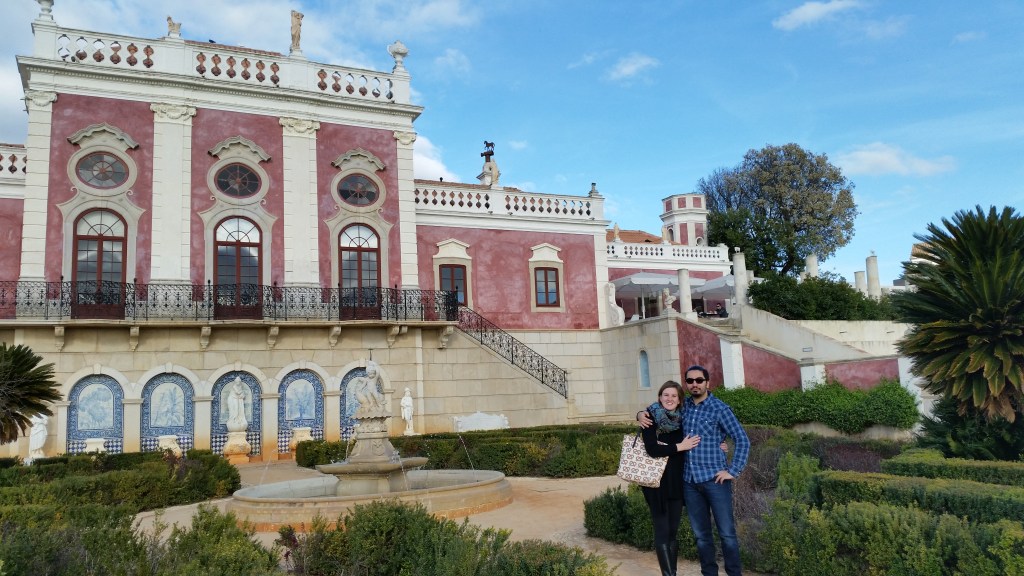
    Our next stop was the Palacio do Estoi. It’s a palace built by a rich guy in the late 1800s and it’s a great example of the Rococo style. It’s also probably one of the only examples of Rococo style to be found in the Algarve.

    Recently, it was acquired by a hotel chain that specializes in unique properties. They’ve added an expansion to the palace that contains a pool and accommodations. As for the original palace, they’ve kept it mostly as-is, operating 2 restaurants out of the building. As a guest or a visitor you can explore various gardens and sitting rooms, all of which maintain their original beautiful style.

    The patio outside is part of the restaurant, and that’s where we sat, enjoying a light lunch, a bottle of “vinho verde” (green wine), an ocean view, and a stunning sunset. Despite being an old beautiful palace-turned-hotel, it maintains a casual atmosphere that makes anyone feel welcome.

    It was a simple day, visiting a simple site, and it was all wonderful. If you make it to Portugal, this is a site worth seeing.

  • The market in Loule and the Festa Chocolat!

    The market in Loule and the Festa Chocolat!

    Both of Kevin’s grandmothers live in the Algarve, and that means double the fun for us.

    And the Portuguese are a people who love festivals, which means even more fun for all of us.

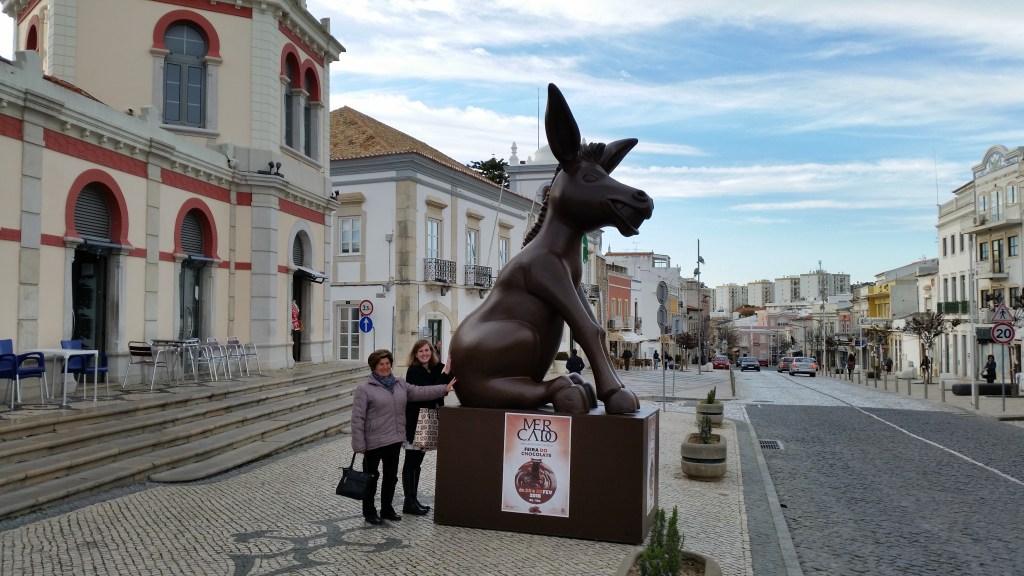
    Avo Maria lives in a mid-sized city called Loule. It’s hundreds of years old, and it has a strong Moorish history. That history is most obvious in the recently-renovated-but-very-old Market of Loule. It’s over 100 years old, and you can see lots more photos of it on this blog right here.

    We love a good “festa”, which is why we made sure to go to the Festa Chocolat (chocolate festival) with Avo Maria. As expected, all the temporary stands were packed with a variety of chocolately goodness. Cupcakes, cookies, chocolate candy, crepes; this festa had everything!

    We only took a few photos, but here they are. Nothing better than a quick afternoon jaunt to a chocolate festival at the market (followed by a trip to the cafe, obviously)!


  • Life with a garden in Alte

    Life with a garden in Alte

    The garden at Avo Olimpia’s house in Alte is not just for lemon trees and orange trees. It’s also a place for herbs and flowers.

    Many, many flowers. In particular, roses.

    When I was growing up, my grandparents had a truly incredible rose garden. I frequently remember walking through the garden with my grandparents, examining the roses, learning their names, and choosing favourites. I’d never expected to experience rose-induced nostalgia, but as winter ended and the roses began blooming in Alte, it hit me. And it kind of freaked me out, too. Kevin and I would walk through the garden, he’d pose question about a flower, and I’d know the answer. For a small amount of time, I felt the like the Jason Bourne of gardening. Totally weird, but also nice to be reminded that there is lasting evidence from that time in my life, beyond simple memories.

    Beyond roses, the gardens in Alte are filled with the types of flowers you typically only see in bouquets in Canada. The weather here is far more forgiving, which means that plants which die during the winter at home actually survive here. Not only do I get to see unique flowers, I also get to see flowers that are larger than I’ve ever seen before.

    Take a look below to see some shots Kevin has captured in the garden over the past couple of months. Beautiful colours, beautiful flowers, beautiful memories.


  • Wait, where exactly do I work?

    Wait, where exactly do I work?

    “Work” is kind of a funny concept. I do a lot of work on different fronts, but I’m currently only monetarily compensated for one of them. Things like blogging, writing TripAdvisor reviews, helping friends write CVs, exploring ideas for future projects, don’t have immediate financial dividends.

    However, I do have a paid job, working remotely for a tech startup based in San Francisco. Often when I talk about work, I’m talking about that job as well.

    The name of the company is RecruitLoop. Here’s our story:

    I met RecruitLoop when I worked at a different tech startup, Influitive, in Toronto. Influitive makes an advocate marketing software, which aims to help b2b companies create online communities of their best users/advocates. RecruitLoop was a customer, and I knew them quite well because I worked in frontline customer support.

    When they found out that I was quitting my job at Influitive to go abroad and spend some time living in southeast Asia, they offered me a job. Part of that job involves operating the community platform that Influitive created, since RecruitLoop is a customer.

    RecruitLoop began in Australia, and then opened a US office around 2 years ago.

    We’re a marketplace company, aimed at connecting independent, billable-by-the-hour recruiters with companies looking to hire. RecruitLoop finds the recruiters and the clients, bringing them both together, and makes a software that is used to manage the hiring engagement between the two parties (it’s kind of like Air BnB for recruiters that bill by the hour). You can see our list of recruiters here: recruitloop.com/recruiters

    They hired me to work with/manage our Australian client base, which is quite large since the company has been operating there since 2011.

    There was a big internal shift at the company recently, which has led to a much bigger focus on growing our number of recruiters, so my job has changed quite a bit (typical in a startup, particularly one as small as RecruitLoop – we’re just 9 people in total!).

    My job title is Customer Success Manager, but the focus of my job changes constantly. At any given time I can be selling RecruitLoop to clients, helping recruiters manage their client relationships, designing email marketing campaigns, managing our community of advocates, creating educational content for recruiters, troubleshooting technical issues, chasing invoice and revenue and beyond. It’s less a question “what do I do?” and more a question of “what needs to be done?”.

    With so much to do, you’d think it would be hard to work remotely, but fortunately it’s par for the course at RecruitLoop. We have people working in San Francisco, Berkley, Sydney, the Philippines, and wherever I am. I have Skype calls with various team members almost everyday, and I actually love working for a tech startup from outside of ‘the valley’. I think my remote location helps me keep a fresh perspective on my job and on the tech startup industry itself.

    As for my location, I’m very lucky – as long as I’m online for Australian hours, then I can be anywhere. This was obviously very easy in Asia. It was a bit challenging in Canada, and it’s quite awkward in Portugal – I typically work from 8pm to 4am GMT so I can be online for most the day in Australia.

    Working while travelling has been really great, though sometimes I wonder if I miss out, since I end up spending so much time indoors, working. Still, it means I can travel this way for longer, which I love.

    Here are some photos of the various places I worked over the past year:


  • Welcome to Portugal, where you can’t do things quickly, even if you try.

    Welcome to Portugal, where you can’t do things quickly, even if you try.

    At the beginning of 2015, I had 2 goals for this blog:

    1. Continue to write regularly

    2. Write more about my feelings and experiences, as opposed to a steady stream of I-went-here stories (though I do plan to continue those as well!)

    June is around the corner and I’ve published so few posts that I have an actual backlog list of 20 blog posts waiting to be written. They’re coming, I promise!

    Today I bring you a brief post about my personal state of mind and a rather funny realization that Kevin and I had today.

    You may have heard people joke about the slow pace of Europe, particularly southern Europe. Let me be the first to tell you, that shit is no joke.

    When you wake up to sunshine and birds singing and fresh orange juice from the backyard, work just doesn’t seem all that important. While I was in Cambodia, I worked non-stop. Don’t get me wrong, I took plenty of time for fun, but I didn’t have social ties or distractions, and so it was easy for me to throw myself head first into nonstop work. Without that, this blog probably wouldn’t even exist.

    In Portugal, there are many distractions. Both literal and mental. With a car and with Kevin’s familiarity with the Algarve, it’s all too easy to find things to do. And it’s hard to explain, but this place just feels relaxed. Life in the Algarve is just so damn pleasant, you never feel guilty for not “getting shit done”.

    On top of that, with Kevin’s dental disaster continuing on an open-ended schedule, we quickly learned to stop asking questions or talking about “what’s next”. It’s hard to plan the next adventure when you don’t even know when it can begin.

    This week has marked the first time since January that we’ve felt comfortable discussing that elusive “next”, possibly even laying down a timeline. We’re still in southern Europe, but these thoughts and possibilities kickstarted something in both of us.

    We’ve both spent the past 2 days working feverishly. It feels natural to fall back into a work-hard groove, getting lots of things done, and quickly.

    Which brings us to today. We had big plans: get up early-ish (11am, since we stay up till 4am while I work – more on that later!), go to the grocery store at the Algarve Shopping mall, come home, then head back to the mall to see a mid-afternoon screening of Mad Max. After all, it’s Tuesday. Indulging in Tuesday movie deals was a well-followed tradition for us in Toronto.

    So that was our plan. A bit more rushed than our typical schedule, but that’s no problem, right?

    Ha!

    Instead of a quick trip to the grocery store with Kevin’s grandmother, the three of us ended up checking out several shops throughout the mall, then having lunch, and then realizing,”shit, it’s 3pm, we’ll have to rush, but we can definitely make that film at 4:30 if we hustle”.

    Ha!

    We did the fastest grocery shopping we’ve ever done in Portugal. We thought that by rushing our shopping, we’d get in and out quickly, and home in time to go to the movies. Of course, we couldn’t have planned for this:

    – the grocery store was under construction and every single section had been moved somewhere new

    – at this grocery store, you have to weigh your produce at a special station before the checkout. Not only did we forget to weigh our watermelon, so did the two families in line ahead of us. And obviously it took them twice as long as us to resolve that issue.

    – for almost 10 minutes on our drive home, we were stuck behind a rather slow-moving tractor

    Ha!

    On the drive home, the realization hit me: we’re back in North American mode, but we’re still in Southern Europe.

    Even if we’re in the mood to really ‘get shit done’, we’ll drive ourselves mad if we don’t keep in mind that the Algarve is too relaxed to be compatible with our North American, do-things-fast mentality.

    Fingers crossed that this new surge of energy for working will keep me posting more regularly!

    And just for all that reading, here’s a series of photos us relaxing around Alte and of me making orange juice in true, laid-back, Algarvian fashion:

  • Welcome to Alte!

    Welcome to Alte!

    Kevin and I have been here in Portugal for awhile, so it’s about time that I let y’all know about exactly where it is we’re staying.

    Both of Kevin’s grandmothers live in the Algarve (southern region of Portugal), which is where they retired after years of working in Canada. I’ll write separate posts about each of them later, but suffice to say that they are two rather feisty, independent women. Kevin’s entire bloodline (pre-parents) come from the Algarve, all within a 30km radius. So the Algarve really is special to him and to his family.

    While one of his grandmothers lives in a mid-sized city, the one that we’re living with, Avo Olimpia, lives in a small town of about 1100 people. When Kevin was growing up, his grandmother would spend 6 months of the year living with his family in Toronto, and the other 6 months would be spent in Alte. As such, Kevin and his brother grew up spending every summer visiting his grandmother here. As much as Kevin is from Toronto, he’s also very much from this small Portuguese village. And it’s obvious every time that we go out, because he knows every. single. person. here.

    But let’s get back to Alte itself. This tiny little village is rather famous, so much so that it has its own Wikipedia article. It’s also extremely popular as a tourist destination, and I found the best Alte description on a website about tourist destinations in the Algarve:

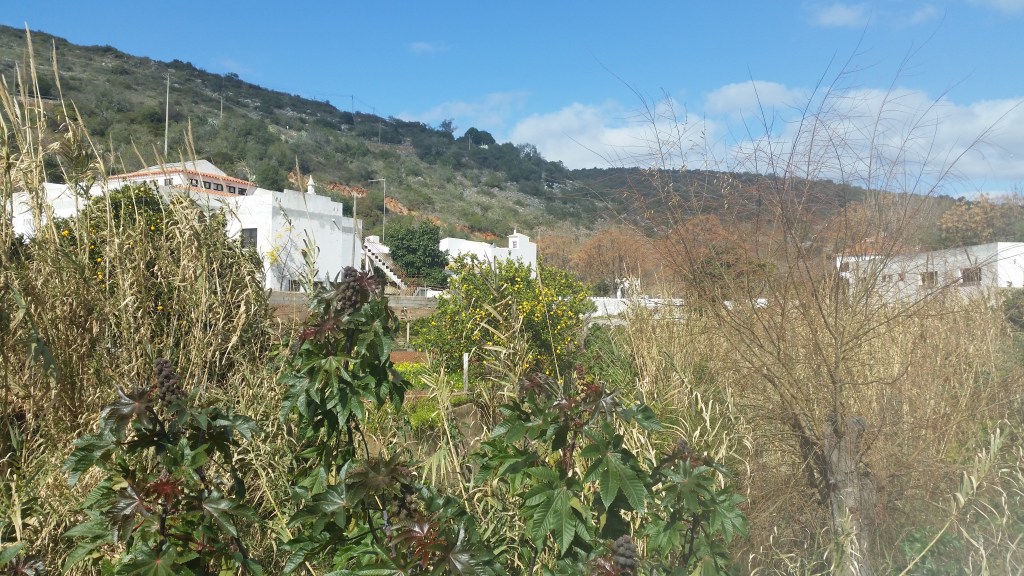
    Considered by many as the most typical algarvean village, Alte is a small village of white-washed houses nestling amidst trees and mountains, the image of old Algarve. Situated in central Algarve, the village dates from Roman times and has a Moorish past that can be observed in the detail filigree chimneys that adorn the houses.

    In the centre of the village you will find the Church dating from the 13th century, the chapel houses some very special hand painted pieces dating from the 16th century. There is also an old water mill which also dates from the 13th century.

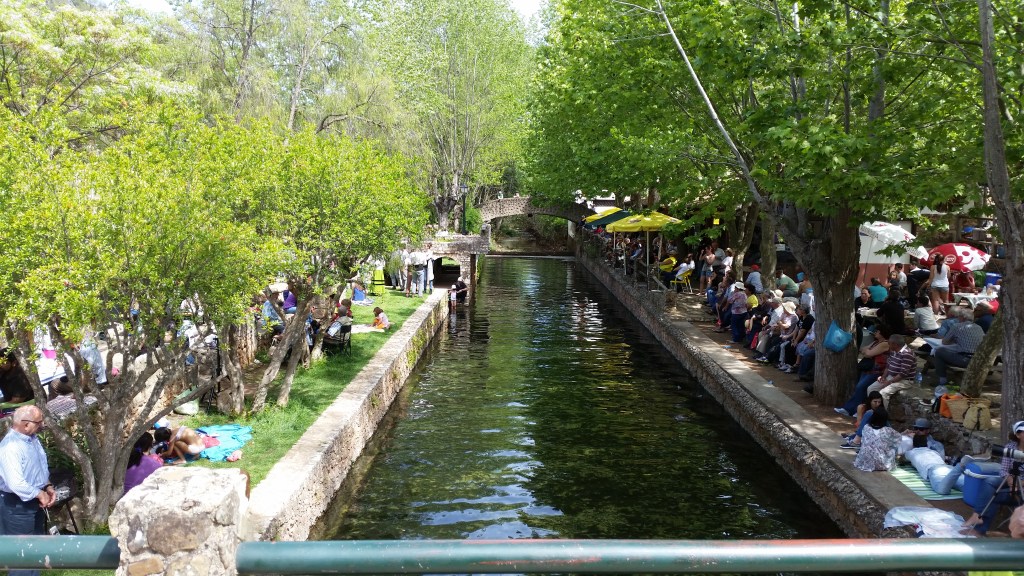
    The focal point of Alte are the two springs. Fonte Pequena and Fonte Grande (Small Spring and Big Spring). In the olden days the women of the village gathered at the springs to fill their pitchers and wash the laundry. Now, the springs are the ideal place to enjoy a relaxing picnic in the calm tranquillity of this village.

    My friend Anne recently visited us here, and she describes this place as a fairytale. It really does have everything: beautiful water features, a waterfall, super old/beautiful churches, cobblestone streets, the view of a town built into a hillside, and the most relaxing sounds. There’s hardly any traffic, so most of day all you hear are the stream flowing and the birds chirping. There’s an interesting array of stray cats (all fed by grandmothers) and other wildlife. In the stream behind the house you can see ducks, geese, fish, and turtles. And in a tree beside the Fonte Pecana you’ll find a couple of chickens and a rooster. There are also horses. Sometimes you see people riding them through the streets!

    Aside from the natural beauty of Alte, there’s the beauty of the community itself. When you go out here, it’s important to always says “good morning” (bom dia), “good afternoon” (boa tarde), or “good evening” (boa noite) to each person you encounter. Basic manners in a small town, I guess. And half the time, that person knows Kevin and/or his family, and will stop to chat. Kevin’s family is rather well-known here, and having spent his summers here, Kevin himself is rather well known. He actually has life-long friends here, which is pretty cool. You’re hard pressed to find someone who won’t describe knowing Kevin when he was just small child.

    I thought that growing up in Grimsby gave me a small town experience? Kevin’s life in Alte is actually as small town as it gets. And not in an unpleasant way. Yes, when you go for coffee or go to the pharmacy, everyone asks about Kevin or his teeth or his grandmother. Yes, people know things about you and talk about what you’re up to. But it’s because the people here are pleasant and nice. Because they’re invested in knowing each other. The people are relaxed and they’re interested in having a good time.

    Case in point? There are SO many events that happen in this small town, all of which involve lots of eating and drinking. In fact, the last festival I went to, we ran into some old family friends. What started as a lively conversation ended with shots of medronho (local fancy moonshine).

    Here’s a quick rundown of the some of the events we’ve been to here (pictures included below):

    – Festa do Chourica (Festival of Chorizo, a version of Portuguese sausage): This was a lively festival held beside the older, smaller church in Alte. We had bread, chourica, and beer. (Of course, we got less bread than the others, because the lady giving out he bread knows that Kevin and I aren’t big bread-eaters, because his grandmother told her). There was also an auction, where we ‘won’ a jar of honey.

    – Alte BTT: this is a bike race that kicks off the cultural week in Alte. It’s organized by a local bike club, and the starting line is right in front of Kevin’s grandmother’s house. We were able to get a great view from the balcony.

    – Semana Cultural – the cultural week included live music, a comedy night, public art, dancing, and an artisanal marketplace (with great desserts)

    – Folk Festival – This took place on the ending weekend of the cultural week. It was a huge event that began on the Friday, which was a holiday. The Fonte Grande was packed with tables and people who were enjoying food and beer while watching a typical folk dancing competition. The weather was beautiful, so we were able to get lots of great photos.

    Lots of photos below, enjoy!

  • January 2015: Heather & Kevin spent 1.5 days sightseeing in Lisbon.

    January 2015: Heather & Kevin spent 1.5 days sightseeing in Lisbon.

    Julie’s flight from Lisbon onward to Prague left quite early in the morning. That left Kevin and I with another day and a half in Lisbon before carpooling down to the Algarve with his godfather.

    While our few days with Julie had been about relaxation and exploratory walks throughout the city, Kevin and I knew that without direction we’d end up spending the next 36 hours napping.

    While we did make time for some naps, I also busted out my trusty ol’ pal, TripAdvisor, for some advice on what to see in the neighbourhood. The result was lots of walking and lots of looking at neat things.

    We started the day with breakfast at a truly Lisbon-esque spot. The thing about Lisbon is it’s filled with parks and cafes. And you’ll never, ever find a park that doesn’t have its own little cafe-stand. Just up the street from the place where we stayed, there was a large park that had 2 cafe stands AND a restaurant. This casually beautiful restaurant doesn’t even have a TripAdvisor review. In Toronto, a place this cool would have a 2 hour brunch line up, but in Lisbon? No big deal.

    Once we were properly fed and caffeinated, we headed to our first destination: Reservoir of the Mae d’Agua das Amoreiras and the Aguas Livres Aqueduct. Both of these are part of the Lisbon Museum of Water, which also includes an additional water reservoir, located underneath a fountain in the park where we’d eaten breakfast. The aqueduct was built beginning in the mid 1700s, and it provided the northern neighbourhoods of Lisbon with water up until the 1960s! (Fun/not-so-fun/actually-sad-and-gross fact: the aqueduct was the preferred site/tool of a serial killer in the 1800s)

    As it goes in Europe, the aqueduct was tucked in behind a bunch of other buildings in a less-travelled area of Lisbon. After some walking, Kevin and I rounded the corner and saw the aqueduct crossing a road and spanning (yet another) park. After taking a bunch of photos and freaking out about the wonders of engineering, we wanted to go inside the reservoir, but it was closed for lunch (lunch is a BIG deal in Portugal).

    We opted to return later, and headed off on another walk. Our walk took us through one of the main roundabouts in Lisbon, placed between the enormous Edward VII Park (named after a British dude!) and the Avenue of Freedom (Avenida da Liberdade). West of the park is the Estufa Fria, or “Cold Greenhouse”. Essentially, it’s large indoor garden that isn’t hot like a greenhouse. It includes a grotto, some ponds, and a host of interesting plants. Kevin and I enjoyed a leisurely walk through the garden, stopping to read our e-readers, like a couple of nerds.

    Finally, we headed back to the reservoir to see the inside. Now, I had read online that it was possible to walk through the aqueduct by entering the reservoir. We didn’t get to do that, because the gate was locked, but I would imagine it’s possible if you book your trip ahead of time.

    The Mae d’Agua das Amoreiras Reservoir, (mother of water of the Amoreiras neighbourhood reservoir, or something like that) is incredibly beautiful. It is not, however, a particularly well presented exhibit. It’s also rather expensive. When you go inside, there’s a desk where a person is working. You pay that person 5 euros each, and then walk over to get a better view of the reservoir.

    Water pours from the top of the aqueduct into the reservoir pool. The light that shines in reflects off the water, making for a beautiful visual effect to accompany the sound of the water. On top of the water, there’s actually a floating platform that you can walk on. I can imagine that it must be a great place for events, and I hope that the people of Lisbon take advantage of a cool space like that. It’s basically begging to have concerts and yoga classes and weddings on it.

    Behind the pool is a staircase that takes you to the roof of the reservoir. When you’re walking up the stairs, you can see into the aqueduct, which seems like it’d be a cool walk if it were open. From the rooftop, you get a view of the aqueduct and the city of Lisbon. 5 euros each felt like a bit of a scam, but I honestly think that the reservoir was one of the prettiest buildings/spaces that I’ve ever been in. I highly recommend checking this place out if you’re in Lisbon.

    After our sightseeing, we met up with Kevin’s godfather for lunch, ran some errands, and generally enjoyed being in Lisbon. The next day we woke up, had breakfast, lazed about, napped, and eventually drove to the Algarve, where the adventure continues…

    As always, photos below!