Category: Our Stories

  • Mexico City Restaurants – All Our Hits & Misses

    Mexico City Restaurants – All Our Hits & Misses

    By far our favourite thing about visiting Mexico was the cuisine. If you’re heading to Mexico City then we definitely recommend that you find a way to go on a food tour, because you’ll learn things and discover places that you wouldn’t have easily done on your own. But even without a guide there are many great restaurants you can find and enjoy on your own.

    So, these are our favourite restaurants, but if food is your ‘thing’ when you’re travelling then you might also want to read about our Airbnb ‘experiences’.

    Below is a list of all the restaurants we went to. We’ve put them into 3 categories, starting with our absolutely favourites and working our way down to those we weren’t so fond of. In terms of price, every place except Pujol was so affordable that it made us wonder if we shouldn’t just stay forever.

    Can’t Wait to Go Back

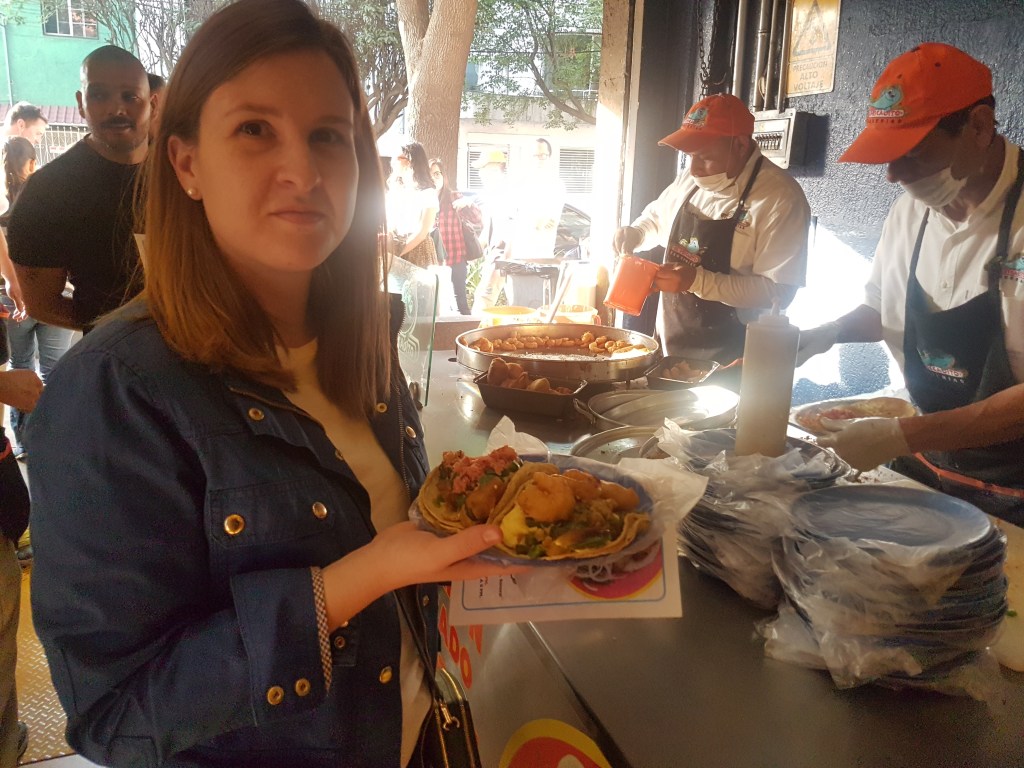
    • El Pescadito – This is my top food recommendation in Mexico City. I fantasize regularly about going back to this place, even though it was the site of our first earthquake experience. The tacos were so good that we actually did eat here twice on our trip. The only down side is that the tacos are so large that you cannot eat that many – though that didn’t stop us from trying. Their tacos are mainly seafood based and every option available is excellent. They also have a wide variety of salsas and hot sauces to choose from. The restaurant is open on two sides so that while you’re sitting inside you still get the fresh air and energy of the neighbourhood. There is usually a line but it moves fast. Highly, highly recommend!
    • Lardo – This restaurant was a 2 minute walk from our Airbnb, and thank goodness for that because otherwise we wouldn’t have found it. It looked good from the outside, so we gave it a try one night when our planned option fell through. We were completely blown away. The food, wine, service, and atmosphere were all excellent. It was so good that we went back again a few nights later, and it was exactly as good we’d remembered.
    • Le Tachinomi Desu – This is one of the places we went with our friends Greg and Adrienne, and we definitely recommend going here. It’s a super trendy yet welcoming sake bar, with delicious sushi to go with it. The owner imports some incredible sake that you wouldn’t be able to find elsewhere, and the bar has a really cool vibe. Highly recommend for a late night spot to enjoy a drink and late night snacks after a big dinner!
    • Pulqueria las Duelistas – the ultimate Mexico City artistic dive bar centred around a unique and ancient product: pulque. Pulque is an alcoholic beverage made from the fermented sap of the agave plant. It has been produced in Central Mexico for millennia, and was at one time considered to be a sacred drink. It has a thick, milky consistency and at this particular location they have several flavour variations available. If you’ve never had it before, it may seem like an acquired taste, but it grows on you quickly (I recommend the mango!). If you get your pulque to go they’ll put it in a cup with a lid and straw, which means you can walk around town drinking  an alcoholic beverage without drawing attention to yourself (Note: Bathrooms are a bit dodgy).

    Loved

    • Amaya – This place is a fairly trendy wine bar with a rather unique selection, and we had a great time here. It was our first full day in the city and we had a pretty packed schedule, so by the end of the night I think I was too tired to fully appreciate this place. We sat at the bar where we had a great view of all the action. The food and drinks were great and the service was friendly. Definitely recommend!
    • Meroma – We found this place by accident and were so happy that we did. It’s across the street from the Museo del Objeto, which was on the agenda during our first adventurous day in the city. After leaving the museum we were ready to eat again and we were drawn in by Meroma’s rooftop patio. The service was good, the food was delicious. We had tartare and ceviche and were blown away by the flavours and freshness. Definitely recommend this one!
    • Taqueria Los Parados – for quick and delicious tacos, this is a great place. Our friend Greg found this place while planning a Sunday night taco crawl (pro-tip: a lot of places are closed on Sunday nights) and it was the perfect second stop for our evening. It’s a straightforward concept – order & pay, watch the chef make your tacos, collect your plate from the cook, add toppings, then enjoy the savoury flavours while standing on the sidewalk or sitting at one of the tables in the back. The food felt emblematic of how we understood Mexican cuisine – even the simplest food is done with a high degree of care and quality, so it’s no surprise that the food gets better and better as you move higher end. If you’re in the area, check it out!
    • El Tizoncito – This was our last stop of the trip and it was the perfect way to wrap up a food-centric vacation. They claim to be the inventors of Tacos Al Asador so of course that’s the dish that we tried. The tacos were small which was great because then we were able to eat more than usual. The service was fast and friendly, and in they brought us a great selection of homemade salsas to enjoy with our tacos. Definitely recommend for a quick and delicious meal!
    • El Huequito – Delicious tacos, friendly service, interesting location. This was the first stop on our taco crawl and it felt like the perfect spot to meet up with our Toronto friends because it’s located under a highway, and gave us some hope that maybe one day Toronto’s Gardiner Expressway might also host charming Mexican restaurants. Not much to say here, but if you’re looking for a reliable and tasty experience, stop in. Open late!
    • Pujol – the Michelin Guide doesn’t publish a list of Mexican restaurants, but people often say that Pujol is the unofficial Michelin-starred restaurant in Mexico City. I don’t know if it’s quite up to the exacting and specific standards of other Michelin-starred places that we’ve been, but it certainly has the food quality, menu style, and price point down pat. If you look in the photos below, the majority of them are from our lunch at Pujol, where we dove in head first, trying some fairly unique wines alongside the most filling lunch that I have ever eaten. I have never felt ill from eating too much until I had this lunch at Pujol that was so darn good that I couldn’t possibly skip a course. The setting was really beautiful, calming, and relaxing. It was an impressive upscale experience with a welcoming atmosphere, and you could tell that the menu was designed to showcase their pride in Mexico’s history of excellent cuisine. Would I recommend it? Maybe. If really pricy food doesn’t scare you away, then definitely go for it. It’s certainly a great experience. However, if you’re even remotely budget conscious, you could skip it. The Mexico City food scene has so many incredible experiences to offer at lesser price points that splurging at Pujol almost feels silly. Do with that information what you will. But if you’re going to Pujol we suggest you book a reservation at least 3 weeks in advance.
    • Restaurante San Angel Inn – We ate here on the day that we went to Bazaar Sabado, we relished the fact that it was a bit over the top. The food was good but not great, but the service was lovely and the building itself was beautiful. This appeared to be a weekend destination for wealthier families, which means that lunch here made for some great people watching. If you’re not hungry for a full meal, it’s worth your while to sit in their courtyard and enjoy some cocktails.
    • Huaraches Ramoncita – This was the lunch stop on our Mexico City food tour, but if you’re feeling adventurous you can head out to the Jamaica Market (make sure to visit the flower market nearby!) where you can find this little family run restaurant. It’s essentially a food stand, with some seating available. They specialize in huaraches, which are kind of like a savoury pancake with beans inside and topped with a variety of fresh ingredients. Definitely recommend if you’re feeling adventurous. The family are incredibly kind and friendly.

    Liked

    • La Casa de Toño – This is not a place to go during the day, but if you’re looking for some late night food after an evening of partying then this is the place for you. You order by filling out a form and handing it to your friendly server, who then brings out your piping hot, fried food. If you’re with a health-conscious crowd you may want to skip this place, but for some late night carbs to stave off a hangover this is a passable option.
    • Paramo – If you don’t like waiting to eat, then this is not the place for you. This restaurant makes mezcal margaritas that I still think about, and throughout our trip I could not a place to make them quite this good. We went here with friends and the wait for a table was nearly an hour. They let you order from the bar while you’re waiting, so we did enjoy those margaritas in the lobby, but the restaurant/bar/lobby are all incredibly busy and can feel a bit claustrophobic. Still, if you don’t mind a wait, I do recommend this place for the margaritas alone. Most of the food was great, though we had a couple of lacklustre dishes. The service was also spotty, but again this place was absolutely packed, so it’s not that surprising. The ambiance is also pretty cool with lots of plants and a glass ceiling giving it a ‘greenhouse’ feel, but it did seem a bit dominated by tourists (millennial tourists like us, haha, but still tourists!). If you can plan something to do while you’re waiting, it may be worth checking out for a few drinks, but don’t bank your whole night on this place.
    • Rojo Bistrot – we found this place while walking through the city and decided to eat on the patio because the atmosphere of the neighbourhood was so pleasant and quiet. We drank cocktails and snacked on taquitos. The food wasn’t amazing but the service was fast and friendly, and it was a great little spot for some low-key evening drinks in a lovely area.
    • Comedor Jacinta – We went here with an appetite for cocktails and not much else (we were still full from lunch) so we didn’t order much food. The place had a fun atmosphere and the mezcal margaritas were quite good. It’s located in Polanco, on a street with many other restaurants, so it’s a good launching pad if you’re looking to try a few places in one night. The restaurant was quite pretty, and while one of the dishes we had was underwhelming, the appetizers were pretty tasty too.
    • El Bajio – This was a nice little lunch spot in the high end neighbourhood of Polanco. Because of the setting, it was another good spot for people watching, but the food was also great. El Bajio is a chain of restaurants focused on preserving and showcasing traditional Mexican cuisine, and on that front it definitely delivers. It doesn’t have the quirks of a little restaurant tucked into some back alley, but it was pretty great regardless. The restaurant’s story is also pretty cool, and it’s considered one of the most famous/successful restaurants in the country.
    • Cafe de Tacuba – A gem in a very busy/touristy area, where you likely won’t have to wait. This place is enormous, and its historical location makes for a great setting. The staff are friendly, the food is delicious, and ambiance is delightful. When we were there it was a very busy Sunday yet we sat right away. It seems like the type of place where families go together, and it was great to be part of that atmosphere. There may be better or trendier places, but this is reliable classic in the historic centre of Mexico City.

    We Went, But Wouldn’t Recommend

    • El Califa – We saw this place on a few different ‘recommendation’ lists and decided to try it out for a quick lunch. It was good, but nothing particularly special. El Califa is a chain of restaurants that makes tacos and other Mexican dishes. In a city where the street food is sometimes better than restaurant food, a chain of taco restaurants just feels overly sanitized and boring. The food was good, but the experience overall is underwhelming and a tad pricy. If you need a quick bite in a large space (with AC), this is a good option, but if you’re looking for something more unique then maybe look elsewhere.
    • Cedron – The food was good, but the restaurant overall was a bit pretentious. We stopped here for dinner before our trek to the Cineteca Nacional to view the Shape of Water. So maybe we were just in a rush to get our night started, but this place fell a bit flat. Because we are extremely fortunate and get to have many ‘fancy’ experiences, we’re fairly attuned to when a restaurant or venue is trying to cater to a clientele who really want to feel like they’re having a luxurious experience. Sometimes it works. But sometimes you’re getting a lot of flashy luxury with little quality beneath it all. That’s kind of what this place felt like. The food was okay, but the style of service was over the top, and it was one of the more expensive places we went to. Not a bad place, but definitely not our favourite. In Mexico City, where the food is just so consistently good, putting on airs to stroke the ego of the wealthy only creates a distraction.


  • A Sunday in CDMX & Visiting Palacio Belles Artes

    A Sunday in CDMX & Visiting Palacio Belles Artes

    CDMX refers to La Ciudad de Mexico… known in English as Mexico City. CDMX refers to the municipality that encompasses Mexico City, home to nearly 22 million people. On Sundays, many of those people have the day off, and the downtown core is filled with people and families who come in search of festivals, entertainment, and relaxation.

    This was our second full solo day (and our first day waking up fully rested) in Mexico City, so we were feeling ready to explore. If you’re someone who doesn’t like crowds, then exploring the old downtown of Mexico City might not be the best call on a Sunday, but we had a lot of fun.

    One thing we hadn’t expected was how much we would be affected by the city’s altitude. For the first few days we staved off headaches with Advil, and we both experienced some difficulty breathing. The day’s heat didn’t help, and by mid-afternoon we were ready for a break.

    We started by visiting Mexico City’s famous art deco landmark, the Palacio de Belles Artes. The Palacio de Belles Artes is near the historic centre of Mexico City, and has been a site of cultural activity for thousands of years. In Pre-Hispanic times it was a site of Aztec altars for worship. Under Spanish colonial occupation, the site was home to a convent, which later was torn down to construct low income housing and textile mills. In the late 1800s, the National Theatre was built on this site, the nearest predecessor to today’s Palacio de Belles Artes:

    The old theatre was demolished in 1901, and the new theatre would be called the Gran Teatro de Ópera … Despite the 1910 deadline, by 1913, the building was hardly begun with only a basic shell. One reason for this is that the project became more complicated than anticipated as the heavy building sank into the soft spongy subsoil. The other reason was the political and economic instability that would lead to the Mexican Revolution.

    The project would sit unfinished for about twenty years. In 1932, construction resumed under Mexican architect Federico Mariscal. Mariscal completed the interior but updated it from Boari’s plans to the more modern Art Deco style. The building was completely finished in 1934.

    The floors between the ground floor and the uppermost floor are dominated by a number of murals painted by most of the famous names of Mexican muralism.[7]

    On the 2nd floor are two early-1950s works by Rufino Tamayo: México de Hoy (Mexico Today) and Nacimiento de la Nacionalidad (Birth of Nationality), a symbolic depiction of the creation of the mestizo (person of mixed indigenous and Spanish ancestry) identity.[2]

    At the west end of the 3rd floor is El hombre controlador del universo (Man, controller of the universe- known as Man at the Crossroads), originally commissioned for New York’s Rockefeller Center in 1933. The mural depicts a variety of technological and societal themes (such as the discoveries made possible by microscopes and telescopes) and was controversial for its inclusion of Lenin and a Soviet May Day parade. The Rockefellers were not happy with the painting and the incomplete work was eventually destroyed and painted over. Rivera recreated it here in 1934.[2][7] On the north side of the third floor are David Alfaro Siqueiros’ three-part La Nueva Democracía (New Democracy) and Rivera’s four-part Carnaval de la Vida Mexicana (Carnival of Mexican Life); to the east is José Clemente Orozco’s La Katharsis (Catharsis), depicting the conflict between humankind’s ‘social’ and ‘natural’ aspects.[2]

    The part above about the murals is quite important because that definitely was the main focus of our visit (as you’ll see in our photos). After our day exploring all types of art at Bazaar Sabado, it was quite exciting to see some of the country’s historic art. But more than that, it was interesting to see how many other people were there admiring the art with their friends and families. It wasn’t hard for us to recognize that the artistic talents and passions on display at the Bazaar were in some way related to the same passion and appreciation for arts that brings thousands of families to the Palacio to view these same murals.

    After spending a few hours at Belles Artes we went for lunch at Cafe de Tacuba, famous for their mole sauce (pronounced mo-lay). The restaurant is located in a former convent and has been open since 1912, so in addition to the delicious food it’s also beautiful just to see.

    With full stomachs, we walked to the historic centre of Mexico City:

    The historic center of Mexico City (SpanishCentro Histórico de la Ciudad de México), also known as the Centro or Centro Histórico, is the central neighborhood in Mexico CityMexico, focused on Zócalo or main plaza and extending in all directions for a number of blocks, with its farthest extent being west to the Alameda Central.[2] The Zocalo is the largest plaza in Latin America.[3] It can hold up to nearly 100,000 people.[4]

    What is now the historic downtown of Mexico City roughly correlates with the ancient Aztec city of Tenochtitlan, which was founded around 1325. During the prehispanic era, the city developed in a planned fashion, with streets and canals aligned with the cardinal directions, leading to orderly square blocks.[5]

    After the Spanish conquest, this design remained largely intact, mostly due to the efforts of Alonso Garcia Bravo, who supervised much of the rebuilding of the city. This reconstruction conserved many of the main thoroughfares such as Tenayuca, renamed Vallejo; Tlacopan, renamed México Tacuba, and Tepeyac, now called the Calzada de los Misterios. They also kept major divisions of the city adding Christian prefixes to the names such as San Juan Moyotla, Santa María Tlaquechiuacan, San Sebastián Atzacualco and San Pedro Teopan. In fact, most of the centro historicos is built with the rubble of the destroyed Aztec city.[5]

    Historically, the Zócalo, or main plaza, has been a venue for fine and popular cultural events.

    Just off the Zócalo are the Palacio Nacional, the Cathedral Metropolitana, the Templo Mayor with its adjoining museum, and Nacional Monte de Piedadbuilding. The Palacio Nacional borders the entire east side of the Zocalo and contains the offices of the President of Mexico, the Federal Treasury, the National Archives as well as murals depicting pre-Hispanic life and a large mural filling the central stairway depicting the entire history of the Mexican nation from the Conquest on.

    There was some kind of festival taking place, in addition to a large market, so the Zocalo was packed with people participating in and watching the festivities.

    Here’s a short video from the day, though it doesn’t really capture the scale of the area or the crowds:

    Check out our favourite photos from the day below!

  • Visiting Zona Arqueológica Palacio Atetelco

    Visiting Zona Arqueológica Palacio Atetelco

    Hello readers! It’s been a long hiatus, but I’m picking up where we left off, with stories from our 2018 trip to Mexico. My last post was about our trip to Teotihuacan, and this post is about another nearby site.

    While the site of Teotihuacan included some housing, it was primarily a centre for celebration, for exchange, and other community based activities. But those who participating in the civic life of Teotihuacan often lived in one of the many apartment complexes in the surrounding area (read more here). Which makes sense, because it took us less than 20 minutes to walk from the Teotihuacan city centre to Palacio Atetelco.

    In 2018 Kevin started getting into archaeology, and research for our trips to Mexico and Portugal involved him studying niche blogs and Google Maps satellite views in search of rare sites to visit.

    Without too much trouble, he found out about Palacio de Atetelco, just a brief walk down the block.

    After finishing up at Teotihuacan, we followed our map and walked through a small, remote neighbourhood on the way to our next adventure.

    When we arrived we were greeted by an INAH sign, letting us know that we had indeed found a site recognized and protected by the Mexican government’s institute for history and anthropology. As we entered the property we could see that the researchers were taking their lunch break under a tree, and no one said a word to us as we walked over to and then explored the site. While the site was excavated in the 1940s, it would appear it’s going through an additional exploration and update, possibly to better preserve some sections.

    And so we spent approximately an hour exploring the ruins of a housing complex that dates back to between 450 and 650 AD. It is most famous for its well-preserved murals (read more here), which were easy to spot due to their red colouring, though originally they would have included more colours that have since been lost.

    Afterwards we walked back through the neighbourhood to the visitors centre for Teotihuacan, where we flagged down an Uber driver and got a ride back into Mexico City for a well-deserved lunch.


  • Torres del Paine – III – Completing the Loop

    Torres del Paine – III – Completing the Loop

    Intro | Part I | Part II | Part III

    Day 7 – Campamento Italiano

    Map (link) | Distance: 7.5 km + 5 km | Time: 1.75 hours + 3 hours

    The hike from Paine Grande to Italiano is one of the shortest hikes in the park, designed so hikers can enjoy a “day hike” past Italiano to a pair of mountainside lookouts (Francés and Británico) which make up the middle leg of the “W”. Knowing this, we set out before sunrise hoping to maximize our daylight hours for the day hike.

    IMG-20180402-WA0091
    Awake really early on Day 7

    The hike to Italiano was fairly straight forward: we left the windy peninsula of Paine Grande and headed East across hillsides and streams, stopping periodically to admire a lakeside view. We arrived at camp fairly early (before many campers had even woken up), set up our tents, and checked in with the Ranger. The Ranger gave us some tips and directions, but informed us that the second lookout, Británico, was closed due to poor weather.

    The day hike is bit awkward: it travels along the mountain side so the footing is tricky, full of rocks and inclines. We reached Francés Glacier after an hour and rested a minute to appreciate our fourth glacier of the week. Then we actually continued on, hoping to see more (the weather in Patagonia changes so frequently that we hoped the trail would clear up, contrary to the Ranger’s recommendation). Unfortunately the wind and rain only worsened so we turned back before getting lost (or worse) and had warmed our hands drinking tea and cooking dinner to rest up before a long hike to Chileno the next day.


    Day 8 – Chileno

    Map (link) | Distance: 16 km | Time: 5.5 hours

    The hike to Chileno was an exhausting day. We got on the trail a bit later than usual (I slept in) and paid for it with a long hike through the middle of a hot afternoon. We started off in hilly lakeside grassland and forest, which were actually delightful in the morning hours (some of the lake views were incredible, and we passed the oft-photographed Cuernos).

    DSC02173
    Cuernos (Horns) del Paine

    However, we left the forest just as the sun was reaching its peak and began a 4-hour hike uphill through open grassland. Many stops for water and sunscreen later, we started to see the mountain range surrounding los Torres which helped to put a spring in our step and push us up the final hill to Refugio Chileno.

    After checking in we set up our tents, which involved a new twist for our last night. Because the campsite is built on the side of a mountain, every tent gets erected on a wooden platform using a hammer and nails instead of stakes!

    The campsite and lodge are beautifully nestled between a stream and mountain, under the gaze of los Torres. Dinner that night was included in our reservation, so we enjoyed some salmon, rice, and salad (real food!) before watching the sunset (what a view) and heading to sleep.


    Day 9 – Our Final Hike

    Map: (link) | Distance: 4 km + 2 km | Time: 2 hours  + 1.5 hours

    Over the course of eight days on the trail we grew into a pretty standard sleeping pattern: sunlight = awake. So we had fine tuned our ability to fall asleep and wake up early, but our last night really pushed us. Researching for the trip we learned that a must-do activity in the park is watching the sunrise at the Torres del Paine. Which means starting your final (2-hour) hike to the Torres well before any daylight arrives. For us, that meant setting an alarm for 4:45 am, sleeping in our hiking clothes, and eating a Cliff bar on the trail (no time for breakfast).

    The hike was a little tricky: everything was pitch black outside of our headlamps’ paths and we were navigating climbing switchbacks through a forest. Fortunately the trail markers contained reflectors, so we only got lost a couple times, and we made the summit fairly quickly. We were actually the very first group to reach the top! So we settled into our sleeping bags and broke out our celebratory chocolate.


    Truthfully we were hoping for a more dazzling display of light, but even in overcast weather it was a treat to watch the Torres greet the day. And what better place to sit and reflect than a peaceful glacial lake surround by mountain tops? Looking back, it was a quick week in which we’d graduated from being hiking rookies, bested the elements, and lived more than a handful of post-card-worthy moments.


    The rest of the day was a mostly wrap-up. After lunch at Chileno we headed downhill to the trailhead, celebrated with a beer, and boarded the bus back to Peurto Natales where hot showers and fresh food awaited. From there we enjoyed a couple great celebratory meals (Angelica’s is highly recommended) and began our journey back home.

    IMG-20180402-WA0085
    Success! (Not pictured: cervezas)
  • Torres del Paine – II – John Gardner and Glacier Grey

    Torres del Paine – II – John Gardner and Glacier Grey

    Intro | Part I | Part II | Part III

    Day 4 – Campamento El Paso (John Gardner Pass ⛰️)

    Map (link) | Distance: 8 km | Time: 7.5 hours

    We had been gently warned by the rangers that most hikers should leave camp around 7:30 am to climb the John Gardner Pass, so despite the rain and chill we were up and on the move early on Day Four. Luckily the rain had calmed down over night so packing our tents up wasn’t too messy and we set out on our relatively short but very steep hike (the Pass is the highest part of the trail, at just under 1,200 m).

    IMG-20180402-WA0089
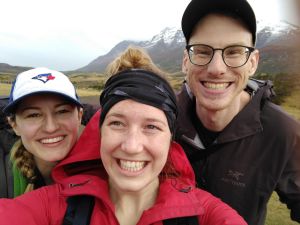
    Early morning selfie


    The trail started out with the forest and dirt we’d grown accustomed to, but turned to rocky switchbacks before long. The rocks made our footing a touch unsteady, and more than once my wobbly ankles almost rolled. Fortunately the weather had blown out after its overnight outburst, so we had relatively clear skies to make our upward grind tolerable and we reached the pass in just a couple of hours!

    One of the great things about Torres del Paine is that it has so many beautiful features. Magazines often feature the Cuernos del Paine. Everybody makes time to visit the namesake Torres. And there are countless viewpoints and tours of Glacier Grey’s Southern tip. But for me, reaching the Gardner Pass takes the cake. There was something incredibly rewarding about climbing the 1,200 m and feeling exhausted but proud. Then just as you’re beginning to feel big, a king literally on top of the world, Glacier Grey slaps you in the face. You look out on a sheet of ice stretching further than you can even comprehend. It contains more white, greys, and blues than your eyes can register in its cracked surface and exposed depths. It stretches as far as you can see, ending only in purer and larger snow capped mountains. It was a truly humbling reminder that the Earth is just so much bigger than us. It’s just so much…ice.

    The rest of the hike is relatively less grand. You turn back South and start working your way downhill. The hills are steep but there are often handrails and steps, (though that didn’t stop my Bambi-like grace from taking the express route once or twice) and a few lookouts through the trees reminding you of the inescapable ice sheet.

    We arrived at Campamento El Paso in mid-afternoon a little tired from the day’s climb and pitched our tents before sitting about in the sun to warm up (the glacier is cold and we were tired). Dinner that night was a smaller affair as our “O-circuit” group had started to break apart as schedules diverged, but we still got to hear plenty of stories about Antarctic adventures and backpacking South America before we packed it in for the night.

    Day 5 – Refugio Grey

    Map (link) | Distance: 7 km | Time: 4.5 hours

    Looking back, our near-perfect experience climbing the John Gardner Pass was pretty special. Because of its proximity to the Glacier Grey, and Patagonia’s generally hectic weather, the pass is frequently closed by Rangers, especially late in the season (when we visited). To that point: the two days after to our climb the trail was closed, and another two days later it was shut for the season. We just squeaked through!

    Knowing this as we were reserving campsites we had actually bracketed in an extra day following the pass, and we awoke on Day 5 grateful for that. The weather had settled into a chilly rain (something to do with a giant glacier nearby?) and our legs were feeling some aches after the climb, so it was nice to start the day slowly. We hit the trail around 10 am after filling up on oatmeal and boiling enough water to brew our tea (Early Grey, hot).

    IMG-20180402-WA0086
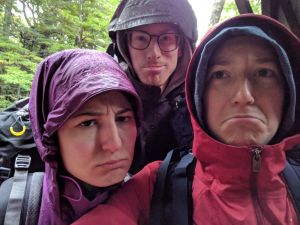
    Grumpy in the rain

    The trail to Refugio Grey was almost entirely downhill through the same cliff side forest we had encountered the previous day. The views looking out at the glacier were similarly impressive, if somewhat diminished by overcast skies. And thankfully we had the views to enjoy, because what was billed as an easy stroll down to Grey became bit of a mental battle. A little bit because of the weather, but mostly because of our knees not enjoying the downhill slog. Almost five hours later we reached Grey tired, grumpy, wet (and probably smelly, it’d been five looong days).

    But boy were we excited to arrive! Refugio Grey marks the Western start of the more built up “W Circuit” so in addition to camping spots and a cooking room, Grey had a full lodge complete with restaurant, bar, hotel, and spa. Hallelujah! We dropped our messy backpacks at the door and stumbled inside ordering “tres cervezas” and cheers’d to rejoining society! We spent the rest of the evening chatting with fellow hikers beside the fire place, enjoying a couple drinks, and honestly just appreciating the comfortable couch.

    Day 6 – Refugio Paine Grande

    Map (link) | Distance:  11 km | Time: 4 hours

    After an evening spent relaxing, Day 6 became the easier day we needed. It was another late morning as none of us set an alarm, andeven when we finally sorted ourselves out we didn’t hit the trail right away. Refugio Grey is considered the starting of the “W Circuit” because of its proximity to and scenic viewpoints of Glacier Grey. So before leaving we wandered out to take our last looks.

    Afterwards we hit the trail, heading south to Paine Grande, and though the skies were grey the worst of the clouds blew over and our hike was dry. Much of the trail looked like our first couple of days: long grass and stubby trees. Knowing the day’s hike was relatively short we took our time, stopping for photographs and snacks throughout the afternoon.

    Arriving at Paine Grande we were quick to understand how it earned the nickname “tent graveyard”. The lodge and campground are situated on a peninsula between two lakes, and wind gusts consistently threatened to uproot everything not bolted down. This was definitely our most nerve wracking tent set-up. Luckily our tents held on and, even though it was a noisy night, we woke early the next day with all our belongings!


  • Torres del Paine – I – The Backside

    Torres del Paine – I – The Backside

    Intro | Part I | Part II | Part III

    Day 1 – Campamento Serón

    Map: (link) | Distance: 13 km | Time: 4.5 hours

    Saturday morning was an early one. We had a 7 am bus ride to the park ahead of us, which meant getting up at dark o’clock and double checking our backpacks before heading out. Fortunately our hostel, the Erratic Rock, provides a warm breakfast every morning so we made our way to the bus full of homemade bread, oatmeal, and omelettes, if a little sleepy.

    The pre-dawn bus ride to the park let us see some brilliant scenes as sunrise played out on distant mountains, and by the time we were dropped off at the trailhead we were pretty excited. A final taste of normal (a muffin) in the gift shop and we were off!

    DSC01895
    Starting out, our first ‘climb’

    The first day of hiking was a nice ease into the routine. Our bags doesn’t hurt (yet), the hills were gradual, and the weather was fantastic. The shuttle-bus contingent quickly split up as every group found their pace, and soon enough the three of us were casually strolling through nature and sunny skies. The path to Campamento Serón is mostly hilly grassland on the Eastern periphery of the mountains, following a winding river North for much of the afternoon. It was funny at times to think we had just traveled two days  when the hike felt so similar to Ontario’s Bruce Trail. But every far-off mountain peak was a quick reminder otherwise, and we spent much of the afternoon taking breaks and doing our best Owen Wilson impressions (wow!).

    Our first night in camp was pleasant, if a little windy. As it was the first time setting up our new tents, we were happy to find spacious, level spots sheltered from the worst of the elements. We ate our first camp meals and chatted a little with our new “O Circuit” family of campers before settling in for the night with plans for an early rise.

    Day 2 – Refugio Dickson

    Map (link) | Distance: 18 km | Time: 7 hours

    Our first morning on the trail was a learning experience. Despite well meaning plans to rise early and head out after a quick bite, we didn’t actually start hiking until almost 10 am. Repacking your bag (from inside the tent) and disassembling a tent took longer than anticipated. We got much better on subsequent days.

    IMG-20180402-WA0087
    Day two selfie

    The trek to Dickson was quite similar to the previous day’s. We spent the morning following the same winding river and the weather remained promising with blue skies and puffy clouds stretching to the horizon. The biggest difference in the trail began as we turned West into the valley. The map noted that the trail would feature “Heavy Winds” at this point, and we were curious to find out what that meant. For me, it finally illustrated the expression “screaming winds” as a constant gale force wind rang in your ears and threatened to bowl you over for 2 km before we could descend into forest.

    The rest of the day was much tamer. We wandered the valley’s hillsides through forest and long grass. At times I was reminded of summers spent golfing back home, searching for my ball in the wild – unkempt – long grass, just with stubbier trees and prettier horizons. I even grew frustrated throughout the day as I sweated and chafed (I had been wearing my backpack improperly), a true callback to my golfing years!

    After a final climb we descended into Refugio Dickson, beautifully perched on the shores of a glacial lake (our first glacier sighting!). We set our tents up nestled within the trees (quickly learning to avoid the wind) and explored the campgrounds: rocky beaches on the lake, horses roaming freely, and communal buildings including a small store, showers, and lodge/cafeteria. This was the first night that our “O Circuit” family got to know each other, many of us stayed up chatting in the lodge until it was too dark to find our tent.

    Day 3 – Campamento Los Perros

    Map (link) | Distance: 11.8 km | Time: 6 hours

    Our second morning on the trail started off a bit smoother: our tents got packed smoothly and breakfast was quick. We were in the first half of campers to leave. So we had high hopes for the day, even if it looked like the weather was turning.

    IMG-20180402-WA0088
    You could feel the rain waiting to start…

    Admittedly, I didn’t have large expectations for Day Three’s hike. On the map it looked like a logistical shuffle that would require covering some distance and elevation, setting up hikers for the next day’s mountain climb at the John Gardner Pass. Fortunately I was wrong. It wasn’t an easy day; it featured a steady climb through mountain forests for the first half of the day, followed by a rocky trail testing your ankles in a windy valley. But the trek had some of the best views on the trail. The first half of the day climbed high, giving us great views looking back at Dickson Glacier (and Argentina), while the second half featured steady progress towards Los Perros Glacier and it’s beautiful green lake.

    Rain threatened for most of the day, but held off long enough for us to reach camp and pitch our tents. We were luckily gathered in the communal cooking room (a make shift building with three shared tables) when the rain finally hit. In the span of an hour we witnessed a downpour, hail, and snow, before it settled into a steady rain for the night. A few of our fellow campers were rained out, so we all spent some time helping move tents or dig moats to ensure everyone was safe before tucking in for a fitfull sleep (I thought every loud gust of wind would blow me away to Oz). Somehow this was one of my favourite nights, and we all awoke early the next morning ready to climb a mountain!

  • Adventure with our Toronto neighbours in Mexico City!

    Adventure with our Toronto neighbours in Mexico City!

    In Toronto our neighbours, Greg and Adrienne, also happen to be old friends of ours. Greg and I attended high school together, and so we were all delighted to find out we were living in the same building, on the same floor.

    To keep the coincidences coming, a week after we booked our trip to Mexico City we realized that Greg and Adrienne were also going and that our trips would overlap!

    We didn’t plan it that way, but it worked out to be a lot of fun because went spent 2 nights partying together in Mexico City. Bonus: Greg & Adrienne both work in the Toronto restaurant industry and so we got to tag along to the trendy places that their colleagues had recommended.

    Greg and Adrienne arrived a few days after us and we met up with them for a ‘taco and mezcal crawl’ that Greg had planned. It was a Sunday night so many places were closed. It was also the first time that we realized there was a major discrepancy between the posted business hours on Google Maps vs reality.

    On the day before they left we had lunch in the same restaurant (Pujol, more on that later), though not together. Before leaving we made plans to meet up for dinner and more drinking. The evening ended in a local fast food joint at 4am, so I’d say it was a successful night on the town.

    So, where did we go? I honestly couldn’t tell you from memory because Greg directed us to each place and I rarely knew what anything was called. But Google is a handy thing, so I’ve put together a list (and photos are included below):

    Sunday night taco & mezcal crawl

    • El Huequito: the first stop on our taco crawl, this place showed what was really possible with under-highway space, as the restaurant was located on a large sidewalk under a highway underpass. Great tacos, great service, great mezcal.
    • Taqueria Los Parados: This was a quick little counter service taco place. Delicious tacos made on the grill in front of you.
    • Paramos: This place was très trendy and almost felt like being in Toronto, and wow the mezcal margaritas were great. When we arrived we headed upstairs to get a table but the wait was over an hour. So we drank margaritas while sitting on couches in their lobby and waited! Once seated at our table, the service was rather slow but again those margaritas balanced it all out. The food was good and the ambiance was cool. It’ worth noting that by this point in the night I was full and could no longer eat much anyways. The highlight was, again, the mezcal margaritas, which were the best I had all week.
    • The next 2 places on our list ended up closing early, so we called it a night and headed home to bed.

    Wednesday night rager:

    • Comedor Jacinta: I’m not sure why we went for dinner because we were all so full from lunch anyways. But Comedor Jacinta had good service and good mezcal margaritas. Food was hit or miss. We ordered some kind of shrimp ceviche that wasn’t good, but some of the smaller guacamole & chips type dishes were great. The service was good though, and they kept the drinks coming. After a few rounds we’d gotten to some personal truths about each other and were ready to move to the next place.
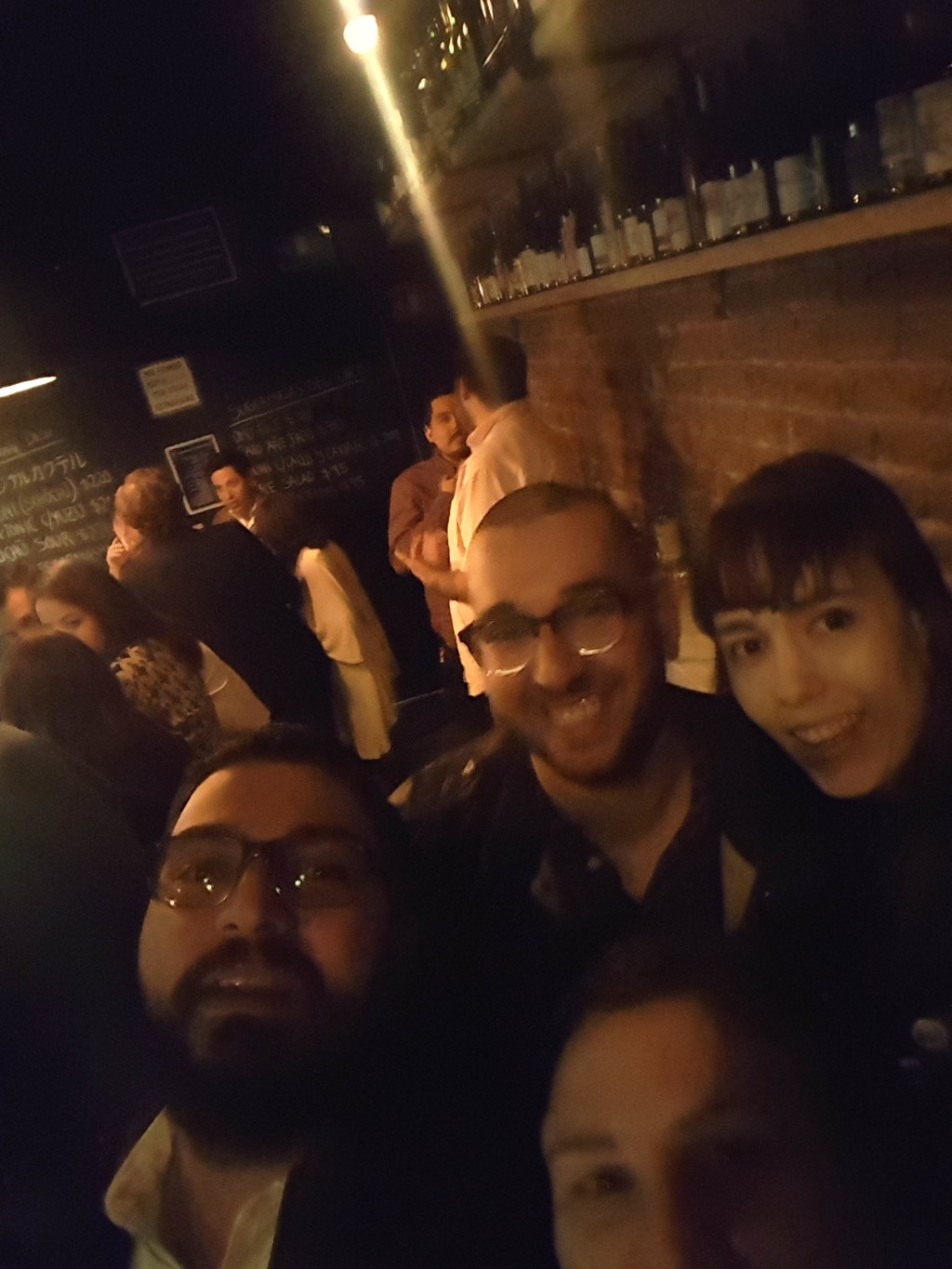
    • Le Tachinomi Desu: This place was very trendy and cool, which normally means there’s a catch, but in this case there wasn’t. The wine and sake selections were unreal, and the service was great. It was the coolest place we went all week and we had a great time. It was the perfect spot for simply standing, drinking, and enjoying each other’s company. We were here until nearly 4 in the morning and we weren’t even the last people to leave. The place is run by a Japanese Mexican man and this place imports some really interesting sakes and wines. At one point they suggested we try a bottle so rare that there were less than 10 in the country. Sounds obnoxious, but it was worth the hype. Again, unreal. After being so full (from lunch still!) that I could hardly walk, it turns out that drinking sake until 4am was the cure. We also met some pretty interested characters to round out the night.
    • La Casa de Toño, Zona Rosa: This is a local chain that’s open late and basically serves whatever you could want to eat, but fried. This late at night they’d stopped serving beer, which was probably for the best or we’d have been there for hours. As it was, we ordered, ate, and went home to bed.

    It’s always fun to see familiar faces in a foreign city, and this was no different. Our trip to Mexico City was incredible throughout, but spending a couple of nights with Greg and Adrienne made it even better.

  • El Bazaar Sábado

    El Bazaar Sábado

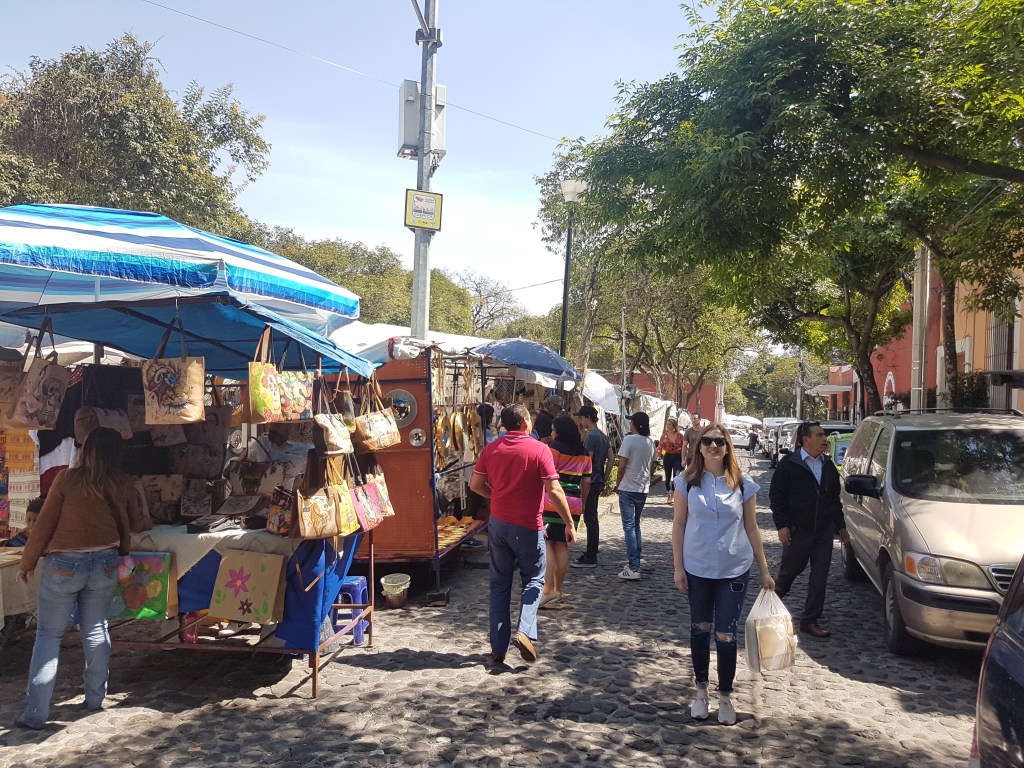
    Our first full day in Mexico City fell on a Saturday. Our Airbnb host recommended that we take this opportunity to visit “El Bazaar Sábado” (aka the Saturday Bazaar) as it’s a unique event that only happens once per week. And so on Saturday morning we took an Uber south into the historic neighbourhood of San Angel.

    The bazaar has 2 parts: a variety of kiosk stalls in a market, and a wide variety of artists exhibiting their work in the park.

    We started in the stalls of the market and were quickly impressed with the range and quality of the goods available. From there we wandered over to the park to start shopping for art! Again, we were quite impressed.

    Kevin and I spend a lot of time visiting artisan markets in Toronto, and we were amazed (again) by the range and quality of the work available. We had heard that Mexico City had a great arts scene, and this was certainly the first of many days/events that proved it to be true. We ended up buying a bunch of art and souvenirs, though the best part of the day was simply walking around in the sun.

    After the market, we walked to the San Angel Inn to try some of their famous margaritas. They were worth the hype, and while the rest of the food/service were just okay, overall the San Angel Inn kept us entertained as we watched upper middle class people wandering in and putting on their airs.

    After lunch we visited Museo Casa Estudio Diego Rivera y Frida Kahlo, the home where the famous Mexican artists Frida Kahlo and Diego River lived together. There’s more to come on that one later. For now, check out the below photos of our adventures in San Angel!

  • We made it to Mexico City! (Just in time for an earthquake)

    We made it to Mexico City! (Just in time for an earthquake)

    For the next week we are in Mexico City, the capital of Mexico and the most populous city in the Americas (fighting neck and neck with Sao Paulo for the top listing). We arrived yesterday, and so far we are having a great time!

    Of course, if you’ve been reading the news you also know that Mexico City suffered from an earthquake earlier yesterday afternoon. You can get all the details here but essentially there was a 7.2 magnitude earthquake off the southern coast of Mexico, which was felt across a wide area of the country, including Mexico City.

    It was a significant event as the city is still suffering the physical and emotional after-effects of a deadly and destructive earthquake in September 2017.

    Our flight arrived around 2pm and we were picked up at the airport by a driver, all arranged by our AirBnB host. We are currently staying at the world’s greatest AirBnB and our host, Leonore, is wonderful. She arranged for us to be picked up at the airport and then met us at our apartment. In fact, 10 minutes ago she dropped in to make sure we were okay following the earthquake (her cat and dog dropped in too! Photos to come later).

    So, we arrived at our apartment for the week, chatted with Leonore about different sites to see, and then headed off in search of tacos.

    We walked to a nearby taqueria, El Pescadito Condesa (highly recommend!). We loaded up our plates with delicious shrimp and fish tacos and settled in to watch the street life while we enjoyed tacos and beers.

    Around 20 minutes into eating, everyone sitting near the windows jumped up and ran outside into the streets. Kevin and I hesitated for a few seconds until the restaurant manager gave a stern look and directions to get moving. And so we stood in the street in a crowd of distressed people and we felt the earth moving under our feet.

    As it turns out, Mexico has an early warning system for earthquakes, the Mexican Seismic Alert System. It was this system that started the flood of people into the streets. And sure enough, as we joined the crowd we could hear the alert system and a few seconds later we felt the earthquake.

    I’ve lived most of my life in Ontario, where there are few earthquakes and fewer reasons for people to worry about emergency preparedness. So when I felt the earthquake today I was definitely taken aback. It was unlike anything I’d previously experienced (obviously Kevin has experienced earthquakes in both Canada and Portugal, so I guess I’m behind the times). I am 100% okay, but it was pretty scary. Despite their well-founded distress and fear, the people of Mexico City proceeded with a calm and orderliness that was quite impressive. I have a lot to learn on this front.

    That said, the event completely changed the tone of the city and the people around us. For the rest of the day we could tell that everyone was on their phones trying to get in touch with loved ones and confirm they were okay. The sombre emotions and stress were palpable as we walked around exploring the city for the next 3 hours. It should be interesting to see how this manifests throughout the rest of our trip.

    Photos below from our first few hours in Mexico City!

  • We learned how to make pierogi this Christmas!

    We learned how to make pierogi this Christmas!

    Every year for Christmas, my Nana Helen (mother of my mother) makes pierogies. My mom’s side of the family is Polish/Ukrainian, and while we dabble only very lightly in Eastern European holiday tradition, pierogies and sour cream are staples at all family events (along with cabbage rolls and borscht, but pierogies are the undeniable fan favourites).

    My brothers and I have discussed making pierogies and stepping up to learn, take over, and carry forward some family traditions, and this holiday season was one of our first collective steps in that direction.

    In addition to learning how to make pierogi (according to Wikipedia the word is already plural… why would you have just one?!), we also made dinner on Christmas Day. It was a significant group effort… despite only needing to feed 10, we made enough food for nearly twenty: butternut squash/pear soup from scratch, turkey according to the Gordon Ramsay method (lemons are the key to having a delicious and juicy turkey), green beans with bacon, baked cod with tomatoes/potatoes/onions, garlic mashed potatoes, seasoned carrots, cabbage rolls, homemade gravy, and our very own pierogi!

    For dessert, my mom ordered us the most beautiful Happy Birthday Jesus cake imaginable. That’s a new tradition, but it’s one that we’ll be keeping.

    Anyways… back to the pierogi-making. My grandparents are famously early risers, and always quick to get things done. So when the four of us arrived at their house around 10am on the 23rd, we expected the pierogi-making process to be half done. To our surprise and delight, they really had waited for us before beginning!

    We donned our babushkas and our aprons, rolled up our sleeves, and got started.

    For the dough, I mixed 1 cup of room temperature water into a 6 cups of Red Rose white flour, along with a couple dollops of regular sour cream. Once it was mixed I had to knead the dough into a nice round ball. I then put the dough aside in a bowl and covered it with a towel. The dough needed to rest on the counter for approximately 30 minutes before it would be ready for use.

    In the meantime, my brothers were getting the filling ready: grating old cheddar cheese, and peeling and quartering old yellow potatoes (just old enough that something’s growing out of them). We then boiled the potatoes to prepare for mashing.

    Next: lunch break! Heaven forbid we work without being provided lunch!

    After lunch, the potatoes were boiled. We mashed them up and added the grated cheese. We also added a few scoops from a jar of sautéed onions that grandmother had made ahead of time. Once the potato mix was ready, we put it outside in the lanai to cool to room temperature-ish.

    Once the potatoes had cooled, we started rolling out the dough: time to make pierogi!

    We rolled out the dough on the kitchen table, aiming for 1/8 inches in thickness. Then we used an old tuna can to cut circles out of the dough. To make the pierogi, you take a circle of dough, add in a spoonful of filling, and pull the sides together around the filling. Pinch the dough together on both sides in such a vigorous way that you’re sure it won’t pop open when boiling.

    We placed them on a towel-covered platter, side by side. When the platter was full, we covered it with another towel, and continued lining up pierogi. They actually looked pretty darn cute. Once all the dough was gone, that’s a wrap! The trays went out to the lanai to freeze a bit. Alternatively, the trays could’ve been placed into the freezer (a deep freeze, obviously… this is the ‘burbs!).

    Anyways, I doubt most of you read all that, but I needed it written down somewhere, so there it is. See below for our photos from our holiday adventures in Grimsby!