Kevin and I have spent a lot of time travelling through Portugal, and we often encounter friends and friends of friends who are in search of suggestions for what do while they’re visiting Portugal.
We’ve written quite a few tailored suggestions, and we’ve decided to combine all of our recommendations right here, in one place. Enjoy!
How to use this guide:
In the first section below you’ll find some general advice about travelling in Portugal. Following that we’ve listed towns are cities that we recommend visiting, along with things to see/do/eat in each city.
The cities are listed in Geographical order from North to South, then West to East.
For each city and restaurant, we’ve also provided a score out of 5 for how worthwhile it is to visit:
- 1/5 = if you happen to be there, check out these places
- 2/5 = these are some great places, but don’t travel far to visit this place
- 3/5 = this is worth it if you’re really interested in this topic
- 4/5 = very worth adjusting your route for, if you can swing it.
- 5/5 = get in your car and go now!
Comment below if you have questions about any of the suggestions, or if you have clarifications/new ideas to offer!
Things to know in general in Portugal:
- Breakfast is hard to come by. The idea of brunch or breakfast being eggs, toast, etc, doesn’t exist in Portugal. Breakfast is an espresso and a pastry. In Lisbon you can get different types of ‘toast’ with a coffee (we’ll recommend below). But in the Algarve, a typical big breakfast is hard to find.
- Lunch is typically served between 11am and 3pm. If you want to eat between 3pm and 5:30pm, good luck. Most restaurants are closed at that time, but reopen for dinner.
- When you sit down at most Portuguese restaurants, they’ll put bread, pate, olives, etc on the table. If you eat these, the cost will be added to your bill. If you’re not interested, you can ask them to take it away, no problem.
- Espumante is the word for Portuguese sparking wine (like Spanish Cava or Italian Prosecco). Be sure to try some while you’re there, as it’s rarely found outside of the country.
- Common greetings include “bom dia” (good day or good morning), “boa tarde” (good afternoon), “boa noite” (good evening).
Exploring Portugal
Sintra and the surrounding area (Northwest of Lisbon)

- Our score: 4/5
- Like any place in Portugal outside of Lisbon, you will need your car to explore Sintra. Even if you’re only in Lisbon on your trip, it’s worth renting a car or booking a tour to visit Sintra. We saw all of Sintra & its sites in one day, but it would definitely be worthwhile to split the whole thing into 2 days and stay up there one night.
- The easiest way to describe Sintra is to list my blog posts about each site. I don’t really have any restaurant recommendations out there:
- Cabo da Roca (edge of continental Europe) – spend 30 minutes there; There’s also a restaurant here with beautiful views of the ocean.
- Convento of the Capuchos – Spend at least 1 hour there. Max 2 hours.
- Moorish Castle and the Palace of Pena – spend at least an hour at each, possibly 2-4 hours at each. The Moorish Castle is a bit of a hike, and the views are stunning. The Palace of Pena has more to see indoors, and also boasts a beautiful set of gardens. You could spend 1-3 hours at each site.
- Quinta da Regaleira – You could easily spent 2-4 hours here. The gardens are incredible. We went there in the rain which gave the whole experience a romantic, nature-y feeling, but for the sake of comfort, try go to there in good weather. It’s not as historically significant as the 2 castles but it’s much more interesting and surprising to explore.
- A note on our order of things… Cabo da Roca is on the west coast. Coming towards the interior, Convento dos Capuchos is next closest. The Quinta, the Castle, and the Palace are all roughly in the same area, within “Sintra”. Sintra itself is a town, but we didn’t spend much time there, so cannot make any recommendations.
- Bring your walking shoes because you’ll be walking and climbing all day long. A hat and sunscreen may also be wise, especially for the Moorish Castle.
Lisbon
- Our score: 5/5
- Lisbon is one of my favourite cities to visit. Like many cities in Europe, it is historical and gorgeous. The architecture and the intricate design of its many buildings and squares show the extravagance of its spending at height of the Portuguese empire, and reflect the restrained budgets of modern governments. Keep an eye out for fancy old buildings that are maintained and/or newly restored, and those that are falling apart. In addition to its beauty, Lisbon offers incredible food, people, views, and nightlife.
- Lisbon is a city built on hills, which is an important part of its design and history. Keep an eye out for its streetcar system and its elevator… both the oldest in the world.
- You can read about our experiences in Lisbon here, here, here, and here.
- Overall we love Lisbon because of its beauty, delicious food and wine, and welcoming hospitality.
-
Places we’ve stayed:
- VIP Executive Arts Hotel – has parking, is close to the airport, in a new part of Lisbon. Not close to the downtown if you’re walking, but a cab to the downtown is around 12 euros
- Travel & Tales AirBnB – These guys have an apartment building in the Principe Real neighbourhood of Lisbon. The apartment is super gorgeous and they are great guys. They have an office on the main floor of their building and are easily available if you need any help.
-
Restaurant recommendations:
- Sea Me (4/5) (for lunch) – the classic example of Lisbon cool. At once incredible cool, high quality, and unpretentious/relaxed. Great for lunch.
- Cervejaria Ramiro (5/5) – This place is AMAZING. It’s famous for it’s amazing selection and quality of seafood. The concept is similar to a food hall in that you grab a seat at a shared table and the servers turn out your order quickly. There will almost certainly be a lineup and wait. We waited for 15 minutes, but your wait could be much longer. We suggest to order the shrimp, the clams, and goose barnacles (percebes). The lobster is also good. Everything there is good. Highly recommend.
- Stanislav Cafe (formerly Stanislav Avenida) (4/5) – Back in the day, this was a really good Russian restaurant where we went for dinner. The pierogies and the steak tartare were our favourites. The service was excellent, and once again the restaurant itself was beautiful.
- Bistro Edelweiss (2/5)- If you’re in the Principe Real neighbourhood and you’re looking for a restaurant with quality food, this is a good option. As you can surmise, they’re a German restaurant. The restaurant and service are both charming. Portugal is full of places that are overshadowed, yet still interesting and high quality. This is one of them.
- Mercado da Ribeira (3/5) – In an area historically known for shipping, TimeOut turned a warehouse into a high end food court/food hall. Different top restaurants/chefs in Lisbon have fast food stalls here, so it’s a good way to explore the range of cuisine in Lisbon. As far as dining experience goes, it’s not ideal, but like everywhere in Portugal, they serve beer and wine.
- Belcanto (3/5) – If you’re interested in fine dining, this is apparently the one to try. We haven’t tried it but it’s recommended by a trusted friend who vouched for its quality, especially given the price.
- Esplanada Cafe (4/5) – This is a cafe located in the Jardim do Principe Real. It’s a great spot for breakfast, as it’s basically a greenhouse cafe in a park. For a satisfying snack we suggest you order a tosta mista, which is sort of like a grilled cheese open-faced sandwich.
- Manteigaria (5/5) – Across the street from Sea Me, this is one of the best pastry shops in downtown Lisbon. Stop in for an espresso and a custard tart, and watch the bakers move through the motions of making pestels de nata in mass quantities. Dessert and a show!
- Cantinho Lusitano: (?/5) We haven’t been here but it’s always been on our list. We always seem to be in Lisbon when it’s closed or very busy. Try it out for classic Portuguese cuisine!
- The Mill (4/5) – This is a wine bar/snack bar owned by a friend of ours (Madeline) and some friends. You can definitely get breakfast here.
- ‘The Nuns’ Canteen’ (Associação Católica Internacional ao Serviço da Juventude Feminina – ACISJF) (3/5) – If you’re looking for a great view on a budget, this is the place for you. This Guardian article mentions a canteen/cafeteria run by nuns where one can grab a cheap lunch with a great view, and it’s exactly as great as it sounds. Enter through the doorway in an alley and head up to the third floor. You’ll find a well-priced traditional Portuguese lunch, while overlooking the Tagus River and the Chiado neighbourhood. Address: Travessa do Ferragial 1, +351 213 240 910
- Tapas Bar 52 – We’ve only been here for drinks but it has been described by a very trusted source as one of the best restaurants in Lisbon. Located in the beautiful neighbourhood of Principe Real.
-
Bar recommendations:
- Casa Independente – we went here on our 2019 trip to Portugal, and right after we got back this neighbourhood was ranking by TimeOut as the world’s coolest neighbourhood. A very charming and cool arts and cultural centre that has a lovely bar tucked away upstairs. Lisbon is full of places that feel like a secret oasis and this is one of them. We went in the afternoon but it seemed like it would be quite the hoppin’ place at night. Definitely recommend!
- Foxtrot – A secluded little bar with a really cool art nouveau design. Perfect for a late night drink in a dark corner.
- Pavilhao Chines – this place is pretty bizarre. Drop in for a drink to check out all the knick knacks they’ve collected here. It’s pretty hilarious.
- Pub Lisboeta – down the street from Pavilhao Chines. A cute and clean place that makes solid drinks at great prices. In a very popular and lovely area of Lisbon as well.
- Kiosks – there are little kiosks on the streets all over Lisbon. Some have tables and chairs in a little patio area. All serve coffee and pastries, and these are definitely part of Portuguese “breakfast” culture. Most also serve alcohol, and many straight up serve sangria, cocktails, etc. These are Kevin’s 2 favourite kiosk spots:
- Largo do Carmo (beside a church, near the top of the elevator)
- Bambu (on Avenida Liberdade, the main boulevard in Lisbon)
- Pensao Amor – A really cool bar with a burlesque theme. Very laid back with couches, etc. You can chill out and have a drink. Great cocktails. This is a fairly unique place, and there are many other late night spots nearby.
- Clube de Fado – while in Lisbon you *definitely* want to go to a Fado bar. Fado is traditional Portuguese music, and it’s unlike anything else. This is the best place to go for a show. There’s actually a Moorish well in the corner of the performance room.
- Be sure to visit a neighbourhood called Bairro Alte where you can climb the steps in the neighbourhood to explore the many small bars and clubs. You can grab a drink at one place and enjoy it as you continue to explore the rest of the street.
-
Sites to see:
- In the City of Lisbon:
- Walk around the city to explore the various squares
- Neighbourhoods you must see, in the downtown, include Chiado and Bairro Alte – these 2 neighbourhoods have great nightlife, with lots of bars, people in the streets, etc.
- Just outside of the city:
- Jeronimos Monastery
- The monastery has a free-entry church you can visit. It’s all in the neighbourhood of Belem. Down the street, you can go to the original Belem pastry cafe, which is where Portuguese custard tarts were invented! There will be a huge line out front for counter service. Go inside and get table service, and the wait will be shorter. There is a massive seating area inside and the service is quick.
- Near the Jeronimos Monastery there are lots of other things to see along the waterfront. Give yourself 2-3 hours to walk along the waterfront and enjoy the view.
- Pasteis de Belem – the bakery that claims to have invented Portuguese custard tarts is located in this area. You can wait in line to buy pasteis at the counter or you can go into the large table seating area in the back where there’s table service.
- Oceanario de Lisboa – if you’re interested in science and/or wildlife, this is a great aquarium to visit. Well-curated, educational, and lots of fun.
- Jeronimos Monastery
- You can read all about our Lisbon adventures here, here, here, and here.
- In the City of Lisbon:
Interior of Portugal, Northeast, East, and Southeast of Lisbon

-
Pioadao
- Our score: 5/5
- A truly magical place, if you’re comfortable with driving on winding roads. If you’re into driving, then this trip is worth seeing it for the journey and the destination. Read about your trip right here.
- Piodao isn’t exactly on the way to anywhere, which is certainly why it’s as special as it is. If you’re driving from Porto to Lisbon (approx. 3 hours) and don’t mind adding an additional 3 hours of driving to your trip, it is well worth it. The best route, in our opinion, is to drive southeast from Porto, to Piodao, and then on to Marvao.
- Piodao is one of the most beautiful and unique places we’ve visited in Portugal. It is a harrowing drive to get to this romantic and stunning little town, which is likely why they were isolated and without electricity into the 1970s. The homes are made of a stone called xist, which looks similar to slate. The town sits in a valley, and there’s nothing quite like listening to the bells of a heard of goats echoing off the hilltops. Highly recommended for a unique adventure.
- Our visit here was relatively brief. We don’t have any recommendations for food or hotel, but there is a significantly sized hotel in town and what looked like some cute restaurants.
-
Tomar
- Our score: 3/5
- If you’re interested in history, particularly European medieval history and the Knights Templar, this is worth visiting. Now a small town of roughly 2000 people, Tomar was once a large and important trading centre that played a central role in some of the most notable periods in European history.
- The town itself is lovely and quiet, with beautiful architecture. The site that you want to visit is the Convent of Christ, which is famous for being the last home of the Knights Templar in Portugal. With the expulsion of the Knights Templar, the convent evolved under the influence of various subsequent influential groups. It’s one of the better curated sites that we visited in Portugal, and you could easily spend 3+ hours here.
- We were there for only one night. We stayed at a great Pensao, which is essentially a b&b with Portuguese hospitality (i.e. amazing spread for breakfast, 24/hour check-in). We ate a pretty good dinner at a medieval themed-restaurant, but there are a variety of food options in the city.
- Also, there’s an aqueduct nearby
- Tomar is about 90 minutes away from Lisbon, and you can easily visit it on the way to Porto. Tomar is about 2 hours south of Porto, and may be a good place to stop for a break on the way to Lisbon.
-
Marvao
- Our score: 5/5
- Another magical place. Marvao is a medieval city on the Eastern border of Portugal, beside Spain. It is a walled city that sits on top of a hill that has been a natural frontier between peoples since the 4th century BCE.
- If you’re looking for a unique stop on the way from Porto to the Eastern Algarve (or even Spain), this is it. We arrived at night, parked outside of the town and walked in through the walls. We had dinner and then walked around in fog and moonlight. It almost felt like time travelling; it was beautiful and eerie and romantic.
- In the morning after breakfast we explored the Castle of Marvao as clouds of fog rolled across the Portuguese-Spanish border. You could imagine people experienced the exact same view 1000 years ago.
- If you’re travelling from Porto to the Algarve but you don’t want to go through Lisbon, you can stop off in Marvao instead. The drive from Porto to Marvao would take around 3.5 hours.
- You can read about our trip to Marvao here.
-
Evora
- Our score: 3/5
- Evora is great if you’re into history and if you’re into food
- This city has been continuously inhabited for more than 2000 years and thus is home to a wide variety of historical sites, including some ancient Roman ruins.
- If food is your thing then you’ll want to stop in for lunch at an incredible lunch restaurant that only serves 9 people at a time. “Botequim da Mouraria” is run by a welcoming Portuguese couple. In their small restaurant, there’s bar seating only, which means that you’d best be there early to lineup for a seat, or aim to go on a weekday.
Getting from Lisbon to the Algarve – The Fast Route
- The fastest route to drive from Lisbon to the Algarve is via the A2, a toll highway that gets you from Point A to Point B in less than 2 hours. Still, after a flight and an hour of driving you’ll be ready for lunch. Before getting to the Algarve, we recommend you stop in a small Alentejo town called Ourique for lunch.
- Restaurant Adega do Monte Velho
- Address: R. Batalha de Ourique 33, 7670-261 Ourique, Portugal
- This is another our favourite spots in Portugal. The Alentejo is famous for its ‘porc preto’ or ‘black pig’, which roam (relatively) freely and snack on hazelnuts, giving their meat a unique and delicious flavour. Order the porc preto with batatas fritas y saladas des tomates (black pig with fries and tomato salad). Food this good and this well-priced is the perfect way to start your trip to the Algarve.
- Restaurant Adega do Monte Velho
Getting from Lisbon to the Algarve – The Scenic (Slow) Route
- We did this drive a few times. The best option is to map it out on Google Maps, but select the “avoid highways” option. This will get you on a rural highway that goes up the western Portuguese coast, in particular an amazing drive through the interior of the Algarve and into the Alentejo (a very provincial, farm filled region of Portugal). There are some really gorgeous sites and views to be had along here, along with an amazing seafood restaurant.
- Stop for lunch at Restaurante Azenha do Mar
- Address: 7630-564 Azenha do Mar, Portugal
- This restaurant is one of our favourites in the Algarve
- Our best advice is to order the crab and the percebes (goose barnacles) if they have them.
- Get there in time for the lunch open at 12pm otherwise you’ll be waiting in line.
- Read about our roadtrips here and here.
- Stop for lunch at Restaurante Azenha do Mar
Places to Visit in the Algarve (Ordered from West to East)

-
Sagres
- Our score: 2/5
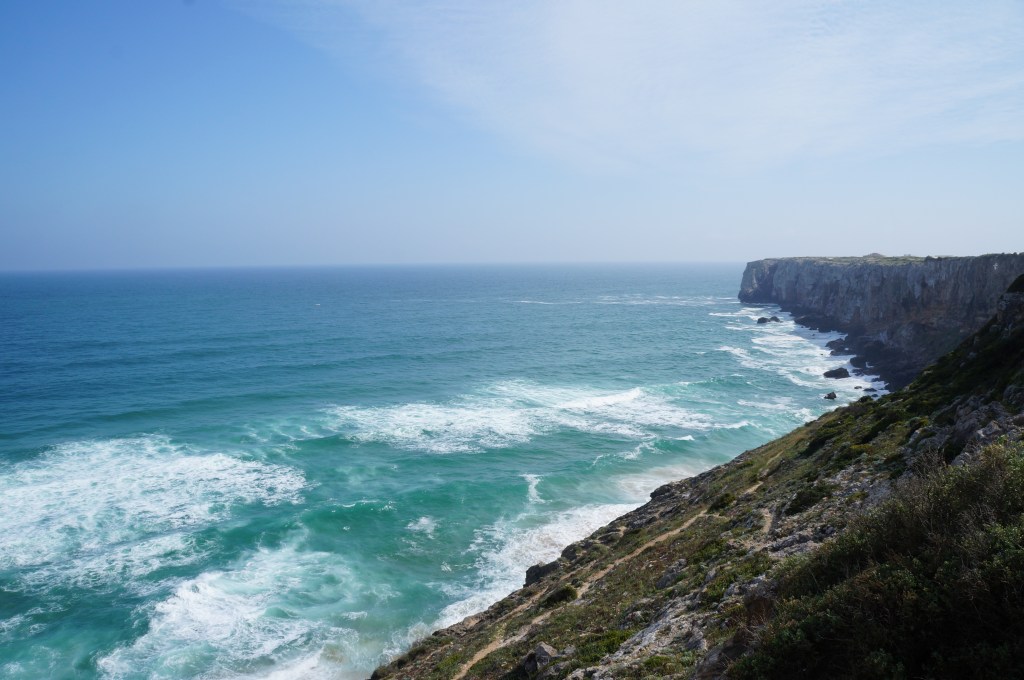
- Sagres is a coastal town, and is the most south western point of the continental Europe. There is a fort there you can see, but there’s almost no educational information on site. The views from the coast are worth it, but if you’re keen to learn history, study up before you go (most Portuguese museums are low on information in this way)
- Restaurant recommendation: A Sagres
- This places serves incredible fresh seafood dishes
- Order the special of the day…
- Good things we had here: Clams are a must, percebes (goose barnacles), a fish/shrimp stew with pasta, and of course, their grilled sea bream.
- Read about our trip there.
-
Carveoiro
- Our score: 4/5
- Faro is east of the centre of the Algarve. Alte is pretty much in the centre. As you go more west, towards Sagres, you’ll go through Carveoiro. It’s a gorgeous seaside town. I’ve only been there for dinner, but Kevin has been in the day and he says the beaches are beautiful.
-
Silves (Northeast of Carveoiro)
- Our score: 3/5
- Silves was a majorly important site and city back when Portugal was under Moor-ish control, and after that time as well. Silves is a wonderful and historic town, and it boasts the Castle of Silves. Well worth seeing!
- Castelo do Silves (the Castle of Silves) is a beautiful place to visit. The museum is fairly informative and the castle itself is open enough that you can explore as much of it as you’d like. Naturally, it also contains a cafe where you can enjoy the sunshine and a beer while sitting in a castle that’s over a thousand years old.
- Read about our trip to the castle here.
-
Alte
- Our score: 5/5
- Alte is a small town in the interior of the Algarve. Kevin’s grandparents are all from within 10km of here, and his grandmother currently lives there (this is where we stay when in Portugal). There is actually a hotel here, up in the hills, if you’re interested (Hotel d’Alte).
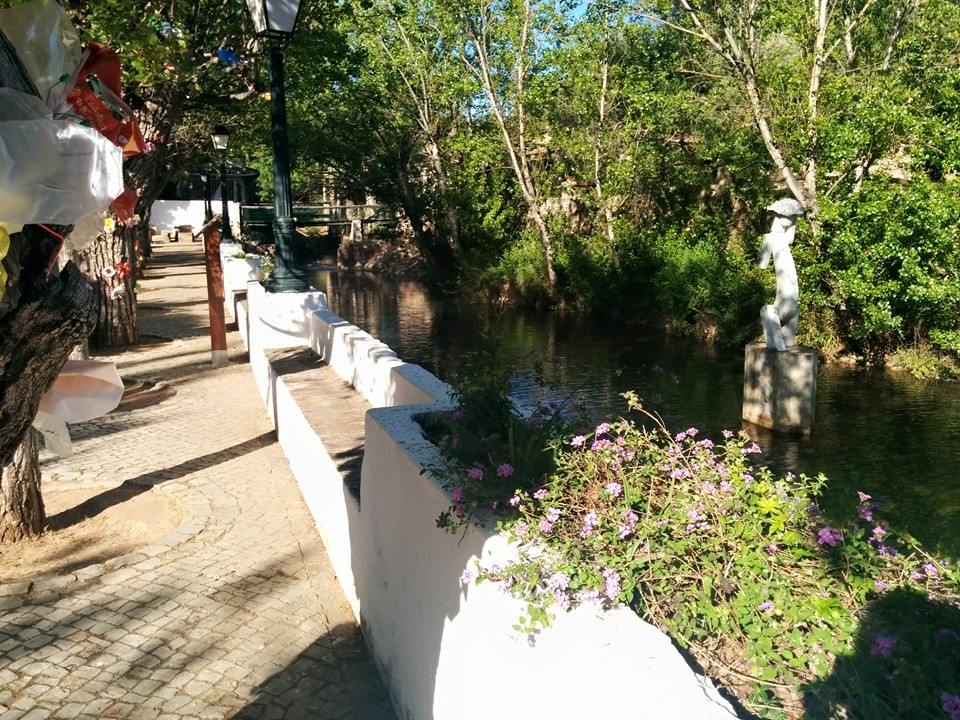
- It’s famed as one of the most “traditional” or “typical” villages in the Algarve. In addition to being a really cute town, it also has a stream running through it, with public pools and spaces built in/along the stream that runs through the town. These are called the “Fonte Grande” and “Fonte Pecana”
-
Things to do:
- Walk around the town and take photos of the beautiful buildings and cobblestone streets
- Check out the churches, one of which is 500 years old
- Go to the Fonte Pecana and then walk from there to the Fonte Grande.
-
Places to eat:
- Agua Mel Cafe (4/5) They make the best pastries in town, and the best espresso. They make a pastry that is specific to Alte, called the “pastel d’Alte”. They also bake a lot of the pastries served at local restaurants. Along the back of the restaurant is a large balcony that offers stunning views of the valley.
- Fonte Nova Snack Bar (5/5) – This is our favourite place toOrder whatever is the special. Do not even open the menu. The food is insanely good and well priced. The owner is ‘Ze, and his son is Tiago. Both have known Kevin his whole life.
- Marreiros (5/5) – This restaurant is located just outside of Alte (37.276088, -8.228469). Carlos is the name of the owner his restaurant offers one of the best (and best value) meals in the Algarve. All meat and veggies are organic, bred by him. The food is so delicious and such a good deal. It’s a true local experience and a great showcase of the relationship between Portuguese cuisine and the Algarve landscape.
- Read our blog posts about Alte: here, here, here, and here.
-
Central Algarve – Interior
- Because Kevin and I stay with his grandmother in the central Algarve, we also eat and beach in this area. The interior of the Algarve is full of beautiful country roads and scenery and often roaming herds of farm animals. It’s also home to some truly excellent restaurants!
-
Places to eat:
- Restaurante Veneza (5/5) – This is one of our favourite restaurants in all of Portugal. The proprietors are wine dealers in addition to running an excellent restaurant. It’s completely unpretentious, and beautiful. You can eat in front dining room, or in the back in the ‘garafeira’ – Portuguese for ‘bottle storage room’. The food is best described as high end Portuguese comfort food. It’s warm, delicious, and thoroughly portioned, with many plates served family style. The wine selection is also unmatched. Their port wine collection is one of the best in Portugal.
- Ramires (5/5) – This is our go-to spot after a day at the beach, located in a little town called Guia. Ramires is essentially a bbq chicken food hall. Order the chicken piripiri, french fries, and tomato salad, along with a bottle of vinho verde (green wine). We promise you’ll be satisfied.
- Restaurante Antiquarios dos Leitoes (2/5) – If you’re in the area, this is a really good local, traditional restaurant, that serves BBQ pig. The food is delicious and the service is great. Similar to Ramires, the formula for ordering food here is: pork, french fries, salad.
- Pizzeria Casavostra (1/5) – We don’t recommend this place super strongly, but if you’re craving something more North American, and if you’re interested in seeing what upper middle class Portuguese people think is fancy to spend their money on, you could go here.
- Frutos do Mar (5/5): We went here with a local friend and loved it. It’s all traditional seafood cuisine, so if eating mariscos (shell fish) out of a pot doesn’t appeal to you, stay away. If you like shellfish you will love this place. Order the cataplana! It’s located in Quarteira which is known as the place where Portuguese people have apartments. It just happens to be a densely designed place with tons of apartment buildings, and a lovely beachside boardwalk, so it’s a common go-to for Portuguese people visiting from within Portugal or from abroad.
-
Central Algarve – Beachside
- The Algarve has one of the longest uninterrupted beaches in the world, so if you’re looking to beach in the Algarve then you have plenty of options. For the sake of convenience, Kevin and I visited beaches in the centre of the Algarve. Below are some of our favourite beaches and beachside bars:
- Restaurante Pedras Amarelas – this was our go-to small beach. Their beachside bar is second to none for its easy laid back vibe.
- Address: Praia de Galé, 8200-428 Guia – Albufeira, Portugal
- Praia Gale – this is a large beach beside the small beach at Pedras Amarelas (above). If you like long walks on the beach and spending time where the locals go, this is the beach for you.
- Restaurante Evaristo – This beach is quite small and its restaurant is pricier than most. However, the restaurant offers great food and it sits right beside the ocean. This is a great place to visit if you want to watch a sunset while enjoying a glass of wine.
- Address: Praia do Evaristo, 8200-903 Albufeira, Portugal
- Praia dos Pescadores in Albufeira – This is one of the most famous beaches in the Algarve. Albufeira is a popular party town for young British tourists, and the beach is always packed with tourists and locals alike. There are many bars and clubs in the Algarve, and after bars close there are often club events on the Albufeira beaches.
- Praia Sao Raphael – This beach is tucked in behind a neighbourhood of expensive time share homes. It’s in a relatively small cove, and it’s one of my favourite beaches. The restaurant there makes unbelievably fresh and delicious seafood. Highly recommend! It’s also a great place to try paddle boarding.
- Praia da Falesia: This beach is the most eastern of all our options. It’s famous for its beautiful red cliffs, and is another great beach for long walks and spending time with locals. This beach is near the towns of Vilamoura and Quarteria, which are where you’ll find many wealthy Portuguese tourists.
- Quinta do Mel (5/5): This is near the Praia da Falesia and it is fairly different than other places on this list. It’s technically a hotel, but also includes a cafe/restaurant. The outdoor patio is a beautiful place to relax and enjoy the surroundings. They make delightful cocktails, and you can also check out the garden where they grow their herbs. Highly recommend!
- Restinga – This is a bit more west than our other recommendations. It’s a beautiful beachside restaurant in Alvor. The owners also own a nearby restaurant called A Lota that come highly recommended. Both are great spots for fresh seafood, good wine, and great service.
- Vila Joya Sea – Vila Joya is a hotel near Praia de Galé that has a Michelin starred restaurant. Back in day, we used to go hiking along the beach cliffs just south of this hotel. Now, one of the lookout points from our hiking route is home to this small and beautiful restaurant, Vila Joya Sea. The cuisine focuses on fish and we ate some of the best sushi of our lives there. You will need a reservation to go. Try to be there around sunset when the views are best. Great wine, food, and cocktails.
-
Loule (pronounced Low-lay)
- Our score: 3/5
- Loule is a regional city. It’s smaller than Faro, but bigger than most other towns in the Algarve. The downtown is full of beautiful old buildings, the most notable of which is the Market. It’s worth a visit for a few hours of shopping. Read this blog post to learn more about Loule.
- Restaurant option: Avenida Velha (2/5) – This traditional Portuguese restaurant is quite very old, and run by an older couple. It’s not always open, but head upstairs to check it out, and eat there if it is!
-
Faro
- Faro is the capital city in the Algarve, and it’s a great place to explore, with lots to see. If shopping is your thing, this is where you’ll find the biggest shopping centres, but we recommend you head to the downtown core beside the sea.
-
Places to eat/drink:
- Columbus Wine & Cocktail Bar (2/5) – a great bar on the waterfront in Faro
- Papparazzi (2/5) – Italian food, which isn’t really what you want when in Faro, but if you’re craving it, this place is pretty good. Very good prices for lunch.
-
Palacio do Estoi
- Our score: 2/5
- This palace is located in the town of Estoi, up in the hills North of Faro. It’s an old private palace that is now a boutique hotel.
- As a tourist can walk around to explore their open rooms and gardens, and then have lunch on their patio. The view goes all the way to the ocean, and it’s a the perfect romantic spot to order a bottle of vinho verde (green wine) on the patio and enjoy the sunshine. Read about our time there in this blog post.
-
Olhao
- Olhao is a fishing town along the coast in the Algarve, just East of Faro. It’s well known for it’s fresh fish, which is the primary reason we would recommend visiting there. If great seafood is your thing, then you should visit Olhao.
-
Places to eat:
- Restaurante Casa De Pasto Algarve (5/5) – This is one of the most famous restaurants in Olhao, in addition to being one of the oldest. If you go, order the ‘skate’ and the razor clams. They are not for everyone, but if you like experimenting with new foods, give it a try! As it’s a more traditional family run restaurant, expect service to be slow.
- Address: Praça Patrão Joaquim Lopes 18, Portugal
- Tapas e Lendas (3/5) – This restaurant is geared at younger people, and takes a modern/fusion approach to making Portuguese “Petiscos” (like tapas but bigger portions). When we were there they also had some kind of cauldron-related dinner theatre.
- Restaurante Casa De Pasto Algarve (5/5) – This is one of the most famous restaurants in Olhao, in addition to being one of the oldest. If you go, order the ‘skate’ and the razor clams. They are not for everyone, but if you like experimenting with new foods, give it a try! As it’s a more traditional family run restaurant, expect service to be slow.






 the stories that I'm telling.