Category: Sintra

  • Roadtrip Day 1 (still!): Quinta da Regaleira

    Roadtrip Day 1 (still!): Quinta da Regaleira

    If you’ve ever read this blog, you know that we typically take our travel slowly. Even if that means we miss out on some possible sites, we always try to spend the maximum amount of time in our travel pursuits, in an attempt to really understand where it is that we’re visiting. Clearly we didn’t quite take that approach on our road trip, where we packed quite a bit of stuff in. I mean, we’re now 3 posts into Day 1 of our Sintra road trip, and yet we still drove another 2+ hours on this day!

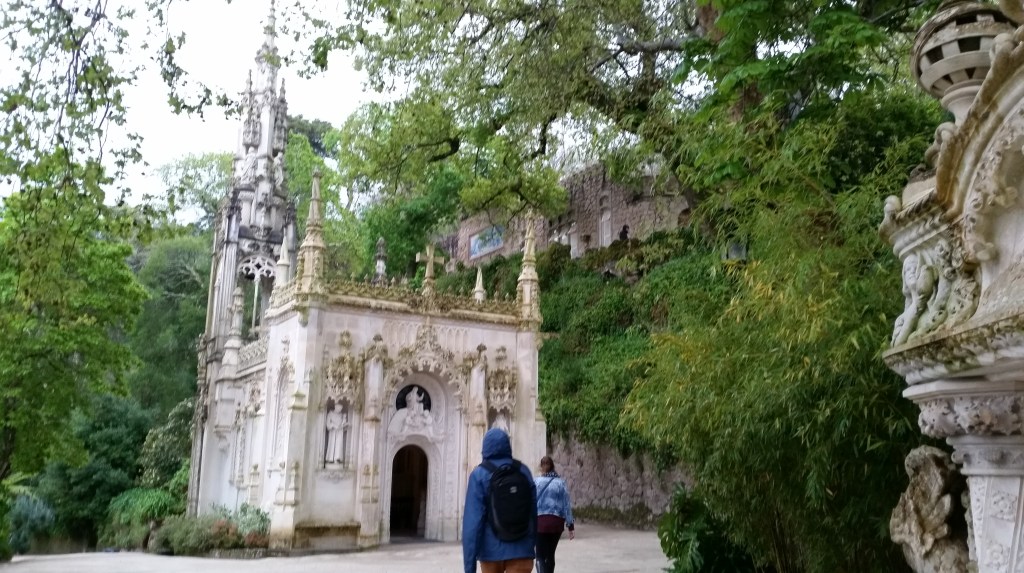
    Our wonderful friend, Soledad, insisted that we visit “Quinta da Regaleira”. It roughly translates to being “Estate of Regaleira” (the land was once owned by the wealthy Regaleira family from Northern Portugal). Soledad told us that this was her favourite place in the world, and once we arrived we realized why. We also very much regretted not budgeting more time to be here. There was so much to see, and we certainly didn’t let the rain slow us down!

    The Quinta da Regaleira is essentially an estate that was once owned by a rich guy with big dreams of making something fancy. And this guy, António Carvalho Monteiro (actually nicknamed Moneybags Monteiro) sure achieved his goal. He was an eccentric guy who leveraged his family fortune to become a coffee tycoon in Brazil, then returned to Portugal study everything from law to bugs.

    After purchasing the land in 1892, he spent until 1910 creating a magical villa and gardens, a neo-Manueline extravaganza all dreamed up by Italian opera-set designer Luigi Manini (Lonely Planet).

    Despite the rain, we spent most of our time exploring the extensive gardens. This place is a landscape architect’s dream, boasting arches, gazebos, grottos, aquariums, gardens, patios, paths, fountains, tunnels, bridges, and more. The highlight is almost certainly what’s known as the “Initiation Wells”. We spent at least 30 minutes trying to find them, and it was well worth the effort. Here’s some background info, courtesy of our friends at Ancient-Origins.net:

    The pair of wells, known as the ‘Initiation Wells’ or ‘Inverted Towers’, consist of ‘winding stair’ architecture, which carries symbolic meaning including the death/rebirth allegory common to many hermetic traditions.

    One of the wells contains nine platforms, which are said to be “reminiscent of the Divine Comedy by Dante and the nine circles of Hell, the nine sections of Purgatory and the nine skies which constitute Paradise.” A smaller well, called the “Unfinished Well,” contains a set of straight staircases, connecting the ring-shaped floors to one another. It is believed that the spacing of the landings, as well as the number of steps in between were dictated by Masonic principles.

    The two wells are connected to a series of underground tunnels and caves. Once we entered the primary initiation well, we descended deep underground.

    To our great delight, we ended up in passing through the other well and entering a grotto/lake/waterfall area. We were beyond thrilled at this turn of events. We’d been freaking out about the beauty of this site all day, but this discovery topped them all, and we immediately agreed that Soledad was right about this place.

    The inside of the mansion was pretty cool as well, but nothing close to the outdoor gardens and its secrets. If you plan to visit this site, give yourself at least 3 hours to see everything!

    Check out the photos to see all this beauty for yourself (some are a bit blurry due to the rain – we were completely soaked, as was the phone!):


  • Roadtrip Day 1: A Moorish Castle and Palace of Pena

    Roadtrip Day 1: A Moorish Castle and Palace of Pena

    We typically take our sweet, sweet time when doing anything, but because we were on a road trip, we had certain goals for where to be and when to be there by. We were also exploring unfamiliar territory, and perhaps underestimated how much time we’d want to spend in certain places.

    That said, everything that we saw on the first day of our Road trip was within the magical area known as Sintra, where castles and natural beauty abound. There are tons and tons of incredible sites to see in Sintra, but we oriented our trip to the advice of our friend Soledad, and selected those she described as ‘must-see’ items.

    We visited 2 different castles on that day, and they couldn’t have been more different: The Moorish Castle, and Palace of Pena.

    Let’s start with the Moorish Castle.

    The Moorish Castle was the decidedly more ruin-y of the two. It is a military fort built around the 10th century by the Muslim populations that occupied the Iberian peninsula. It acted as a control tower for the Atlantic coast and land to the north, serving as an outpost for the city of Lisbon.

    For a building that’s more than 1000 years old, it was in pretty decent shape. All of the exterior castle walls remain, and we were able to walk up, down, all around, and catch amazing views throughout. From the top of the castle walls, you can see all that’s built up in the Park in the centuries since: a town, castles, mansions, etc. And yet, you can imagine how it felt 1000 years ago to look out and see no evidence of other people. Placed atop a large hill, this place is definitely an impressive and well planned military location.

    And not *just* military either. After the large castle walls had been built, people began to settle just outside of them. A “second circle of walls” was later built to protect these settlements.

    If you’re interested in the nitty gritty history timeline for the Castle of the Moors, check out Wikipedia.

    After the Castle of the Moors, we headed to the Palace of Pena.

    While it was cool, the Palace of Pena (Palacio da Pena) is one road trip stop we could’ve done without. We crammed a lot of sites into this road trip. That’s not usually our style, but we went a bit overboard with expectations for what we wanted to see. In its defense, it’s part of a large garden complex, but we only saw the castle itself, because it was raining and we were rushing to see another place afterwards (more on that later this week!). By rushing to see the Palacio, we cost ourself some appreciation of its history. The routinely under-informational museum pamphlet also didn’t give us the full story of site.

    Here’s what Wikipedia has to say:

    The palace’s history started in the Middle Ages when a chapel dedicated to Our Lady of Pena was built on the top of the hill above Sintra. According to tradition, construction occurred after an apparition of the Virgin Mary.

    In 1493, King John II, accompanied by his wife Queen Leonor, made a pilgrimage to the site to fulfill a vow. His successor, King Manuel I, was also very fond of this sanctuary, and ordered the construction of a monastery on this site which was donated to the Order of Saint Jerome. For centuries Pena was a small, quiet place for meditation, housing a maximum of eighteen monks.

    In the 18th century the monastery was severely damaged by lightning. However, it was the Great Lisbon Earthquake of 1755, occurring shortly afterwards, that took the heaviest toll on the monastery, reducing it to ruins. Nonetheless, the chapel escaped without significant damage.

    For many decades the ruins remained untouched, but they still astonished young prince Ferdinand. In 1838, as King consort Ferdinand II, he decided to acquire the old monastery, all of the surrounding lands, the nearby Castle of the Moors and a few other estates in the area. King Ferdinand then set out to transform the remains of the monastery into a palace that would serve as a summer residence for the Portuguese royal family. The commission for the Romantic style rebuilding was given to Lieutenant-General and mining engineer Baron Wilhelm Ludwig von Eschwege. Eschwege, a German amateur architect, was much traveled and likely had knowledge of several castles along the Rhine river. The construction took place between 1842–1854, although it was almost completed in 1847: King Ferdinand and Queen Maria II intervened decisively on matters of decoration and symbolism. Among others, the King suggested vaul tarches, Medieval and Islamic elements be included, and he also designed an ornate window for the main façade (inspired by the chapter house window of the Convent of the Order of Christ in Tomar).

    Having done my Wikipedia research, it’s clear that this place’s history actually fits well with many of the other sites that we saw in Sintra and in Tomar. That information was definitely not in the pamphlet we received upon entering, but either way we had a fun time. It’s by far the most colourful castle I’ve ever seen, which gives it an almost-comical appearance.

    All this site-seeing constituted just part of our day. Enjoy the photos below, there’s more to come from our final (and favourite!) stop coming soon.


  • Roadtrip Day 1: Exploring the Convent of the Capuchos

    Roadtrip Day 1: Exploring the Convent of the Capuchos

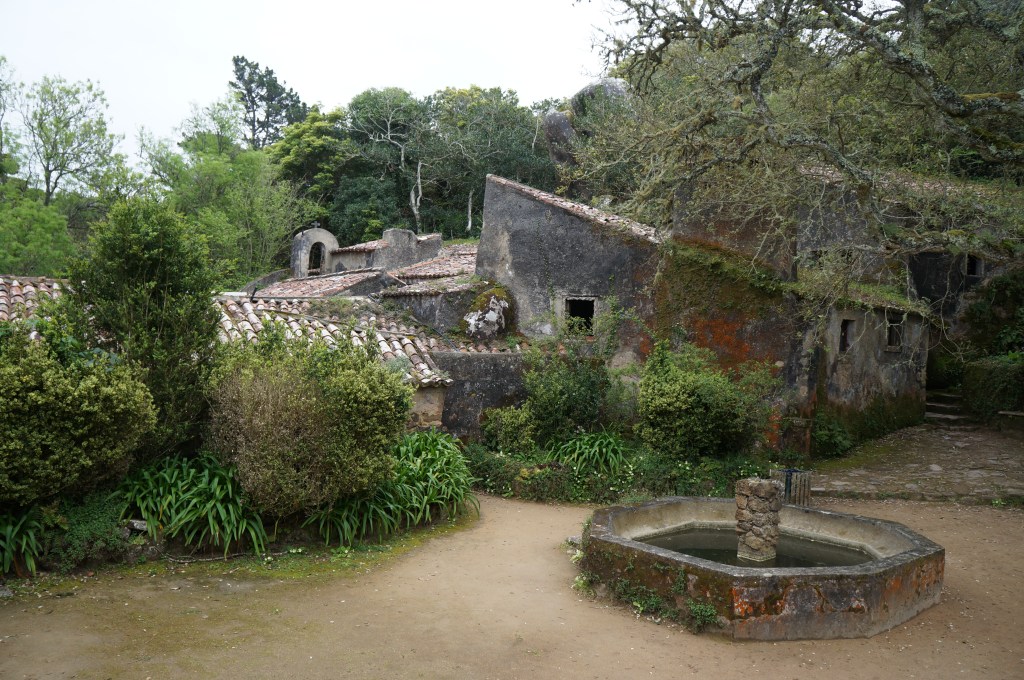
    After stopping at the Cabo da Roca, we drove back into the Sintra-Cascais Natural Park. The drive alone was incredible: beautiful trees, winding roads that twisted up a hillside. Our next stop was at ruins of the centuries old Convent of the Capuchos.

    Literally translating to the “Cork Convent”, its name comes from the insulation used in the construction of the buildings here. It was first formed in the mid-1500s, and according to the lovely brochure that I’ve been saving for this exact occasion,

    The Cork Convent was built in accordance with a philosophy that stressed harmony between human and divine works, for which reason the building merges inseparably with nature and the surrounding vegetation, incorporation enormous granite boulders. Through the exercise of contemplation, fulfilling the teachings of Saint Francis of Assisi, the friars worshipped the Creator through what they considered to be His greatest work; the natural world”

    Though the convent has ceased to be operated as such, and is now simply a series of ruins to be toured by visitors, you can easily see the convent’s philosophy at work. It’s impossible to wander through the small buildings, built into the side of a hill, without reflecting on the beauty and calming effects of nature. The smell and feel in the air of so much nature all in one place was truly magical. And this magical place really was the perfect start to a magical day in magical Sintra.

    We spent about an hour exploring all the nooks and crannies of these small, simple buildings. We snapped some great photos, and also some “band photos”. There were lots of laughs at this early point in our roadtrip, and that continued on throughout the day.

    Check out the photos below!

  • Roadtrip Day 1: We went to the edge of continental Europe!

    Roadtrip Day 1: We went to the edge of continental Europe!

    A quick post today before we head out to the beach. This post is a bit late coming, but Kevin’s best friend Mark is currently visiting, so we’ve been out and about (we also drove to Lisbon to pick him up 2 days in a row, because the first day we drove up we were a day too early).

    Anyways, when Tyler was here, our post-Lisbon road trip began with a drive to Cabo da Roca, a lighthouse at the westernmost point of continental Europe. Perhaps not the coolest claim to fame of all time, but it was gorgeous nonetheless.

    The western coast of Portugal is dotted with gorgeous cliffs, and Cabo da Roca is no exception. It’s a popular tourist attraction in the picturesque Sintra-Cascais Natural Park, and was the first of many beautiful spots that we saw in Sintra that day. Because it was March, we were 3 of maybe 8 people there that day. Being along the cliffs, with the beautiful green fields behind us felt magical. It was a great to start to an excellent day.

    See below for the photos!