Blog

  • The market in Loule and the Festa Chocolat!

    The market in Loule and the Festa Chocolat!

    Both of Kevin’s grandmothers live in the Algarve, and that means double the fun for us.

    And the Portuguese are a people who love festivals, which means even more fun for all of us.

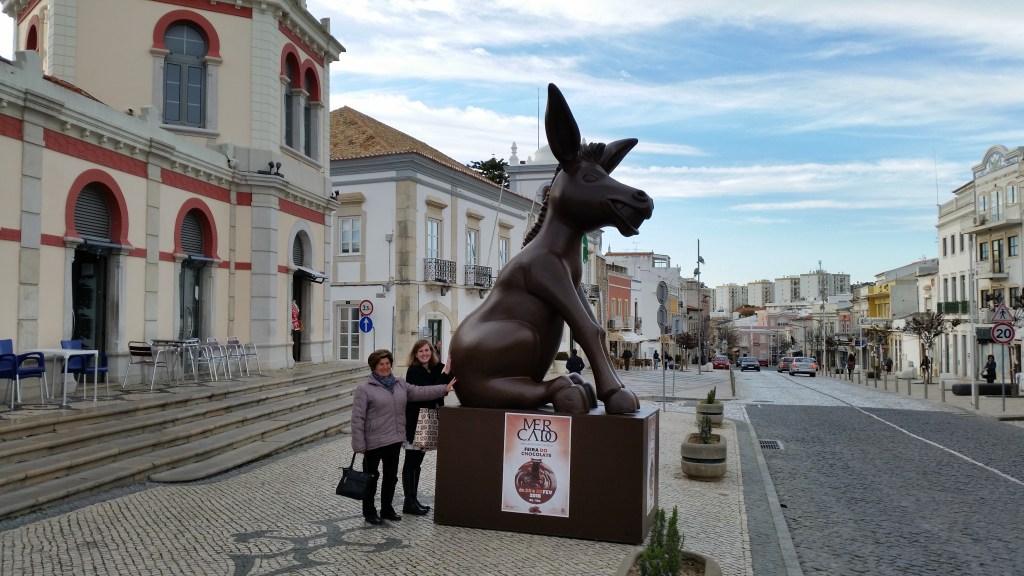
    Avo Maria lives in a mid-sized city called Loule. It’s hundreds of years old, and it has a strong Moorish history. That history is most obvious in the recently-renovated-but-very-old Market of Loule. It’s over 100 years old, and you can see lots more photos of it on this blog right here.

    We love a good “festa”, which is why we made sure to go to the Festa Chocolat (chocolate festival) with Avo Maria. As expected, all the temporary stands were packed with a variety of chocolately goodness. Cupcakes, cookies, chocolate candy, crepes; this festa had everything!

    We only took a few photos, but here they are. Nothing better than a quick afternoon jaunt to a chocolate festival at the market (followed by a trip to the cafe, obviously)!


  • Life with a garden in Alte

    Life with a garden in Alte

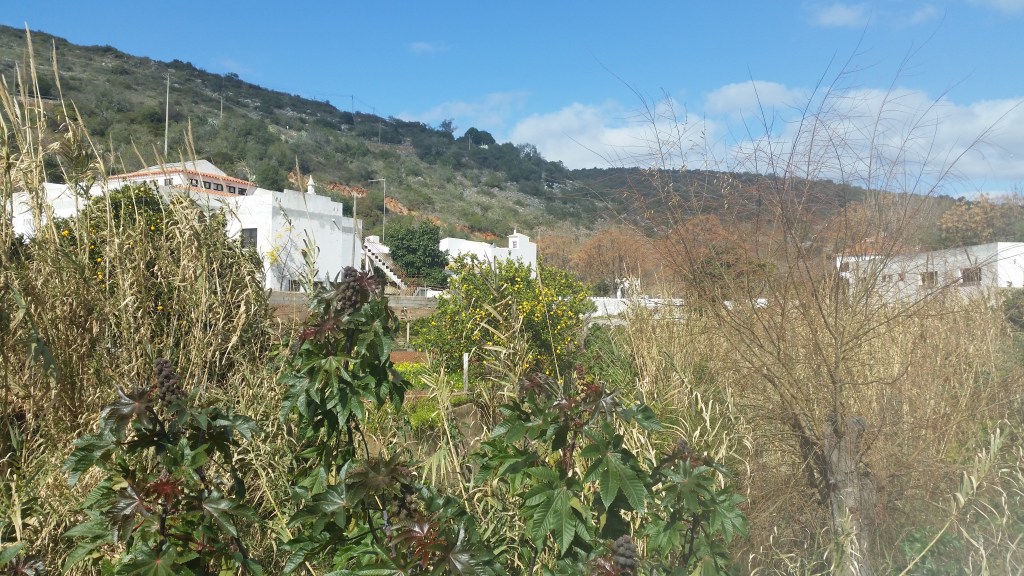
    The garden at Avo Olimpia’s house in Alte is not just for lemon trees and orange trees. It’s also a place for herbs and flowers.

    Many, many flowers. In particular, roses.

    When I was growing up, my grandparents had a truly incredible rose garden. I frequently remember walking through the garden with my grandparents, examining the roses, learning their names, and choosing favourites. I’d never expected to experience rose-induced nostalgia, but as winter ended and the roses began blooming in Alte, it hit me. And it kind of freaked me out, too. Kevin and I would walk through the garden, he’d pose question about a flower, and I’d know the answer. For a small amount of time, I felt the like the Jason Bourne of gardening. Totally weird, but also nice to be reminded that there is lasting evidence from that time in my life, beyond simple memories.

    Beyond roses, the gardens in Alte are filled with the types of flowers you typically only see in bouquets in Canada. The weather here is far more forgiving, which means that plants which die during the winter at home actually survive here. Not only do I get to see unique flowers, I also get to see flowers that are larger than I’ve ever seen before.

    Take a look below to see some shots Kevin has captured in the garden over the past couple of months. Beautiful colours, beautiful flowers, beautiful memories.


  • Wait, where exactly do I work?

    Wait, where exactly do I work?

    “Work” is kind of a funny concept. I do a lot of work on different fronts, but I’m currently only monetarily compensated for one of them. Things like blogging, writing TripAdvisor reviews, helping friends write CVs, exploring ideas for future projects, don’t have immediate financial dividends.

    However, I do have a paid job, working remotely for a tech startup based in San Francisco. Often when I talk about work, I’m talking about that job as well.

    The name of the company is RecruitLoop. Here’s our story:

    I met RecruitLoop when I worked at a different tech startup, Influitive, in Toronto. Influitive makes an advocate marketing software, which aims to help b2b companies create online communities of their best users/advocates. RecruitLoop was a customer, and I knew them quite well because I worked in frontline customer support.

    When they found out that I was quitting my job at Influitive to go abroad and spend some time living in southeast Asia, they offered me a job. Part of that job involves operating the community platform that Influitive created, since RecruitLoop is a customer.

    RecruitLoop began in Australia, and then opened a US office around 2 years ago.

    We’re a marketplace company, aimed at connecting independent, billable-by-the-hour recruiters with companies looking to hire. RecruitLoop finds the recruiters and the clients, bringing them both together, and makes a software that is used to manage the hiring engagement between the two parties (it’s kind of like Air BnB for recruiters that bill by the hour). You can see our list of recruiters here: recruitloop.com/recruiters

    They hired me to work with/manage our Australian client base, which is quite large since the company has been operating there since 2011.

    There was a big internal shift at the company recently, which has led to a much bigger focus on growing our number of recruiters, so my job has changed quite a bit (typical in a startup, particularly one as small as RecruitLoop – we’re just 9 people in total!).

    My job title is Customer Success Manager, but the focus of my job changes constantly. At any given time I can be selling RecruitLoop to clients, helping recruiters manage their client relationships, designing email marketing campaigns, managing our community of advocates, creating educational content for recruiters, troubleshooting technical issues, chasing invoice and revenue and beyond. It’s less a question “what do I do?” and more a question of “what needs to be done?”.

    With so much to do, you’d think it would be hard to work remotely, but fortunately it’s par for the course at RecruitLoop. We have people working in San Francisco, Berkley, Sydney, the Philippines, and wherever I am. I have Skype calls with various team members almost everyday, and I actually love working for a tech startup from outside of ‘the valley’. I think my remote location helps me keep a fresh perspective on my job and on the tech startup industry itself.

    As for my location, I’m very lucky – as long as I’m online for Australian hours, then I can be anywhere. This was obviously very easy in Asia. It was a bit challenging in Canada, and it’s quite awkward in Portugal – I typically work from 8pm to 4am GMT so I can be online for most the day in Australia.

    Working while travelling has been really great, though sometimes I wonder if I miss out, since I end up spending so much time indoors, working. Still, it means I can travel this way for longer, which I love.

    Here are some photos of the various places I worked over the past year:


  • Welcome to Portugal, where you can’t do things quickly, even if you try.

    Welcome to Portugal, where you can’t do things quickly, even if you try.

    At the beginning of 2015, I had 2 goals for this blog:

    1. Continue to write regularly

    2. Write more about my feelings and experiences, as opposed to a steady stream of I-went-here stories (though I do plan to continue those as well!)

    June is around the corner and I’ve published so few posts that I have an actual backlog list of 20 blog posts waiting to be written. They’re coming, I promise!

    Today I bring you a brief post about my personal state of mind and a rather funny realization that Kevin and I had today.

    You may have heard people joke about the slow pace of Europe, particularly southern Europe. Let me be the first to tell you, that shit is no joke.

    When you wake up to sunshine and birds singing and fresh orange juice from the backyard, work just doesn’t seem all that important. While I was in Cambodia, I worked non-stop. Don’t get me wrong, I took plenty of time for fun, but I didn’t have social ties or distractions, and so it was easy for me to throw myself head first into nonstop work. Without that, this blog probably wouldn’t even exist.

    In Portugal, there are many distractions. Both literal and mental. With a car and with Kevin’s familiarity with the Algarve, it’s all too easy to find things to do. And it’s hard to explain, but this place just feels relaxed. Life in the Algarve is just so damn pleasant, you never feel guilty for not “getting shit done”.

    On top of that, with Kevin’s dental disaster continuing on an open-ended schedule, we quickly learned to stop asking questions or talking about “what’s next”. It’s hard to plan the next adventure when you don’t even know when it can begin.

    This week has marked the first time since January that we’ve felt comfortable discussing that elusive “next”, possibly even laying down a timeline. We’re still in southern Europe, but these thoughts and possibilities kickstarted something in both of us.

    We’ve both spent the past 2 days working feverishly. It feels natural to fall back into a work-hard groove, getting lots of things done, and quickly.

    Which brings us to today. We had big plans: get up early-ish (11am, since we stay up till 4am while I work – more on that later!), go to the grocery store at the Algarve Shopping mall, come home, then head back to the mall to see a mid-afternoon screening of Mad Max. After all, it’s Tuesday. Indulging in Tuesday movie deals was a well-followed tradition for us in Toronto.

    So that was our plan. A bit more rushed than our typical schedule, but that’s no problem, right?

    Ha!

    Instead of a quick trip to the grocery store with Kevin’s grandmother, the three of us ended up checking out several shops throughout the mall, then having lunch, and then realizing,”shit, it’s 3pm, we’ll have to rush, but we can definitely make that film at 4:30 if we hustle”.

    Ha!

    We did the fastest grocery shopping we’ve ever done in Portugal. We thought that by rushing our shopping, we’d get in and out quickly, and home in time to go to the movies. Of course, we couldn’t have planned for this:

    – the grocery store was under construction and every single section had been moved somewhere new

    – at this grocery store, you have to weigh your produce at a special station before the checkout. Not only did we forget to weigh our watermelon, so did the two families in line ahead of us. And obviously it took them twice as long as us to resolve that issue.

    – for almost 10 minutes on our drive home, we were stuck behind a rather slow-moving tractor

    Ha!

    On the drive home, the realization hit me: we’re back in North American mode, but we’re still in Southern Europe.

    Even if we’re in the mood to really ‘get shit done’, we’ll drive ourselves mad if we don’t keep in mind that the Algarve is too relaxed to be compatible with our North American, do-things-fast mentality.

    Fingers crossed that this new surge of energy for working will keep me posting more regularly!

    And just for all that reading, here’s a series of photos us relaxing around Alte and of me making orange juice in true, laid-back, Algarvian fashion:

  • Welcome to Alte!

    Welcome to Alte!

    Kevin and I have been here in Portugal for awhile, so it’s about time that I let y’all know about exactly where it is we’re staying.

    Both of Kevin’s grandmothers live in the Algarve (southern region of Portugal), which is where they retired after years of working in Canada. I’ll write separate posts about each of them later, but suffice to say that they are two rather feisty, independent women. Kevin’s entire bloodline (pre-parents) come from the Algarve, all within a 30km radius. So the Algarve really is special to him and to his family.

    While one of his grandmothers lives in a mid-sized city, the one that we’re living with, Avo Olimpia, lives in a small town of about 1100 people. When Kevin was growing up, his grandmother would spend 6 months of the year living with his family in Toronto, and the other 6 months would be spent in Alte. As such, Kevin and his brother grew up spending every summer visiting his grandmother here. As much as Kevin is from Toronto, he’s also very much from this small Portuguese village. And it’s obvious every time that we go out, because he knows every. single. person. here.

    But let’s get back to Alte itself. This tiny little village is rather famous, so much so that it has its own Wikipedia article. It’s also extremely popular as a tourist destination, and I found the best Alte description on a website about tourist destinations in the Algarve:

    Considered by many as the most typical algarvean village, Alte is a small village of white-washed houses nestling amidst trees and mountains, the image of old Algarve. Situated in central Algarve, the village dates from Roman times and has a Moorish past that can be observed in the detail filigree chimneys that adorn the houses.

    In the centre of the village you will find the Church dating from the 13th century, the chapel houses some very special hand painted pieces dating from the 16th century. There is also an old water mill which also dates from the 13th century.

    The focal point of Alte are the two springs. Fonte Pequena and Fonte Grande (Small Spring and Big Spring). In the olden days the women of the village gathered at the springs to fill their pitchers and wash the laundry. Now, the springs are the ideal place to enjoy a relaxing picnic in the calm tranquillity of this village.

    My friend Anne recently visited us here, and she describes this place as a fairytale. It really does have everything: beautiful water features, a waterfall, super old/beautiful churches, cobblestone streets, the view of a town built into a hillside, and the most relaxing sounds. There’s hardly any traffic, so most of day all you hear are the stream flowing and the birds chirping. There’s an interesting array of stray cats (all fed by grandmothers) and other wildlife. In the stream behind the house you can see ducks, geese, fish, and turtles. And in a tree beside the Fonte Pecana you’ll find a couple of chickens and a rooster. There are also horses. Sometimes you see people riding them through the streets!

    Aside from the natural beauty of Alte, there’s the beauty of the community itself. When you go out here, it’s important to always says “good morning” (bom dia), “good afternoon” (boa tarde), or “good evening” (boa noite) to each person you encounter. Basic manners in a small town, I guess. And half the time, that person knows Kevin and/or his family, and will stop to chat. Kevin’s family is rather well-known here, and having spent his summers here, Kevin himself is rather well known. He actually has life-long friends here, which is pretty cool. You’re hard pressed to find someone who won’t describe knowing Kevin when he was just small child.

    I thought that growing up in Grimsby gave me a small town experience? Kevin’s life in Alte is actually as small town as it gets. And not in an unpleasant way. Yes, when you go for coffee or go to the pharmacy, everyone asks about Kevin or his teeth or his grandmother. Yes, people know things about you and talk about what you’re up to. But it’s because the people here are pleasant and nice. Because they’re invested in knowing each other. The people are relaxed and they’re interested in having a good time.

    Case in point? There are SO many events that happen in this small town, all of which involve lots of eating and drinking. In fact, the last festival I went to, we ran into some old family friends. What started as a lively conversation ended with shots of medronho (local fancy moonshine).

    Here’s a quick rundown of the some of the events we’ve been to here (pictures included below):

    – Festa do Chourica (Festival of Chorizo, a version of Portuguese sausage): This was a lively festival held beside the older, smaller church in Alte. We had bread, chourica, and beer. (Of course, we got less bread than the others, because the lady giving out he bread knows that Kevin and I aren’t big bread-eaters, because his grandmother told her). There was also an auction, where we ‘won’ a jar of honey.

    – Alte BTT: this is a bike race that kicks off the cultural week in Alte. It’s organized by a local bike club, and the starting line is right in front of Kevin’s grandmother’s house. We were able to get a great view from the balcony.

    – Semana Cultural – the cultural week included live music, a comedy night, public art, dancing, and an artisanal marketplace (with great desserts)

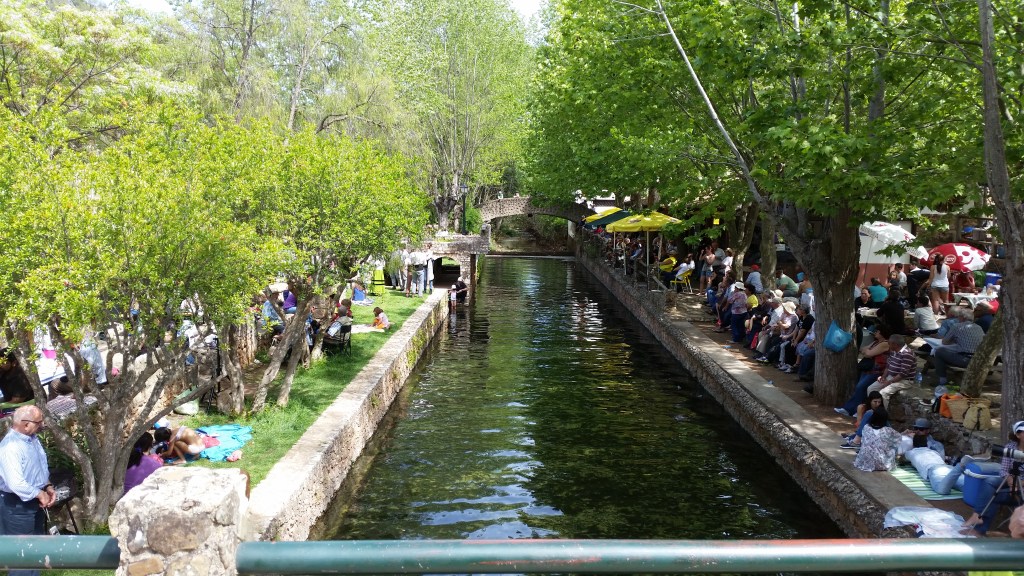
    – Folk Festival – This took place on the ending weekend of the cultural week. It was a huge event that began on the Friday, which was a holiday. The Fonte Grande was packed with tables and people who were enjoying food and beer while watching a typical folk dancing competition. The weather was beautiful, so we were able to get lots of great photos.

    Lots of photos below, enjoy!

  • January 2015: Heather & Kevin spent 1.5 days sightseeing in Lisbon.

    January 2015: Heather & Kevin spent 1.5 days sightseeing in Lisbon.

    Julie’s flight from Lisbon onward to Prague left quite early in the morning. That left Kevin and I with another day and a half in Lisbon before carpooling down to the Algarve with his godfather.

    While our few days with Julie had been about relaxation and exploratory walks throughout the city, Kevin and I knew that without direction we’d end up spending the next 36 hours napping.

    While we did make time for some naps, I also busted out my trusty ol’ pal, TripAdvisor, for some advice on what to see in the neighbourhood. The result was lots of walking and lots of looking at neat things.

    We started the day with breakfast at a truly Lisbon-esque spot. The thing about Lisbon is it’s filled with parks and cafes. And you’ll never, ever find a park that doesn’t have its own little cafe-stand. Just up the street from the place where we stayed, there was a large park that had 2 cafe stands AND a restaurant. This casually beautiful restaurant doesn’t even have a TripAdvisor review. In Toronto, a place this cool would have a 2 hour brunch line up, but in Lisbon? No big deal.

    Once we were properly fed and caffeinated, we headed to our first destination: Reservoir of the Mae d’Agua das Amoreiras and the Aguas Livres Aqueduct. Both of these are part of the Lisbon Museum of Water, which also includes an additional water reservoir, located underneath a fountain in the park where we’d eaten breakfast. The aqueduct was built beginning in the mid 1700s, and it provided the northern neighbourhoods of Lisbon with water up until the 1960s! (Fun/not-so-fun/actually-sad-and-gross fact: the aqueduct was the preferred site/tool of a serial killer in the 1800s)

    As it goes in Europe, the aqueduct was tucked in behind a bunch of other buildings in a less-travelled area of Lisbon. After some walking, Kevin and I rounded the corner and saw the aqueduct crossing a road and spanning (yet another) park. After taking a bunch of photos and freaking out about the wonders of engineering, we wanted to go inside the reservoir, but it was closed for lunch (lunch is a BIG deal in Portugal).

    We opted to return later, and headed off on another walk. Our walk took us through one of the main roundabouts in Lisbon, placed between the enormous Edward VII Park (named after a British dude!) and the Avenue of Freedom (Avenida da Liberdade). West of the park is the Estufa Fria, or “Cold Greenhouse”. Essentially, it’s large indoor garden that isn’t hot like a greenhouse. It includes a grotto, some ponds, and a host of interesting plants. Kevin and I enjoyed a leisurely walk through the garden, stopping to read our e-readers, like a couple of nerds.

    Finally, we headed back to the reservoir to see the inside. Now, I had read online that it was possible to walk through the aqueduct by entering the reservoir. We didn’t get to do that, because the gate was locked, but I would imagine it’s possible if you book your trip ahead of time.

    The Mae d’Agua das Amoreiras Reservoir, (mother of water of the Amoreiras neighbourhood reservoir, or something like that) is incredibly beautiful. It is not, however, a particularly well presented exhibit. It’s also rather expensive. When you go inside, there’s a desk where a person is working. You pay that person 5 euros each, and then walk over to get a better view of the reservoir.

    Water pours from the top of the aqueduct into the reservoir pool. The light that shines in reflects off the water, making for a beautiful visual effect to accompany the sound of the water. On top of the water, there’s actually a floating platform that you can walk on. I can imagine that it must be a great place for events, and I hope that the people of Lisbon take advantage of a cool space like that. It’s basically begging to have concerts and yoga classes and weddings on it.

    Behind the pool is a staircase that takes you to the roof of the reservoir. When you’re walking up the stairs, you can see into the aqueduct, which seems like it’d be a cool walk if it were open. From the rooftop, you get a view of the aqueduct and the city of Lisbon. 5 euros each felt like a bit of a scam, but I honestly think that the reservoir was one of the prettiest buildings/spaces that I’ve ever been in. I highly recommend checking this place out if you’re in Lisbon.

    After our sightseeing, we met up with Kevin’s godfather for lunch, ran some errands, and generally enjoyed being in Lisbon. The next day we woke up, had breakfast, lazed about, napped, and eventually drove to the Algarve, where the adventure continues…

    As always, photos below!


  • Back to the beginning: a few days in Lisbon

    Back to the beginning: a few days in Lisbon

    Back in December, when Kevin and I were in Canada for Christmas, we planned out a trip that would involve a couple of weeks in Lisbon followed by travels through Spain, all the way to Paris, where we’d then fly back to Cambodia.

    We booked plane tickets to Lisbon, Portugal for January 4th.

    Back in November, I’d been planning a January trip to Vietnam with two of my lady friends, Julie & Komal. Due to the complications of life and travel visas, that hadn’t worked out. However, Julie planned to be in Lisbon for 2 days along with Kevin and I.

    When Kevin was hit in the mouth with a hockey stick on January 2nd, I was admittedly freaking out. Not only had we booked tickets to Lisbon, but my friend had booked a trip to meet us there. Needless to say, we didn’t miss our flight. I hopped Kevin up on pain killers and got him on the plane to Lisbon. His godfather met us there, and showed us to an incredibly wonderful few days in one of my favourite cities that I’ve been to yet.

    Many photos are attached, because we were able to cram lots of fun into a few short days. One of the most important things to note is how much we were able to do while also being completed relaxed. Julie was coming off a serious bout of food poisoning, and Kevin was obviously also in quite a bit of pain. However, Lisbon is such a welcoming and easy-to-access, non-touristy, relaxed place that were able to really make the most of our time there.

    Rather than crash at a hotel, we rented an AirBnB through a group called Travel & Tales. The fine gentlemen who run Travel & Tales, Pedro & Duarte, rent out a series of apartments in the chic Lisbon neighbourhood of Principe Real.

    One of the most bizarre things about Lisbon is how similar (also better than) it is to San Francisco. Hills are one such similarity, and when Kevin’s godfather drove us up into Principe Real, and then parked on one of the steepest hills imaginable, I knew we were in for an authentically Lisbon experience. Pedro helped us check in and hooked us up with some free SIM cards for our phones, and we were off on an adventure. Oh, and the apartment we were renting? Absolutely beautiful. Historical. Interesting. Clean. Well-located. I cannot say enough good things. It really represented the best of what Lisbon has to offer.

    Relative to other European capital cities, Lisbon is geographically small and rather inexpensive. And yet, as the capital city of the once-massive Portuguese empire, it’s jam-packed with history, old-world beauty, and remnants of the colonial wealth that created it.

    The city has many interesting neighbourhoods, and an hour or two of walking can really take you through a great cross-section of the best of Lisbon. We walked everywhere and saw a lot. It also helps that the hills of Lisbon mean you’re never far from an incredible, heightened view of the city. From old plazas with fountains and monuments galore, to the city’s oceanfront, where colonial ships once presented their wealth to kingdom, to ruins, and one of the first elevators in Europe, we walked and saw it all.

    Kevin took a couple of much-needed naps, as well as an afternoon trip to a private hospital to see if his lip was actually recovering, so Julie and I also had a couple of long exploratory jaunts. On one occasion we hopped in a cab to the Belem neighbourhood. There, we sat by waterfront along the Tagus river and enjoyed some lovely January sunshine. We also saw the Jeronimos Monastery, and the “Monument to the Discoveries”. We also caught a glimpse of the Ponte de 25 April (April 25th Bridge), which is essentially Lisbon’s version of the Golden Gate Bridge in San Francisco. It’s 27th largest suspension bridge in the world. I highly suggest you click on all those links and read what Wikipedia has to say about all these sights. So many interesting things to learn! On another jaunt, we decided to start walking and just see where we ended up. Turns out that we ended up at a lookout point behind a neighbourhood that had enticed us with a long yet lovely staircase. It was the perfect spot to watch the sunset, though regrettably I didn’t have my camera. That type of magical experience is exactly what makes Lisbon so enchanting.

    With all that walking, we obviously needed to eat, and Lisbon had us covered there as well. Because Lisbon is so old, almost every building is special in some way, which makes dining that much more interesting. We opted for a couple of low-key local places for lunch, and tried some fancier dining at night. Portuguese food is simple yet delicious, and I think that would describe our Lisbon culinary experience as well.

    If you can’t already tell, I’m a big fan of Lisbon. More than that, I’m a big fan of spending time with the people who I care about. I’ll let you see more of what we did by perusing the photos below. What really made this trip special was getting to explore a beautiful city with Kevin and my dear friend Julie. If you’ve never considered visiting Lisbon, I suggest that you add it to your to-do list, but more than that, I hope that you make the time to have interesting experiences with the people who you love.


  • Blog Housekeeping

    Blog Housekeeping

    My previous blog post was my 50th entry here. Kinda crazy to imagine.

    A few weeks before, I ran out of space for uploading photos, and had to upgrade from my free blog to a paid $100 per year hosting fee. That got me more space for hosting photos, along with a custom URL.

    You may have noticed that andtheworldsyouroyster.wordpress.com has now become thestoriesthatimtelling.com

    It’s a small change, but a change nonetheless. A proper blog with its very own URL (and 40 followers!) deserves more love and attention than I’ve been giving lately. I have a long list of backlogged posts, all of which will be posted in the next month.

    I’ve now been in Portugal since January 4th. I shared the posts & photos of my March trip to Canterbury, but now I’ll be going back to January and sharing the photos & stories of my Portugal adventures in chronological order.

    I hope you’re excited, because there are many interesting stories to share. From Kevin’s dental recovery to interesting day trips around the Algarve to our daily routine and my brother Tyler’s 2 week trip to visit us, I have a lot of stories to tell.

    Love,

    Heather

  • Final thoughts and photos from my lovely trip to Canterbury

    Final thoughts and photos from my lovely trip to Canterbury

    My week in Canterbury was one of the most unique and special trips I’ve ever been on. I don’t think that I’d spent so much uninterrupted ‘grandparent time’ since I was a kid, and as a kid I rarely saw the adults being anything other than a caretaker/entertainer for me.Having this one-on-one time was really the best, because we were able to explore Canterbury through each other’s eyes, and there’s no more enjoyable way to connect with someone than by exploring a shared interest. My Nana Ev has now taken 3 winterly sojourns to this beautiful town, in a beautiful apartment. It goes without saying, this place and this experience are meaningful for her, and I can certainly see why. The youthfulness of the energy in Canterbury, combined with the freedom of living in a truly walkable city is a perfect reflection of the life she lives. For those of you who don’t know my Nana Ev, she is truly on fire with regards to living life. She’s one of the busiest, strongest, and most independent women that I’ve ever known. Visiting her in this special place, taking the time to connect about our family and our lives, taught me so much about much grandmother and my grandfather and who they are as people. It was a really special glimpse into who I might become one day, and I’m so grateful that I had the opportunity to make this trip.

    Our time in Portugal has given Kevin a similar opportunity to reconnect with his grandmothers, both of whom retired to the Algarve after years of working in Toronto. Similar to me, Kevin spent a lot of time with his grandparents growing up, but as he went away to school, began his career, etc, those opportunities for grandparent-ly connections became less and less frequent. Now, we live with one of his grandmothers and regularly visit the other. While the suffering of Kevin’s dental injury is very real, he recognizes and appreciates this unique trip and the time he’s been able to spend with his grandmothers, exploring his family history and his own connection to the Algarve.

    He’ll be on here once in a while with his own posts about our experiences here in the Algarve, but it’s safe to say that we’re both feeling incredibly lucky to spend so much long, uninterrupted time with the people that we love. If you take anything away from this blog post, it’s that time with family is important. Life can be crazy busy, but I promise you that it’s worth it to take the time to connect with your grandparents. I know that I’m already looking very forward to the next time I can get back to Canada and see mine!

  • Imagining history at St Augustine’s Abbey

    Imagining history at St Augustine’s Abbey

    Thursday (2 weeks ago) was my last full day in Canterbury, and it was a good one.

    After sleeping in a bit, Nana Ev and I set off to see a site that neither she nor anyone else in my family had seen. It was a site of church ruins that had been closed and under renovation for the past couple of years.

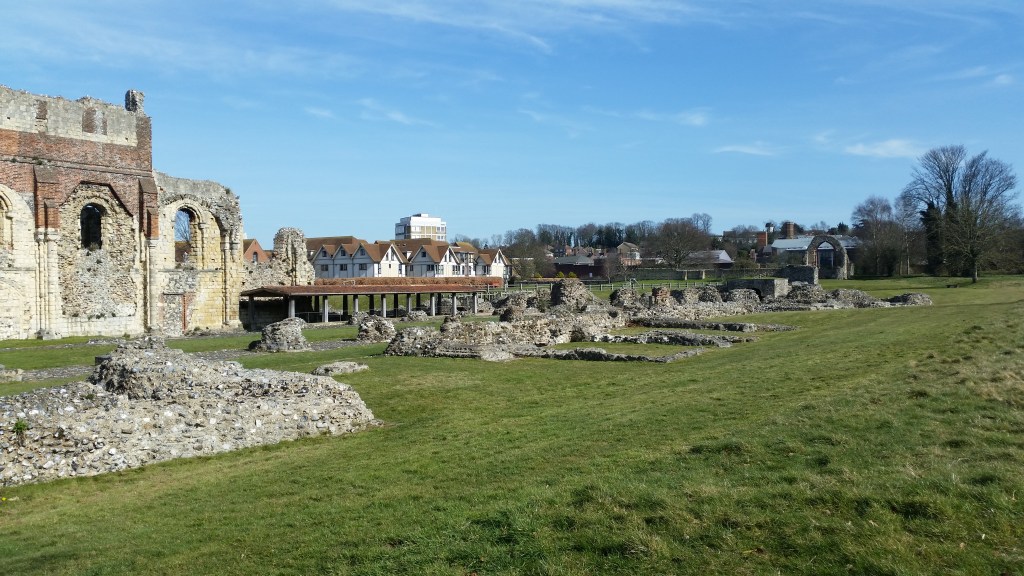
    We woke up to a bright, sunny day and walked across town to the ruins of St Augustine’s Abbey. When we got there, the museum was closed. However, the gate to the yard was open. Since we were more interested in seeing ruins than paying for admission or buying coffee cups, we walked through the open gate, feeling like a couple of rebels.

    As a total museum-loving nerd, I’m always interested to see how different exhibits are presented. That is, is the information helpful? Are there useful images? Is it clear what I should be looking at when? Has walking flow been taken into consideration? I’m pleased to say that this exhibit gets 5 stars across the board. Without a guide, without a pamphlet, and with very little preparatory knowledge, we were able to explore and understand the entire site. The exhibit was so well set up that we were able to complete envision what this site must have looked like back in its heyday.

    Wait a second, what’s the exhibit again?

    Right. Saint Augustine’s Abbey was an abbey built around the same time as the original old-timey sections of Canterbury Cathedral. Officially speaking, it was a Benedictine Monastery completed in 598 CE (that’s current era, for you old folks who are used to AD). As usual, Wikipedia breaks it down for us:

    In 597, Augustine arrived in Anglo-Saxon England, having been sent by the missionary-minded Pope Gregory I to convert the Anglo-Saxons. The King of Kent at this time was Æthelberht or Ethelbert. Although he worshipped in a pagan temple just outside the walls of Canterbury to the east of the city, Ethelbert was married to a Christian, Bertha. According to tradition, the king not only gave his temple and its precincts to St Augustine for a church and monastery, he also ordered that the church to be erected be of “becoming splendour, dedicated to the blessed apostles Peter and Paul, and endowed it with a variety of gifts.” One purpose of the foundation was to provide a residence for Augustine and his brother monks. As another, both King Ethelbert and Augustine foresaw the abbey as a burial place for abbots, archbishops, and kings of Kent.

    William Thorne, the 14th century chronicler of the abbey, records 598 as the year of the foundation. The monastic buildings were most likely wooden in the manner of Saxon construction, so they could be quickly built. However, building a church of solid masonry, like the churches Augustine had known in Rome, took longer. The church was completed and consecrated in 613. Ca. 624 a short distance to the east, Eadbald, son and successor of Ethelbert, founded a second church, dedicated to Saint Mary which also buried Kentish royalty. The abbey became known as St Augustine’s after the founder’s death.

    For two centuries after its founding, St Augustine’s was the only important religious house in the kingdom of Kent.[9] The historian G. F. Maclear characterized St Augustine’s as being a “missionary school” where “classical knowledge and English learning flourished.”

    The monastery was of fairly simple construction, and much smaller than what eventually sat on this site. Because of course the Normans eventually invaded. The liked to worship at church as well, but didn’t think that the existing Abbey was fancy enough to pay proper respects to God. And so they built a much larger and much fancier Romanesque building. There was great expansion and attention from the Pope at this time, during which “[t]he cloister, frater (refectory) and kitchen were totally rebuilt. A new abbot’s lodging and a great hall were added. In the early 14th century, land was acquired for a cellarer’s range (living and working quarters for the cellarer who was responsible for provisioning the abbey’s cellarium), a brewhouse, a bakehouse, and a new walled vineyard. A Lady chapel was built to the east of the church. (Wikipedia)

    This was all well and good until everyone’s least favourite, King Henry VIII, came along and replaced Catholicism with Anglicism. No Catholics means no Catholic Abbeys. In 1541, St Augustine’s was partially dismantled/sold off, and partially turned into a new royal residence for King Henry VIII himself. After being passed along as a royal residence, the estate here was eventually rented out to a series of Noblemen. As time separated this succession of residences from the history of this place, the old structures were further dismantled and the stone was sold off. New gardens were built over the original abbey, a lawn bowling green was installed, etc. As I’m sure someone said back then, “kids these days just don’t appreciate history”.

    It wasn’t until 1844 that one such kid did appreciate history, and he bought the property in order to conserve what was left, turning it into a school for missionaries. After a German Blitz, the buildings were so badly destroyed that the school closed.

    The King’s School now uses some of the existing structures, while the rest are cared for by English Heritage, and protected as a UNESCO World Heritage Site.

    Now, all these facts I confirmed with Wikipedia, but I was able to learn most of this stuff from our self-guided tour. Helpful and well-placed placards helped us understand how to interpret ruins upon ruins, while guiding us helpfully along. By the time we reached the end, we were really able to envision where the churches had been, and which parts of the landscape had continued as royal residences, and which parts had been covered over by gardens, etc. This was especially interesting to me: it was not just the history of the buildings that we were trying to interpret, but the history of the very landscape itself. As I realize more each time that I travel, the end landscape always is mother nature’s own garden. For me, that’s a nice idea.

    Take a look at the pictures from our day and see if you can see what we saw!