Blog

  • Day 5 in Amsterdam – Paddle Boating Through the Canals!

    Day 5 in Amsterdam – Paddle Boating Through the Canals!

    During our time in Amsterdam we often saw people boating through the canals. It’s a relatively popular form of leisure transit. While locals seemed to treat their boats as picnic spots – spending time meandering down the canals while drinking wine and snacking – we also spotted many (presumed) tourists paddle boating.

    After spending a few hours indoors at the Stedelijk, we were ready to get some sun and try out paddle boating.

    You can see this video of our exploits:

    Overall the process was fairly straightforward. Along the canals there are a variety of kiosks where you can rent a boat. You get a map and some instructions on how to ‘drive’, which canals you’re allowed to traverse, and which kiosks are valid “drop off” sites. From there, you’re on your own. As long as you get the boat home in time, there’s nothing to worry about.

    Navigating the paddle boat was definitely a bit more challenging than I’d anticipated but eventually we figured it out, and we loved it. It was so relaxing and calming to boat through the canals and view the city from a new perspective. The rental company’s guide also included some fun facts about sites along the route, so again we were learning.

    And on the topic of learning, we also found this article about the history of Amsterdam’s city design. Yes, they are famous for being very cyclist and pedestrian friendly, but this wasn’t always the case. Walking and paddle boating around such a beautiful place, it’s easy to imagine that this place is just magical by nature. But in fact the accessibility of Amsterdam is the result of specific choices made by the people of Amsterdam.

    We wrapped up our day with dinner and drinks at a local hangout called Cafe de Prins. All in all, an excellent day in an excellent city.

    Check out our photos below!

  • Day 5 in Amsterdam – Visiting the Stedelijk!

    Day 5 in Amsterdam – Visiting the Stedelijk!

    Amsterdam has a LOT of museums. The most popular is probably the Van Gogh Museum, which we did not visit because it required advance booking and/or booking a ticket to stand in line for a pre-scheduled time. We don’t like to plan that kind of stuff ahead, so we skipped it. We’d also just seen a Van Gogh exhibit in Toronto, so we didn’t feel we were missing out too much.

    Just down the street from the Van Gogh is the Stedelijk, Amsterdam’s primary contemporary art museum. Here’s the ‘official’ Wikipedia description:

    The Stedelijk Museum Amsterdam (Dutch pronunciation: [ˈsteːdələk myˈzeːjɵm ˌɑmstərˈdɑm]; Municipal Museum Amsterdam), colloquially known as the Stedelijk, is a museum for modern artcontemporary art, and design located in AmsterdamNetherlands.[8][9]

    The 19th century building was designed by Adriaan Willem Weissman and the 21st century wing with the current entrance was designed by Benthem Crouwel Architects. It is located at the Museum Square in the borough Amsterdam South.

    The collection comprises modern and contemporary art and design from the early 20th century up to the 21st century. It features artists such as Vincent van GoghWassily KandinskyErnst Ludwig KirchnerMarc ChagallHenri MatisseJackson PollockKarel AppelAndy WarholWillem de KooningMarlene DumasLucio Fontana, and Gilbert & George.[9]

    When approaching the museum, the first thing that you notice is the new wing, added onto the original historic building. It’s shaped like a gigantic bathtub, so it’s pretty tough to miss. Once you go inside, you work your work through all of the rooms, which are all white square or rectangular spaces. This museum, like many of the others we visited, offer complimentary audio guides… simply find a kiosk in the museum, grab a little “phone”, choose your language, and start walking!

    The collection is great, and ranges from audio visual modern art to more classical modernist or constructivist painting, to contemporary photography, to exhibits about new technologies being used to accommodate refugees. Some of the stuff that we saw here we saw again in Toronto at EDIT (Expo for Design, Innovation, & Technology).

    We took quite a few photos, so you can check it out for yourself!

  • Day 4 in Amsterdam – Visiting the Rijksmuseum!

    Day 4 in Amsterdam – Visiting the Rijksmuseum!

    We started out our fourth day in Amsterdam by visiting the Tulip Museum for a quick visit. We then walked south through the city to visit their flagship art “quarter”. The section of the city has several museums, and on this day we visited just one of them: the Rijksmuseum. I’d read about this museum a few years ago when it was renovated to include a bike path that treads directly through the building, so we were quite excited to see it all in person.

    Here’s what Wikipedia has to say about the museum and its collection:

    The Rijksmuseum (Dutch pronunciation: [ˈrɛiksmyˌzeːjʏm]; English: National Museum) is a Dutch national museum dedicated to arts and history in Amsterdam. The museum is located at the Museum Square in the borough Amsterdam South.

    The Rijksmuseum was founded in The Hague in 1800 and moved to Amsterdam in 1808, where it was first located in the Royal Palace and later in the Trippenhuis.[1] The current main building was designed by Pierre Cuypers and first opened its doors in 1885.[3] On 13 April 2013, after a ten-year renovation which cost  375 million, the main building was reopened by Queen Beatrix.[11][12][13] In 2013 and 2014, it was the most visited museum in the Netherlands with record numbers of 2.2 million and 2.47 million visitors.[6][14] It is also the largest art museum in the country.

    The museum has on display 8,000 objects of art and history, from their total collection of 1 million objects from the years 1200–2000, among which are some masterpieces by RembrandtFrans Hals, and Johannes Vermeer

    We were in the museum for hours and still didn’t manage to see it all. Below are the many, many photos we took on our full day museum adventure. Read the comments to learn about all the highlights from our day! And shout out to Restaurant ‘t Zwaantje for serving us an incredible dinner.


  • Day 4 in Amsterdam – Visiting the Tulip Museum!

    Day 4 in Amsterdam – Visiting the Tulip Museum!

    If you’ve been following the news stories about bitcoin lately, you may have heard some references to tulips and Dutch tulip mania. Or perhaps you’ve been to the Ottawa Tulip Festival, connected to WWII and the Dutch love of tulips. Either way, it’s more than just a flower, which is why we stopped by the Tulip Museum in Amsterdam.

    Much like the Canal House Museum, this small, specialized museum was impressively high quality and educational.

    You enter the museum through their storefront. In the museum’s store you can buy a wide variety of tulip related souvenirs, but we skipped that to beeline for some learning. In the back of the storefront you go down a small set of stairs to enter the museum. It begins with the origins of tulips, then traces the plant’s migration to the Netherlands. Once the story arrives in Amsterdam, the exhibit goes into detail about Tulip Mania in the 1600s:

    The introduction of the tulip to Europe is usually attributed to Ogier de Busbecq, the ambassador of Ferdinand I, Holy Roman Emperorto the Sultan of Turkey, who sent the first tulip bulbs and seeds to Vienna in 1554 from the Ottoman Empire.[14] The tulip was different from every other flower known to Europe at that time, with a saturated intense petal color that no other plant had. The appearance of the nonpareil tulip as a status symbol at this time coincides with the rise of newly independent Holland’s trade fortunes.

    As a result, tulips rapidly became a coveted luxury item, and a profusion of varieties followed.

    Tulip mania (Dutch: tulpenmanie) was a period in the Dutch Golden Age during which contract prices for some bulbs of the recently introduced and fashionable tulip reached extraordinarily high levels and then dramatically collapsed in February 1637.[2] It is generally considered the first recorded speculative bubble;

    This was another of our favourite museums from the trip, and it’s something I’d recommend to anyone. Most museums can be fun and educational, but they don’t all teach lessons that can be applied to modern-day economics. This one does, and it’s cute as heck to boot. If you’re in Amsterdam, you should check it out. See our photos below!

  • Day 3 in Amsterdam – Walking Lots & Visiting the Foam Museum

    Day 3 in Amsterdam – Walking Lots & Visiting the Foam Museum

    Our last museum stop of the day was the “Foam” Museum, a well-reviewed photography museum.

    Before the museum though, we needed a lunch break. On the advice of Esther from the Hungry Birds Food Tour, we had lunch at Tomaz, an old restaurant in the old part of the city. When we asked where Dutch families might go out to eat together, this was the place she suggested. We had traditional Dutch beer with traditional Dutch food. The highlight was BitterBallen, little fried balls of meet & sauce & seasoning, best eaten with mustard and beer.

    Rested and fed, we headed back to Foam. Here’s how Wikipedia describes the museum:

    Foam or Fotografiemuseum Amsterdam is a photography museum located at the Keizersgracht in Amsterdam, the Netherlands. The museum has four different exhibitions at any given time in which different photographic genres are shown, such as documentary, art and fashion. Two notable shows were Henri Cartier-Bresson – A Retrospective, work by Henri Cartier-Bresson, and Richard Avedon – Photographs 1946 -2004, a major retrospective of Richard Avedon. In summer 2016 Foam will present a major Helmut Newton retrospective exhibition. Next to large exhibitions by well-known photographers, Foam also shows the work of young and upcoming photographers, in shorter running exhibitions. The museum contains a café, a library, a commercial gallery called FoamEditions and a bookshop.

    We didn’t take many photos, but we certainly saw plenty. The highlight was the exhibit of Gordon Parks’ photography. Gordon Parks was a American photographer between the 1950s and 1980s who captured American life, and was a regularly featured contributor in Life Magazine. His work often touched on themes of social justice and civil rights in the country. You can learn more about Gordon and this exhibit right here. If you live in North America, odds are good that you’ve seen his work already.

    Check out our photos from the day below!

  • Day 3 in Amsterdam – Visiting the Cat Museum

    Day 3 in Amsterdam – Visiting the Cat Museum

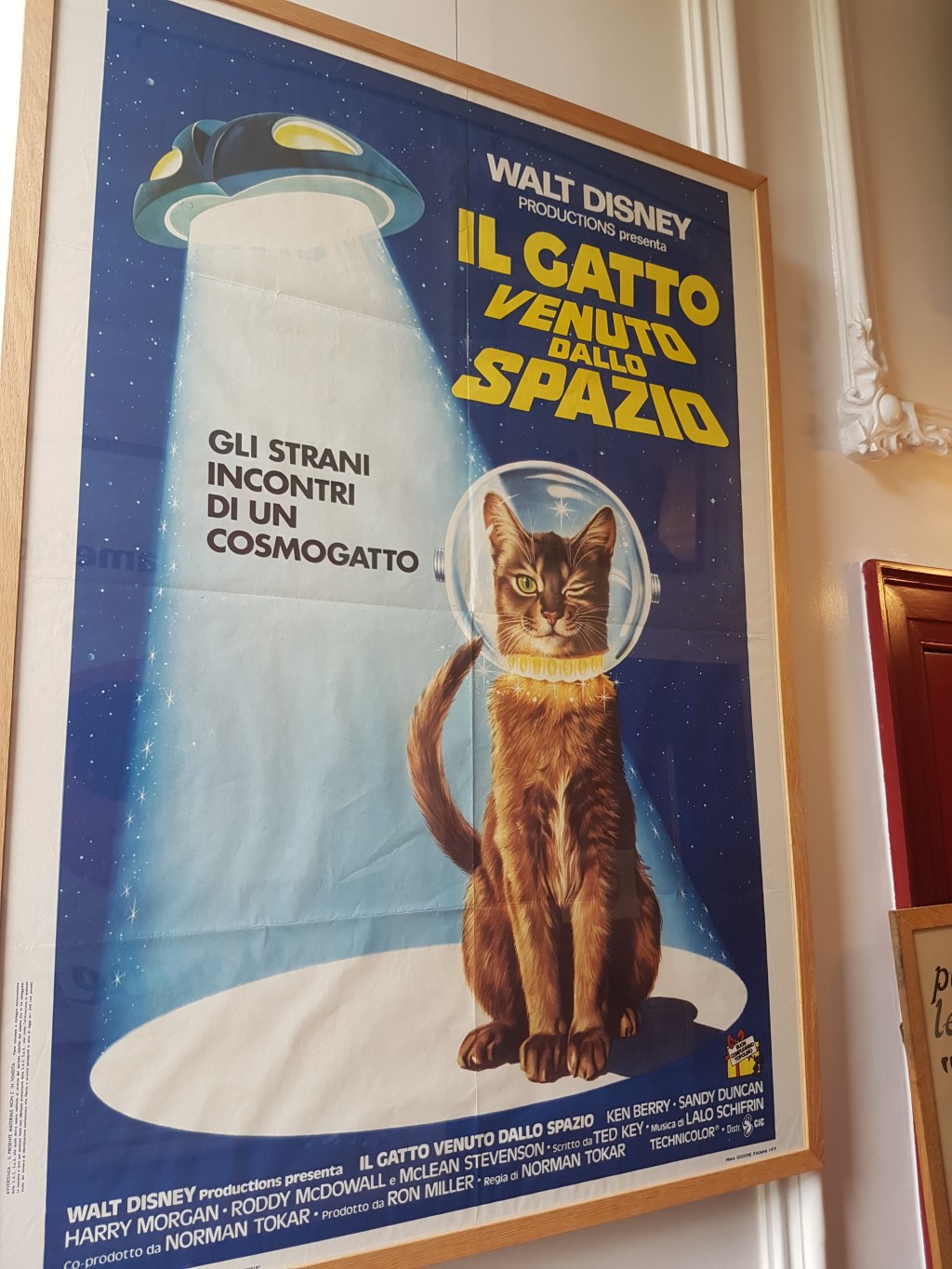
    After visiting the Canal Museum, we planned to head over to the Foam Museum (more on that later). On the way, our walk took us past the Cat Museum, and of course we had to stop in for a visit.

    The Cat Museum is properly known as KattenKabinet or “Cat Cabinet”. It’s an art museum located in an old home that is solely focused on exhibiting arts related to cats, cats, and more cats.

    As well established cat people, Kevin and I were more than happy to hand over a few euros to explore the house and the collection, and hopefully see a few cats.

    As far as museums go, this one is pretty unique, but unfortunately we only saw one real cat while we were there!

    The art collection is pretty cute, and they have a lovely outdoor space that includes seating areas and more cat art. We paid 7 euros each to get in, which probably isn’t worth it unless you really love cats, but we do, so it was.

    You can see the whole collection in under 30 minutes, and it’s also pretty interesting to walk through the house. After spending so much time in awe of the canals and the houses along them, it was nice to get inside and get an additional perspective.

    If you’re looking for a cute, quick and quirky museum to visit, you should definitely consider stopping by KattenKabinet! See below for our photos!

  • Day 3 in Amsterdam – The Canal House Museum

    Day 3 in Amsterdam – The Canal House Museum

    After visiting the Amsterdam Museum, we headed to the Canal House Museum, known as the “Museum of the Canals” or “Het Grachtenhuis“. The museum is located in an old house along an older portion of canals and it was delightful. While visiting Amsterdam we visited many museums, and we found nearly all of them to be incredibly well-curated.

    The Canal House Museum was one of our favourites. They made particularly good use of audio visual effects to tell the story of Amsterdam’s architecture as it relates to the canals and the houses built alongside them.

    Here’s bit of information from Wikipedia about the Amsterdam Canals:

    Amsterdam, capital of the Netherlands, has more than one hundred kilometers of grachten (canals), about 90 islands and 1,500 bridges. The three main canals (Herengracht, Prinsengracht and Keizersgracht), dug in the 17th century during the Dutch Golden Age, form concentric belts around the city, known as the Grachtengordel. Much of the Amsterdam canal system is the successful outcome of city planning. In the early part of the 17th century, with immigration rising, a comprehensive plan was put together, calling for four main, concentric half-circles of canals with their ends resting on the IJ Bay. Known as the “grachtengordel”,[5] three of the canals are mostly for residential development (Herengracht or ‘’Patricians’ Canal’’; Keizersgracht or ‘’Emperor’s Canal’’; and Prinsengracht or ‘’Prince’s Canal’’), and a fourth, outer canal, the Singelgracht, for purposes of defense and water management. The plan also envisaged interconnecting canals along radii.

    As you can tell, the Canal House Museum is the perfect follow up to the Amsterdam Museum. To get a sense of how the museum looks, check out this video:


    Th Canal House Museum is a must-see for anyone interested in urban planning or anthropology, or even just those of you who love quality museums. Check it out if you can! See below for a few photos from our visit.


  • We learned how to make pierogi this Christmas!

    We learned how to make pierogi this Christmas!

    Every year for Christmas, my Nana Helen (mother of my mother) makes pierogies. My mom’s side of the family is Polish/Ukrainian, and while we dabble only very lightly in Eastern European holiday tradition, pierogies and sour cream are staples at all family events (along with cabbage rolls and borscht, but pierogies are the undeniable fan favourites).

    My brothers and I have discussed making pierogies and stepping up to learn, take over, and carry forward some family traditions, and this holiday season was one of our first collective steps in that direction.

    In addition to learning how to make pierogi (according to Wikipedia the word is already plural… why would you have just one?!), we also made dinner on Christmas Day. It was a significant group effort… despite only needing to feed 10, we made enough food for nearly twenty: butternut squash/pear soup from scratch, turkey according to the Gordon Ramsay method (lemons are the key to having a delicious and juicy turkey), green beans with bacon, baked cod with tomatoes/potatoes/onions, garlic mashed potatoes, seasoned carrots, cabbage rolls, homemade gravy, and our very own pierogi!

    For dessert, my mom ordered us the most beautiful Happy Birthday Jesus cake imaginable. That’s a new tradition, but it’s one that we’ll be keeping.

    Anyways… back to the pierogi-making. My grandparents are famously early risers, and always quick to get things done. So when the four of us arrived at their house around 10am on the 23rd, we expected the pierogi-making process to be half done. To our surprise and delight, they really had waited for us before beginning!

    We donned our babushkas and our aprons, rolled up our sleeves, and got started.

    For the dough, I mixed 1 cup of room temperature water into a 6 cups of Red Rose white flour, along with a couple dollops of regular sour cream. Once it was mixed I had to knead the dough into a nice round ball. I then put the dough aside in a bowl and covered it with a towel. The dough needed to rest on the counter for approximately 30 minutes before it would be ready for use.

    In the meantime, my brothers were getting the filling ready: grating old cheddar cheese, and peeling and quartering old yellow potatoes (just old enough that something’s growing out of them). We then boiled the potatoes to prepare for mashing.

    Next: lunch break! Heaven forbid we work without being provided lunch!

    After lunch, the potatoes were boiled. We mashed them up and added the grated cheese. We also added a few scoops from a jar of sautéed onions that grandmother had made ahead of time. Once the potato mix was ready, we put it outside in the lanai to cool to room temperature-ish.

    Once the potatoes had cooled, we started rolling out the dough: time to make pierogi!

    We rolled out the dough on the kitchen table, aiming for 1/8 inches in thickness. Then we used an old tuna can to cut circles out of the dough. To make the pierogi, you take a circle of dough, add in a spoonful of filling, and pull the sides together around the filling. Pinch the dough together on both sides in such a vigorous way that you’re sure it won’t pop open when boiling.

    We placed them on a towel-covered platter, side by side. When the platter was full, we covered it with another towel, and continued lining up pierogi. They actually looked pretty darn cute. Once all the dough was gone, that’s a wrap! The trays went out to the lanai to freeze a bit. Alternatively, the trays could’ve been placed into the freezer (a deep freeze, obviously… this is the ‘burbs!).

    Anyways, I doubt most of you read all that, but I needed it written down somewhere, so there it is. See below for our photos from our holiday adventures in Grimsby!

  • Day 3 in Amsterdam – Visiting the Amsterdam Museum

    Day 3 in Amsterdam – Visiting the Amsterdam Museum

    Our third day in Amsterdam was a full day, and it started quite early. We were up by 7am and out the door to explore the city and find breakfast by 7:30am. Given how quiet we’d noted the nightlife to be the previous evening, we had suspected the city would be bustling in the early morning, but that was not the case in reality.

    In fact, the city was very quiet, and there was hardly anyone outside. We walked along the canal that would later host the Pride Parade and noted a few early birds setting up their floats or their viewing spots, but the city was mostly calm. We managed to find one breakfast place open. After a delicious meal, we headed to the first of many museums for the day: The Amsterdam Museum.

    When we travel to a new city, we like to start with learning about the history of that city, as the city itself chooses to present. We’re both hoping that one day Toronto gets a similar institution to showcase our history for visitors; the courts currently housed in the Old City Hall will be moving out shortly, hopefully a Toronto Museum will move in!

    As for the Amsterdam Museum… again, we arrived too early, so we had a coffee around the corner, and then later went back for some learning.

    The Amsterdam Museum is all about the history of Amsterdam and how the city came to be. It’s located in the old historic city centre, in a building that once housed a municipal orphanage.

    The museum begins with lessons on the city’s founding, and then evolves into exhibits on the modern features of Amsterdam, including a couple of interactive exhibits about what the city’s future should include.

    The history of the city was well presented and it told an interesting tale. While most other European communities at the time were ruled by royalty, Amsterdam’s power was held by groups of regents, and membership in the ruling class was somewhat accessible. Relative to other cities in Europe at the time, Amsterdam was also know to be quite tolerant of religious diversity, and thus it was a popular destination among immigrants.

    There’s much more to all this, and it’s described in greater detail on Wikipedia – check it out!

    If you’re going to Amsterdam but you don’t know much about the city itself, this museum is well worth visiting. See below for photos from our early morning adventures and our time at the Amsterdam Museum!

  • Day 3 in Amsterdam – Pride & the Canal Parade!!

    Day 3 in Amsterdam – Pride & the Canal Parade!!

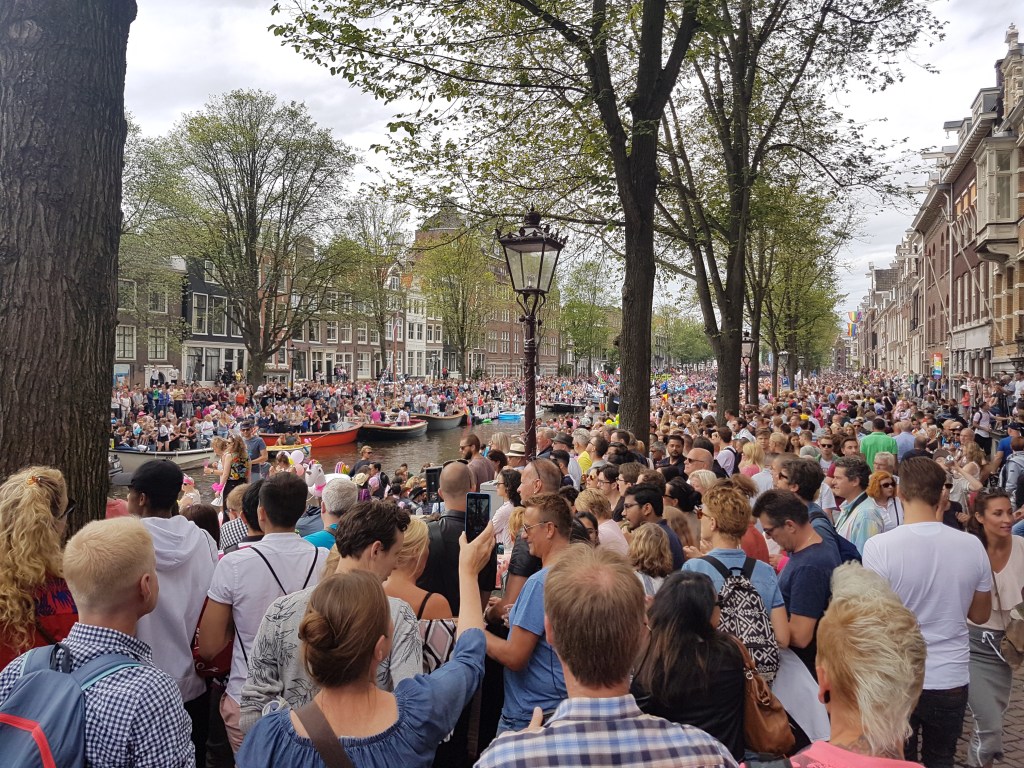
    We happened to arrive in Amsterdam during their week long Pride festivities. Our second full day in the city was the day of the famous “Canal Parade”. In most other cities, Pride parades take place as a march through the streets, but this parade taps into the city’s fantastic canal network, and thus both the streets and the waterways are packed for the event.

    We were cautioned by many people to prepare ourselves for loads of traffic and crushing crowds, but we found those warnings were a bit over zealous. Yes, there were big crowds, but movement was only restricted in a small area. We spent most of this day visiting museums, but we did stop by the Pride events a few times to check out the incredible floats, music, performers, and crowds.

    You can learn more about Amsterdam Pride right here, and you can see photos below from our time at the event!