Tag: Adventure

  • Visiting Teotihuacan

    Visiting Teotihuacan

    Kevin did 90% of the research for our trip to Mexico City, and I could tell it was going to be a good trip because of how excited he would get about what he was reading.

    When he suggested that our trip include a day trip outside of the city I knew that we were in for something great because he’s well aware of my distaste for travelling within trips.

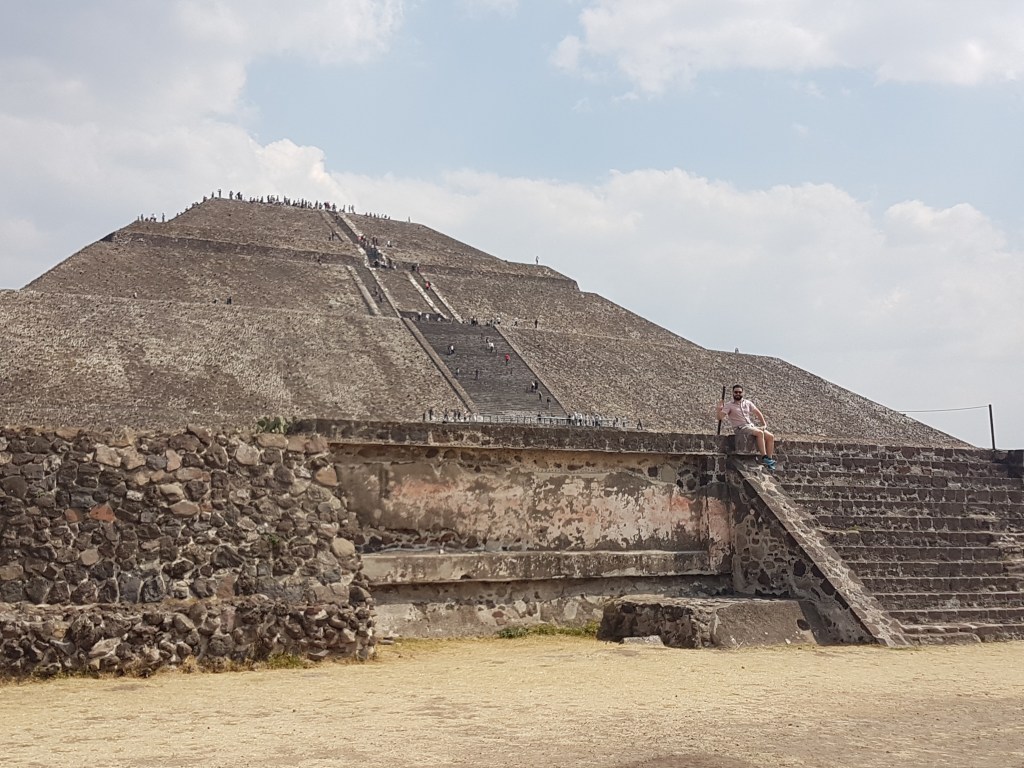
    Indeed, our day visiting the ancient Mesoamerican city of Teotihuacan was well worth the trek to get there. It was also one of the first things we did on our trip, and it set us up well for a week of learning about the incredible culture and history that have occurred on the lands of present-day Mexico. We were able to Uber there, and then found another Uber to drive us back later.

    Our day included a lot of walking and climbing, but you can easily enjoy the site without climbing the pyramids. If you go, be sure to bring a hat and some sunscreen. We also went on Monday so there were relatively few tourists. We’ve been told that Sunday is the busiest day to visit.

    Around 1200 CE, the Mexica were moving in search of a new location where they could establish a settlement and build a city. Along the way they found the remarkable site of Teotihuacan and they claimed a common ancestry with the city’s ancient founders. So, that’s how ancient and significant Teotihuacan is: some 800 years ago a power community found it and were so impressed that they took on some of city’s mythology and worked it into their own origin story.

    When most Canadians talk about pre-European peoples in Mesoamerica, the most prominent group mentioned is called “the Aztecs”. However, “Aztec” is a term coined by a European researcher. The Aztec Empire began as an alliance between 3 city-states in the Central Mexican Valley, and the most influential of these 3 group were actually known as the “Mexica” (pronounced May-Shee-Ka). The language that they spoke, Nahuatl, is still spoken in Mexico today, and many Nahuatl words have been incorporated into Mexican Spanish. In fact, some Nahuatl words are even spoken in the Philippines (more on that in a later post).

    So, what’s all the hype about?

    Well, before you ask, let me assure you that this site was not built by aliens.

    Teotihuacan, founded approx 2000 years ago, is the site of the largest pyramids outside of Egypt and was once a city home to over 125,000 people (some estimates suggest closer to 250,000). Such a large city was hub for trading and exchange and its cultural and economic influence appears in archaeological digs and cultural sites across Mesoamerica.

    Further details about its exact origins, who built it, etc are unclear, and there some different competing theories. However it is a rich archaeological site and researchers have been able to learn a lot about how life was live in this community. Their importances as a trading centre has helped researchers build a clear picture of the various groups living and trading across the Mesoamerican region at that time.

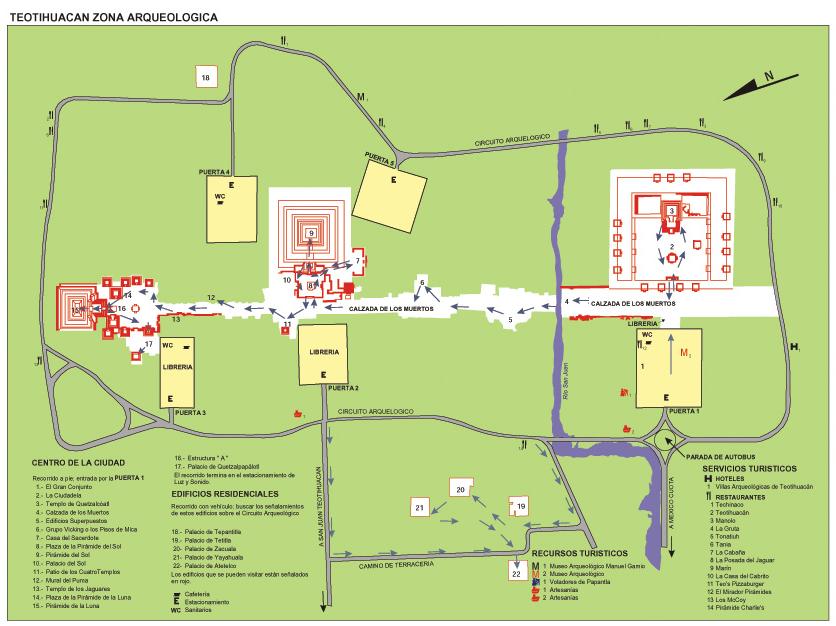
    Here’s a map of the site. The arrows show the recommended route through the site, which is exactly what we did:
    Teotihuacan_Archaeological_Area_Map_Edo_Mexico (1)

    Here’s what Wikipedia has to say about the site layout and design.

    The city’s broad central avenue, called “Avenue of the Dead” (a translation from its Nahuatl name Miccoatli), is flanked by impressive ceremonial architecture, including the immense Pyramid of the Sun (third largest in the World after the Great Pyramid of Cholula and the Great Pyramid of Giza). Pyramid of the Moon and The Ciudadela with Temple of the Feathered Serpent Quetzalcoatl are placed at the both ends of Avenue while Palace-museum Quetzalpapálot, fourth basic structure of site, situated between two main pyramids. Along the Avenue are many smaller talud-tablero platforms also. The Aztecs believed they were tombs, inspiring the name of the avenue. Scholars have now established that these were ceremonial platforms that were topped with temples.[citation needed]

    The Avenue of the dead is roughly forty meters wide and four Kilometers long.[64] Further down the Avenue of the Dead, after small river, is the area known as the Citadel, containing the ruined Temple of the Feathered Serpent Quetzalcoatl. This area was a large plaza surrounded by temples that formed the religious and political center of the city. The name “Citadel” was given to it by the Spanish, who believed it was a fort. Most of the common people lived in large apartment buildings spread across the city. Many of the buildings contained workshops where artisans produced pottery and other goods.

    While a lot is known about the site and its various inhabitants there is still much to learn. A recent discovery was made and we got to see the tent where they were continuing to explore it. Kevin insists that you read this article about it.

    Our path through the site also included a journey through their museum, which helped us get a better understanding of what we were seeing. We were impressed with the breadth of material on display and how well it was curated.

    Below you can see all of our photos from our visit to Teotihuacan, though it’s hard to do it justice. If you ever get the opportunity to go to Mexico City then I strong encourage you to make a trip out to visit this incredible historical gem!


  • Day 5 in Madrid – National Archaeological Museum of Spain!

    Day 5 in Madrid – National Archaeological Museum of Spain!

    Thursday night got a bit crazy, so Friday was a late start. We woke up late to a rainy day and also realized we’d left one of our host’s umbrellas at the bar the previous night. Oops!

    Anyways, sharing the one remaining umbrella we headed out to grab some breakfast before, obviously, going to a museum. It was our last day in Madrid, and we had plans that evening with Zoya and some friends, but we wanted to see the National Archaeological Museum of Spain. For the last 6 months or so Kevin has been on a deep dive into learning about Roman and Iberian history, so this seemed like the perfect place to spend our last day in Madrid, which also happened to be his birthday.

    Here’s what Wikipedia has to say about the museum:

    The museum was founded in 1867 by a Royal Decree of Isabella II as a depository for numismatic, archaeological, ethnographical and decorative art collections of the Spanish monarchs.

    The museum was originally located in the Embajadores district of Madrid. In 1895, it moved to a building designed specifically to house it, a neoclassical design by architect Francisco Jareño, built from 1866 to 1892. In 1968, renovation and extension works considerably increased its area. The museum closed for renovation in 2008 and reopened in April 2014.[1] The remodelled museum concentrates on its core archaeological role, rather than decorative arts.

    The collection includes, among others, PrehistoricEgyptianCelticIberianGreek and Roman antiquities and medieval(VisigothicIslamic Spanish and Christian) objects.

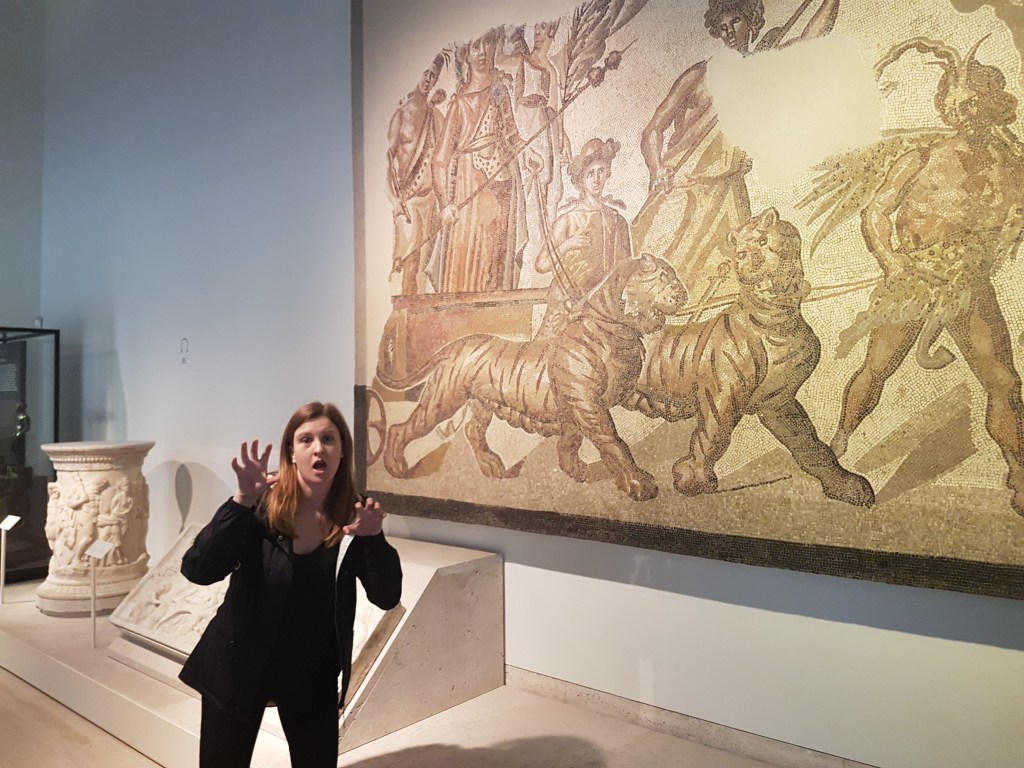
    This was one of the best no-art museums I’ve ever been to. The detail and expenses put into curating the collections are excellent. The impact of the most recent renovation is unmissable and it would be a great place for anyone with any level of pre-existing knowledge on Archaeology, including kids. The collections are extensive, and take you through the evolution of ancient western culture and civilizations.

    The use of visual guides, including audio visual content, was quite impressive. Each new time period and/or topic was introduced with a video that illustrated what the community would’ve looked like at the time. It was a great way to understand the context of the artifacts presented, particularly with respect to the geographic movement and interactions of people. You can learn more about their collection here and here.

    Check out the photos below, and add this one of your Madrid itinerary!


  • Exploring DC – Day 1 of Adventures

    Exploring DC – Day 1 of Adventures

    We went to Washington, DC to watch my friend Komal’s documentary, Dream, Girl, at the White House, but we also took the opportunity to spend a few days on holidays in DC. My mom and I had been before, but Kevin and my dad had never seen any of the Washington, DC attractions, so we got to work quickly on our tourist experience.

    Morning Adventures

    We stayed at a hotel within walking distance to Capitol Hill, which also put us within a short distance of the Washington Mall.

    If you’re not familiar with Washington, DC, here’s how Wikipedia describes the National Mall:

    The National Mall is a national park in downtownWashington, D.C., the capital of the United States. The National Park Service (NPS) administers the National Mall, which is part of its National Mall and Memorial Parks unit.[2] The term National Mall commonly includes areas that are officially part of West Potomac Park and Constitution Gardensto the west, and often is taken to refer to the entire area between the Lincoln Memorial and the United States Capitol, with the Washington Monument dividing the area slightly west of its midpoint.[3] The National Mall receives approximately 24 million visitors each year.[4]

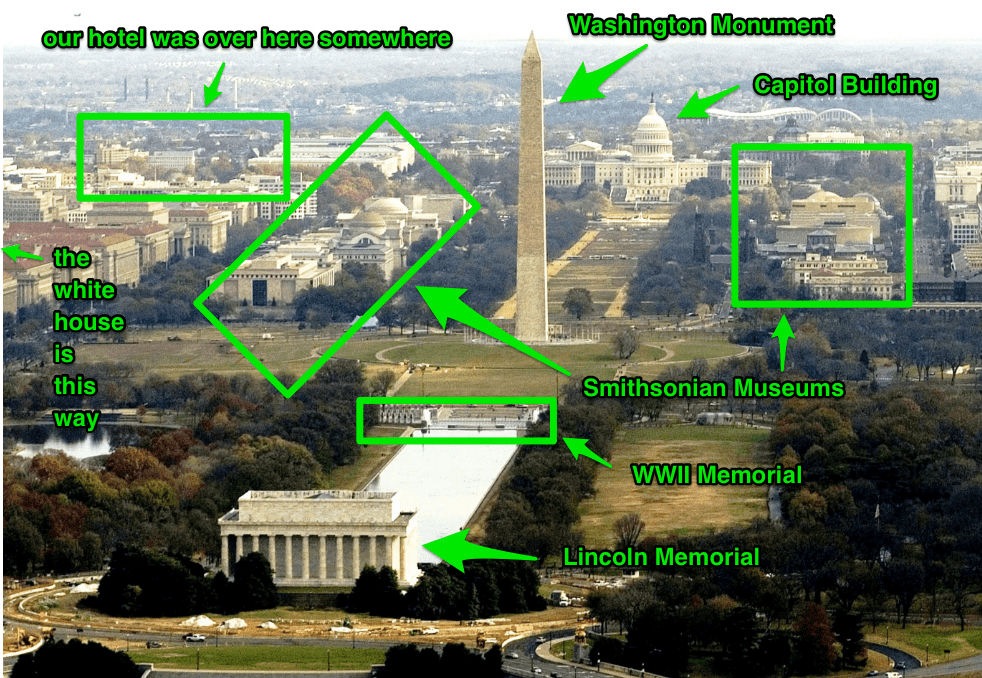
    Here’s a photo of the National Mall, and some notes on different landmarks, relative to our hotel.

    dcnationalmall

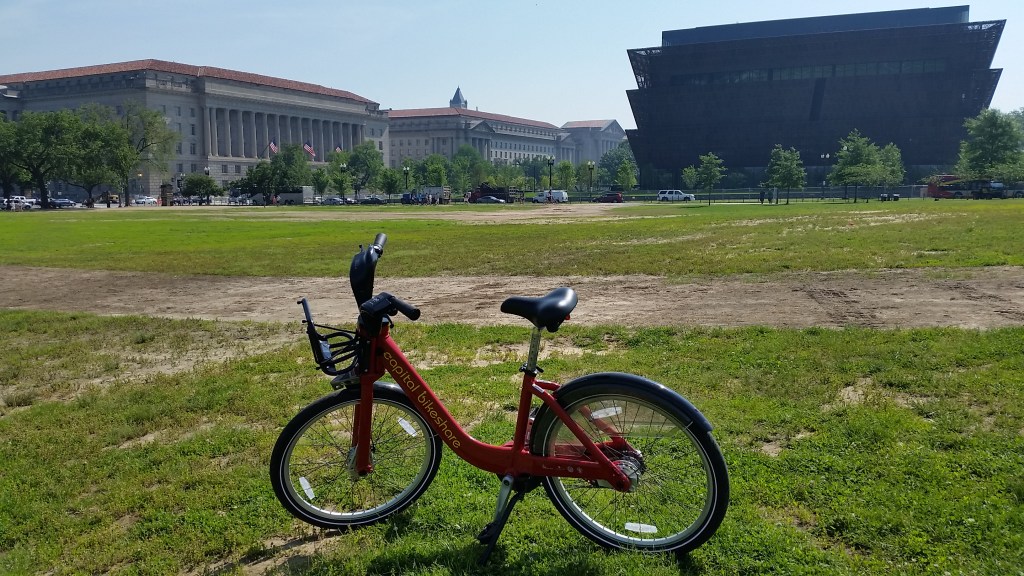
    We started early in the morning with a quick breakfast and a walk around the Capitol Building. The heat was pretty intense, so my parents opted for a relaxed, air-conditioned morning at the hotel while Kevin and I rented some Capital Bixi bikes, and biked down the Washington Mall to see the Lincoln Memorial.

    With Tony & Judy relaxing, Kevin and I bike in the sun along the Mall, past the Smithsonian museums. We stopped for a photo op at the Washington Monument, and then carried on to the WWII memorial. I’d seen all of this before, but it was great to see it again. The size and beauty of the National Mall is always impressive, and even Kevin agreed with that, so it was fun to see him enjoying himself so much.

    The WWII Memorial in particular includes such great attention to detail. Between the carvings, and the sounds of the fountains, it’s truly a work of art.

    The weather was nice and hot, but it was too early in the year for DC’s infamous humidity, so we enjoyed the sun as we biked along the reflecting pool and then climbed the steps to the Lincoln Memorial.

    Because we were in DC for Memorial Day weekend, it was an especially busy spot. At every memorial and landmark, we saw different veterans and veteran groups, which added a bit of extra meaning and context to all that we were seeing. As a Canadian, American politics can sometimes be a bit bewildering, so it was interesting to see Americans expressing their meaningful politics on this set of national landmarks.

    After the Lincoln Memorial we saw the Vietnam War Memorial. It’s one of my favourite things to see in DC because it’s so different from typical war memorials. Rather than celebrating achievements or supposedly high minded ideals, this memorial is a wall of stone, cut into a hill, with all the names of the American soldiers lost in Vietnam carved into it. Rather than celebrating the state, it recognizes the American soldiers who were lost in the war. It’s rather emotional to walk along, even more so when you’re walking behind and in front of Vietnam war veterans.

    On our way back to the other end of the mall, we stopped for a photo op near the White House, then headed to the Museum of Native American History for lunch (which was excellent).

    Afternoon Adventures

    After lunch we met up with my parents at the National Air and Space Museum. The Smithsonian has a really impressive collection of things in general, and this museum was no different. We saw exhibits covering the first attempts at flight, the first launches into space, and real pieces of modern spaces stations and technology. It was a great way to see and understand the progress of travel over the last few generations.

    Kevin was pretty bummed to not see Cape Canaveral when we went to Florida, so he was quite thrilled to see some spaces ships, rovers, etc at the Smithsonian.

    Next up we went to the National Gallery of Art. We only had time to see the basement floor, but we stumbled upon some Mark Rothko paintings, so we were quite excited. All in all, we had a great time on our first day exploring DC!

    Evening Adventures

    After the museums closed, we headed back to the hotel to shower off all the sweat and sunscreen of our day. After changing, I headed out with Kevin and my Dad. Unfortunately, my mom wasn’t feeling well so she stayed back in the room to sleep.

    Before going to dinner, we went to the Sculpture Garden at the National Gallery of Art. It was “Jazz in the Garden” night, which I thought meant that it would be full of stuffy rich people doing the polite golf clap while listening to jazz. I could not have been more wrong. By the time we got there, the garden was completely full. We found a line up, bought pitchers of beer and sangria, and stood in the garden to listen to the music and enjoy the energy of the crowd. It was a great crowd of people of all ages, gathering for what was clearly a very popular Friday night social event. It also helped that we were at the season debut. If you’re in DC on a Friday night, I highly suggest you check out this awesome free event!

    Next up we headed to a wine bar for dinner. I did some heavy research on WikiTravel for this trip, as I’d been advised that good restaurants were hard to find in DC due to the high amount of touristy/business-y nonsense restaurants. Fortunately, I found a great list of places, and we didn’t have a single bad meal.

    On Friday night we ate at Proof. The food was excellent, and the wine was also great. The wine list wasn’t as varied as I’d been hoping, but everything we ate and drank was delicious. Unfortunately, the aesthetic of the restaurant includes lighting so lacking that you can’t even read the menu. I found this to be completely pointless, and annoying. Otherwise, it’s a top notch experience, but eating in the dark is just plain weird. That said, we ate some of the most delicious charcuterie of all time there, so it was worth going to. Still, it was the weak point of meals over our weekend, which likely says more about how well we ate in DC.

    Photos are below, in reverse order for some reason:

  • #tbt: Summer of 2015 and learning how to ‘beach’

    #tbt: Summer of 2015 and learning how to ‘beach’

    Going to the beach is a sport in the Algarve. In the Algarve, people stay in between January and April, as it’s cold, most things are closed, and seasonal employees are out of work.

    Come late April, early May, the Algarvieu (Algarvians) come out to play. And that means hitting up the beach with a level of deep seriousness.

    To say the weather here is perfect is a complete understatement. As the spring and summer progress, and the weather gets hotter, you see the entire landscape becoming busy. More traffic, more people, more restaurants, and more sun!

    Growing up, I’d only been to the beach a handful of times. The Page kids were not into beach life; no sand in our toes, no seaweed on our feet, no sunburns on our skin, thank you very much.

    The Silva kids were the complete opposite. Spending most summers in the Algarve, with all their local friends in Alte, Kevin and his brother were total beach kids who spent many, many hours playing on the beach, swimming in the ocean, enjoying the sun.

    I had a lot to learn, but luckily for me I was learning how to “beach” with the help of an expert.

    In June, and July, we went to the beach almost everyday. And there were A LOT of beaches to choose from. Beautiful white sand beaches with crystal-blue water aren’t just for the Carribbean, people! Algarve beaches are famously beautiful, and we were spoiled enough to have multiple amazing beaches within just a 20 minute drive. In doing a bit of pre-writing research, I realized that some of the most “well reviewed” beaches are places we never went to, but it’s hard to justify driving an hour to a perfect beach when you have 6 almost-perfect beaches to choose from in your backyard!

    So, how does one beach?

    There are only a few things required:

    • water, and lots of it. My beach bag contained at least 8 water bottles at all times.
    • towels, 1.5 per person. I always had 3 towels for Kevin and I, so we could lay them out in a way that would keep ourselves and the towels sand-free
    • hats. With the Algarve sun, a hat is essential
    • euros – there’s a restaurant/bar at almost every beach, and the best way to end your day is with a bottle of wine at sunset (bars with a good wine selection are preferred).
    • paddle-ball equipment – surprisingly fun, and good exercise
    • tanning oil (for Kevin and all our Portuguese friends)
    • immense amounts of sunscreen for me (I also had a pre-departure routine that included sunscreening my entire body, head toe)
    • tanning technique – not as easy as one might think. You need to keep regular movement throughout the day to get an even tan all over your body. And pay attention to the sun, so you can angle yourself appropriately. Whether standing or laying down, you need to tack with the movement of the sun in order to get maximum rays.
    • sunglasses. duh.
    • e-readers. essential activity when you’re growing that tan on the sand
    • beer in a cooler – not required every time, but you need both together whenever required.
    • Google Maps – a required assistant when scanning the coast in search of a hidden beach!

    It’s hard to get a proper list of the beaches we went to, because all our friends referred to the beaches based on local history and/or the name of the restaurant at the beach. And some of the beaches were “hidden”, aka only limited walking access, which means the only way you can find them is by carefully scanning Google Maps’ Satellite View. In any case, we did take a lot photos, which you can peruse below!

  • #tbt – Friendship reunion in Cannes!

    #tbt – Friendship reunion in Cannes!

    In the time that I’ve been travelling, the glorious technology of iMessage & Group Chats has been a complete lifesaver, helping me keep in constant touch with some of my best friends in Canada. I have a group chat with 2 of my friends, Julie and Komal, that is essentially a haven of love, positivity, and support as we share each others fears and excitement while building our lives and careers from three different cities.

    Komal is currently producing a documentary about female CEOs and entrepreneurs called “Dream, Girl“, and thus was invited to speak on a panel at the Cannes Film Festival this year in Cannes, France. You know France… just around the corner from Portugal? In a series of events that still seems to good to have been true, we all decided to go to France together in support of Komal and in search of sunshine.

    The trip was four women in total: me, Julie, Komal, and Taylor (another very good friend of Komal’s and overall talented woman).

    Cannes was all booked up by the time we planned this trip, so we opted to stay in Nice, which is just a 30 minute train ride away from Cannes.

    Four women. Five days in France. Here are the numbers on what we got up to:

    • number of delayed flights: 0 (win!)
    • number of hours spent on the beach: at least 24 – we made a point of clocking hours in the sun
    • number of small children that we saw poop into a bag while on the beach: 1 (gross.)
    • number of parties that we snuck into: 1 (Komal said, “act like you belong”, and we went with it)
    • number of parties we tried and failed to sneak into: 1
    • number of creeps that we met: 2
    • number of wonderful people that we met: many, many, many
    • number of ways we tried to sneak in: 5
    • number of celebrities that we saw: at least 10
    • number of reunions with a friend from Cambodia: 1
    • number of friends that Julie and I made while dancing till 7am: more than I can remember, that’s for sure.
    • number of minutes that Julie and I were on the Cannes-to-Paris train instead of the Cannes-to-Nice train: 45
    • number of panelists on the “Cutting Edge Collaborators: Women Achieving in Film” panel discussion: 5
    • number of red carpet photos taken between the 4 of us: 20+
    • number of vlogs recorded: 10+
    • number of times we used the word “glam”: 50+
    • number of times we were glam: always
    • number of times we felt immense gratitude for this trip with these people: constant. Still feeling grateful as I relive the memories now
    • number of photos we took: surprisingly few, and all the best are below.

    Leaving Kevin to go to France just a week after his implants surgery (and on an expired travel visa!) was actually pretty scary. But it was worth every second of it to enjoy the unique experience of travelling to be a cheerleader for Komal. Also pretty cool because it means that Julie and I had 2 European-adventures together in 2015! It was a rough year, but the bright spots were very, very bright.

  • Back in Grimsby :: An update on what’s happening with this here blog

    Back in Grimsby :: An update on what’s happening with this here blog

    If you’re reading closely, 2 things are clear:

    1. Kevin and I are back in Canada
    2. Most of the posts about our travels are describing things have taken place a few months ago

    At the end of July, Kevin and I booked one-way tickets back to Canada. We’d been in Portugal since early 2015, and had been travelling/living in Southeast Asia before that.

    We didn’t anticipate coming back to Canada nearly this soon, but here we are. So, what happens to a travel blog when you’re no longer “travelling”?

    The immediate plan is to continue writing. There are still tons of photos and stories to share from our adventures in the first half of 2015. I’ll be posting those as a “Throwback Thursday” entry, once a week.

    Alongside the Thursday posts, I’ll be writing about what we’re doing and exploring in Canada, along documenting with any other shorter trips that we get to.

    When we left Toronto and set out on our ‘big international adventure’, we chose to plan a long period of travel because we like to take our time. In Portugal, we *really* took our time, exploring many nooks and crannies of the Algarve, often seeing the same place or thing many times, and yet appreciating it all the same.

    One thing that we learned very quickly is that it’s next to impossible to see all the incredible and beautiful and interesting things/places out there, because the opportunities to do so are limitless. If the opportunities to explore beautiful experiences abroad are so numerous, it stands to reason that the same thing applies wherever life finds us. Right now, we’re living in Grimsby, the quickly growing small-ish town where I grew up. Much to my surprise, there are plenty of things to see and explore here, as long as you look for such opportunities.

    As someone who has started and abandoned many projects, I’m still a bit shocked that I’ve maintained this blog for so long. Though I’m geographically back where I started, I’ll keep documenting Kevin’s photos and our stories. (Beside, this blog was started to share our adventures with friends and family. With most of our friends in Toronto, being in Grimsby can feel so far away that we might as well still be in a foreign country 😉 )

    I’m not at all looking forward to winter, but Kevin and I will be doing our best to get into some winter sports and activities, making sure we get the most out of the unique experience of a Canadian winter.

  • Canadian Thanksgiving traditions in Grimsby

    Canadian Thanksgiving traditions in Grimsby

    It’s American Thanksgiving, so it’s as good a time as any to write about our adventures during the Canadian Thanksgiving weekend.

    A couple of years ago, I went to Ottawa and spent Thanksgiving weekend with Kevin. While there, I ate the most delicious Thanksgiving dinner that I’d ever had. Since we’re back in Grimsby, room-mating it up with my parents, we cried “dibs” pretty immediately on preparing Thanksgiving dinner. My mom was away for a wedding that weekend, so we had free reign over the kitchen. Of course, there were some other antics afoot before we got the oven running.

    We were making our Thanksgiving dinner on Sunday, so on Friday I set out to buy a turkey. I’d attempted to purchase a turkey on Thursday, to no avail. Apparently everyone buys their turkey at least 2 weeks early, and I had missed the memo. On Friday morning, Kevin told me “go to Lococo’s, they’ll have a 10kg Butterball for sure”. With Thursday’s empty turkey freezers in mind, I drove my parents to the airport on Friday, and proceeded to spend 3 hours driving all around Mississauga and Oakville in search of a 10kg+ Butterball turkey. I could barely find a 7kg turkey, let alone a butterball, so I began to panic. I bought the first 10kg turkey I could find, Butterball be damned.

    Then, to stock up on veggies and stuffing and all that other Thanksgiving goodness, I went to Lococo’s. As Kevin had promised, they had multiple Butterballs over 10kg. So what did I do? I bought one. As of today, we still have an extra turkey just waiting it out in our basement freezer.

    Double turkey purchases aside, Thanksgiving weekend in Grimsby involves just one tradition: Attending the Balls Falls Craft Show. So before we got to cooking, Kevin agreed to indulge me and attend the craft show. Balls Falls is a conservation area in Vineland, ON, that also happens to be the home of several old/historic buildings. It’s a wedding hotspot these days, which makes sense because it’s quite lovely.

    Fortunately, the craft show is not just about crafts. There are several historical displays that showcase 20th century technologies. There was also a “raptor” display, where we saw some really cool birds, most importantly, a Bald Eagle!!!! The next best thing to a Bald Eagle was seeing a genuine Military Band Organ from 1911. Still in full working order, this was a pretty cool site to see. It was restored and maintained by a gentleman named Captain John Leonard, who toured it all around the great lakes regions, in the United States and Canada. Though Captain John has since passed away, his wife and and his friend continue this great tradition, bringing a taste of early 20th century musical technology to the masses.

    Here’s a quick video of what the inner workings of the machine, as seen through the back, looks like:

    Surprisingly, we got quite into the whole craft scene, and went through to see every vendor there. While I’d planned to check out the festival for 30 minutes, once we saw the food tent, we got sucked in, and ended up spending more than 2 hours crafting about. I’ve been to this festival in some terrible weather, so the bright sunny day was a real treat.

    The next day, guided by some tips from Gordon Ramsay, we embarked on our Thanksgiving cooking extravaganza. With Kevin leading, me sous-chefing, and my brothers assisting, it was a pretty big production. I can honestly say that we could not have pulled this off without the help of Tyler and Kristopher, who helped with all the preparation, and made dessert. Tyler also ran point on serving the wine, which is essential for family holidays. We kicked off dinner by toasting with a glass of sparkling wine for everyone at the table, then proceeded to dig in.

    The menu included:

    • A 10 kg turkey, perfectly prepared
    • Garlic mashed potatoes
    • Green beans with bacon
    • 3 types of gravy
    • Stovetop Stuffing (yes, from the box – don’t mess with a classic!)
    • Gwyneth’s roasted cauliflower and chickpeas
    • Pumpkin pie
    • Homemade Gingerbread Cookies
    • Homemade Lemon Meringue Pie (courtesy of Nana Ev)
    • Wine, wine, and more wine (all from Niagara’s 20 Valley Region, of course)

    And that’s it. The secret to a great Thanksgiving weekend? Wine and teamwork. Hopefully Christmas will be similar entertaining! Check out the various photos of our Canadian Thanksgiving weekend, below:

  • Visiting Sagres

    Visiting Sagres

    Throughout the duration of Tyler’s trip to Portugal, I was incredibly ill. I slept most of the time and felt terribly shivery and gross for most of the time that I wasn’t sleeping. As a result, I didn’t get out for too many excursions, and Tyler’s blog posts have covered the majority of his second week with us in Portugal, where we relaxed in the Algarve.

    There was one trip for which I did manage to drag myself out of bed: a day trip to the Fort at Sagres.

    Sagres is the most south-west point of Portugal, with a large landmass that juts out into the ocean. The Fort of Sagres occupies this space, a place connected to Portugal’s history of exploration. The Fort may or may not have been connected to the work for Portuguese Prince Henry the Navigator:

    It is traditionally suggested that Henry gathered at his villa on the Sagres peninsula a school of navigators and map-makers. However modern historians hold this to be a misconception. He did employ some cartographers to chart the coast of Mauritania after the voyages he sent there, but there was no center of navigation science or observatory in the modern sense of the word, nor was there an organized navigational center.[7]

    Referring to Sagres, sixteenth century Portuguese mathematician and cosmographer, Pedro Nunes, remarked, “”from it our sailors went out well taught and provided with instruments and rules which all map makers and navigators should know.”[8]

    The view that Henry’s court rapidly grew into the technological base for exploration, with a naval arsenal and an observatory, etc., although repeated in popular culture, has never been established.[9][10][11] Henry did possess geographical curiosity, and employed cartographers. Jehuda Cresques, a noted cartographer, has been said to have accepted an invitation to come to Portugal to make maps for the infante. This last incident probably accounts for the legend of the School of Sagres, which is now discredited. (Wikipedia)

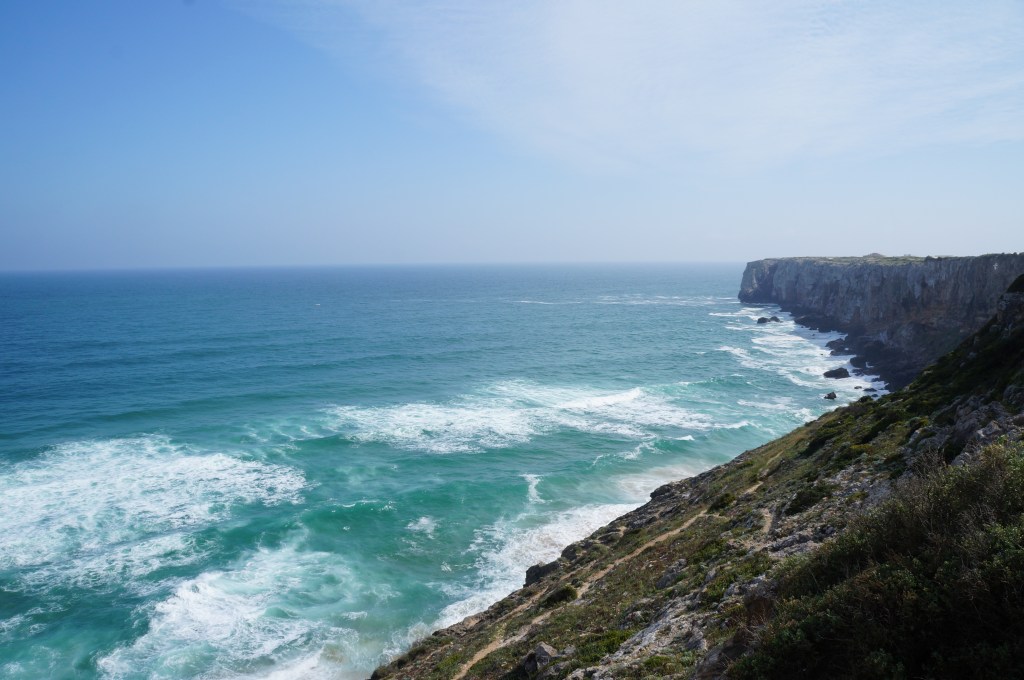
    The location was stunning. Walking along the cliffs, watching birds fly above the waves, and looking back at the rather flat, open space of the fort, it was a beautiful scene. As far as museums go, it was fairly unimpressive. Very little information was offered about what we were looking at, though Wikipedia has suggested that the Fort’s importance is up for debate, which may explain the lack of concrete information at the site.

    In either case, it was a lovely day, made even better by a really fantastic seafood lunch. We dined at A Sagres, the closest restaurant to the Fort. While those around us were eating spaghetti and other such nonsense, we requested the daily specials, and were treated to an amazing seafood stew and freshly caught fish.

    On the way home we took a scenic route along the coast. We stopped at a beautiful beach, and took a detour for a supposed ‘archaeological site of interest’ that was actually just a field.

    Check out our photos to enjoy the view:

  • Road Trip Day 3: Evora & Illness & the Algarve

    Road Trip Day 3: Evora & Illness & the Algarve

    After waking up in Marvao and spending our morning exploring, we set off to Evora. Of course, Tyler rolled his ankle on those beautiful cobblestone streets the night before, and I woke up feeling the beginning of a fever. Still, we had 2 more stops on our road trip, beginning with the city of Evora, followed by the nearby Monsaraz, then the city of Beja. By the time we had lunch, Kevin realized his couple of Pages were too ill, and he promptly drove us the last 3 hours home to the Algarve.

    Before our trip was cut short, we did get to explore Evora. We also had an incredible lunch at a restaurant that only serves 9 people at a time. “Botequim da Mouraria” is run by a welcoming Portuguese couple. In their small restaurant, there’s bar seating only, which means that we were incredibly lucky to arrive in time for lunch and find 3 empty chairs waiting for us. The service and the food were excellent. This was one of those places Kevin had found in the course of his detailed research, and it was very much worth the hype.

    After lunch, we explored Evora and its incredible history. A very old city, Evora still has Roman ruins and an incredible variety of historic architecture. On all our other stops, I read aloud to the guys various historical fun facts. Being sick in Evora meant that I didn’t really do this, and so we learned a bit less there than everywhere else. The city is more than 2000 years old, and was occupied by the Celts and the Moors before becoming the #2 city in Portugal for a time, becoming the site of much lavish spending on the behalf of Portuguese rulers.

    Here are a couple of other fun facts about Evora:

    Évora has a history dating back more than two millennia.

    It was known as Ebora by the Celts, a tribal confederacy, south of the Lusitanians (and of Tagus river), who made the town their regional capital.

    The etymological origin of the name Ebora is from the ancient Celtic word ebora/ebura, plural genitive of the word eburos (yew), name of a species of tree, so its name means “of yew tree.” The city of York, in northern England, at the time of the Roman Empire, was called Eboracum/Eburacum, named after the ancient Celtic place name Ebora Kon (Place of Yew Trees), so the old name of York is etymologically related to the city of Évora.[6]

    (Wikipedia)

    Évora is also remarkable for reasons other than its monumental heritage related to significant historic events. The 16th century was a time of major urban planning and great intellectual and religious influence. While Évora also has many noteworthy 16th-century patrician houses (Cordovil house, the house of Garcia de Resende), the unique quality of the city arises from the coherence of the minor architecture of the 16th, 17th and 18th centuries. This unity finds its overall expression in the form of numerous low whitewashed houses, decorated with Dutch tiles and wrought-iron balconies and covered with tile roofs or terraces which line narrow streets of medieval configuration and which in other areas bears witness to the concentric growth of the town until the 17th century. It also served to strengthen the fundamental unity of a type of architecture that is perfectly adapted to the climate and the location.

    Évora remained mainly undamaged by the great earthquake of 1755 that destroyed many towns in Portugal, including Lisbon. The monuments of the Historic Centre of Évora bear witness to their profound influence on Portuguese architecture in Brazil.

    (UNESCO)

    In retrospect, while we recognized how beautiful Evora was, I was a bit too sick to recognize and appreciate the signs of its long storied history. It was also clearly packed with tourists from all of the world, which became a bit of a distraction itself. All the same, we managed to take a few photos. Enjoy!


  • Road Trip Days 2 & 3: Visiting Marvao

    Road Trip Days 2 & 3: Visiting Marvao

    Ok, so the last few posts have detailed some fairly magical sights. But to be honest, there’s more to come here. This trip was pretty surreal, and we saw many memorable places.

    The driving on the trip may also have been a bit much, but in this case it turned out to be worth it. After driving 2.5 hours to Piodao, we spent a couple of hours exploring this small yet remarkable village. And then we got back in the truck and Kevin drove us another 3 hours to Marvao, a city on a hill right on the border of Portugal and Spain. About an hour into this trip, I was really questioning this decision, but when we drove up to this walled-city on a foggy night, all doubts were forgotten.

    Here’s what you need to know about Marvao (courtesy of Wikipedia):

    Commanding spectacular views across the Tagus basin (the same river to connects Lisbon to the Atlantic) and Serra de Estrela (highest point in Portugal) to the north, the fortified rock of Marvão has been a site of significant strategic importance since the earliest human settlements. Today lying on the ‘raia’ that divides Portugal and Spain, Marvão has consistently stood on a frontier zone between peoples: Celtici, Vettones and Lusitani (4th-2nd century BCE); Lusitanians and the Romans ofHispania Ulterior (2nd-1st century BCE); migratory Suevi, Alans, Vandals and Visigoths (5th-7th century CE); conquering moors and Visigoths (8th century); muwallad rebels and the Cordoban emirate (9th-10th century); Portuguese nation-builders and Moors (12th-13th century); Templars and Hospitallers (12th-14th century); Portuguese and Castilians (12th century-present day); Liberals and Absolutists (19th century); the fascist regimes of Salazar and Franco (20th century).

    Marvão’s natural assets have contributed to the ‘uniqueness’ of this remote village as perceived by visitors today: (i) as nigh-impregnable ‘eagle’s nest’ fortress – perched high on a granite crag, and bordered on the south and west by the Sever river; (ii) as vital lookout-point towards the Alcántara Bridge (70 km (43 mi) away), a wide stretch of the Tagus basin and the Serra de Estrela; (iii) as a gateway to Portugal from Spain via the Porta da Espada (‘Sword Gate’) mountain pass of the Serra de São Mamede. These assets have ensured its status as the ‘Mui Nobre e Sempre Leal Vila de Marvão’ (Very Noble and Ever-Loyal Town) into the present day.

    As with other 11th-13th-century castles, the early medieval improvements and development of Marvão castle reflect the innovations brought back by crusading orders from the near east (notably the highly influential Hospitaller castle in Syria, the Krak des Chevaliers). The medieval castle seen in Marvão today mostly post-dates the year 1299, and features numerous characteristic features of a crusader-era castle: a tall central keep with raised entrance on the first floor; a series of lower, outlying turrets (some semi-circular); high-placed arrow-slits; open spaces to aid the sheltering and assembly of villagers and troops; a well, and huge rain-collecting cistern to supply water to both keep and the wider castle in the event of siege; bent entrances (both on the village and castle gates) to slow down invaders in the event of breached gates; a series of narrow killing zones (notably, in the triple gate on the village-side of the castle); extensive crenellated battlements and curtain walls that enhanced the natural defences provided by the escarpments of Marvão’s rock.[22]

    That’s only a smattering of interesting information about Marvao, as this place is filled with historical significance. When we arrived at night fog filled the town, we had to park the truck just outside of the gates in order to walk to our hotel (we stayed and ate at the the Casa do Alentejo, where we were welcomed with the traditional and impressive Alentejo hospitality). With the characteristic preservation of the buildings’ historical style, it felt like we were walking back in time. After a lengthy dinner, we got some sleep, then woke up early for breakfast and further touring. We explored all through the town and the castle, and were constantly in awe of the view and the spirit of the region. Similar to Sintra, looking across the hills you could easily imagine what it was like to look across that view 1000 years ago. A very cool feeling that won’t soon be forgotten.

    Check out our photos below!