The week before we went to Amsterdam, Kevin met up with a friend who had visited the city multiple times. The friend was insistent that we seek out and eat an Indonesian dish called “rijsttafel”. Naturally, we did our research, and it was the first thing we did (after checking into our hotel, and allotting time for me to have a 2 hour nap).
Once I was feeling a bit more rested, we struck out on a walk through the city, taking in the beautiful buildings, canals and streetscapes (in our 6 days, it never got old). We ended our walk at Restaurant Jun, a well-reviewed Indonesian restaurant.
For those of you who (like me) didn’t pay enough attention in history class, here’s some background on Indonesian cuisine and rijsttafel, courtesy of our friends at Wikipedia:
The Dutch colonial feast, the rijsttafel, was created to provide a festive and official type of banquet that would represent the multi-ethnic nature of the Indonesian archipelago. Dishes were assembled from many of the far flung regions of Indonesia, where many different cuisines exist, often determined by ethnicity and culture of the particular island or island group — from Javanese favourite sateh, tempeh and seroendeng, to vegetarian cuisine gado-gado and lodeh with sambal lalab from Batavia and Preanger. From spicy rendang and gulai curry from the Minangkabau region in Sumatra, to East Indies ubiquitous dishes nasi goreng, soto ayam, and kroepoek crackers. Also Indonesian dishes from hybrid influences; such as Chinese babi ketjap, loempia, and bamie to European beef smoor. And there are many others from the hundreds of inhabited islands, which contain more than 300 regional and ethnic language groups.
During its centuries of popularity in Dutch East Indies, lines of servants or sarong-clad waitresses ceremoniously served the marathon meal on platters laden with steaming bowls of fragrant foods. The first to be served was a cone-shaped pile of rice on a large platter, which the server placed in the center of the table. The servers then surrounded the rice platter with as many as 40 small bowls holding meat and vegetable dishes as well as condiments.
Brought back to the Netherlands by former colonials and exiled Indonesians and Indo-Europeans (Eurasians) after Indonesia gained its independence in 1945, the rijsttafel was predominantly popular with Dutch families with colonial roots. On the other hand, when Indonesia proclaimed its independence in 1945, nationalist sentiment promoted the rejection of Dutch colonial culture and customs, including the flamboyant rice table. Today, the rice table has practically disappeared from Indonesia’s restaurants and is served only by a handful of fine-dining restaurants in Indonesia.
More of a banquet than a regular meal, the rijsttafel has survived Indonesia’s independence, composed as it is of indigenous Indonesian dishes, and is served in some mainstream restaurants in Indonesia. A typical rijsttafel will have several dining tables covered with different dishes; while in some fancy settings in Indonesia, each dish may be served by a separate waitress. Since about 1990, Indonesian food has become part of a mainstream interest in South East Asian cuisine, and there has been a proliferation of Indonesian restaurants in the Netherlands.
Despite its popularity in the Netherlands and abroad, the rijsttafel is rarely found in Indonesia. That is probably because most Indonesian meals consist of rice accompanied by only one, two or three dishes, mostly consisting of lauk (fish, chicken, meat, egg, or other source of protein), sayur(vegetable), and other side dishes. To consume more than that number of dishes at once (a rijsttafel might range from seven to forty dishes) is considered too extravagant and too expensive. The closest versions to rice table dishes readily available in Indonesia are local nasi Padang and nasi campur. However, in Indonesian restaurants around the world, especially in the Netherlands and South Africa, the rijsttafel is still popular.
So, um, now knowing the history of the dish, it actually sounds like a pretty gross tradition. As an ignorant tourist, I definitely assumed that the rijsttafel was more of an authentic Indonesian concept, but in fact it’s an authentic colonial concept. When we travel, we generally aim to experience the local culture, and given that colonialism is an important part of Dutch (and European) history, rijsttafel clearly fits the bill. And this is why it’s important to know your history, so you can (among other things) better appreciate and understand your modern experiences.
As for the dinner itself, it was top notch. The food was both delicious and beautiful. Our version of the rijsttafel included 12 different dishes, plus 2 more for dessert:
- Lumpia goreng (fried spring rolls with vegetables, chicken & a fresh salsa with coriander leaves)
- Rendang (beef tenderloin in a Sumatran sauce)
- Ayam rica bersantan (chicken in a red curry with kunyit and pandan leaves)
- Saté ayam (chicken satay with peanut sauce)
- Jukut urap (stirfried vegetables Balinese style)
- Acar campur (fresh pickled vegetables)
- Nasi putih (white jasmine rice)
- Udang laksa (gambas in a red curry from West Java with 10 spices)
- Ikan pesmol à la Jun (seabass in a sweet-sour sauce with basil)
- Saté kambing (lamb satay with sweet soy sauce and red onion)
- Pisang goreng (fried banana with palm sugar sirop)
- Kue dadar (crêpe with Javanese sugar and grated coconut with a scoop)
The team at Restaurant Jun did a fantastic job. From the service to the food to the perfect little bathrooms, we had a wonderful dinner there, and I highly recommend it to anyone looking for great Dutch-Indonesian food in the Jordaan area of Amsterdam.
Photos below!

Standing outside the restaurant. Ready to eat!

Getting started with appetizers…

… and now the real fun starts!

time for dessert!

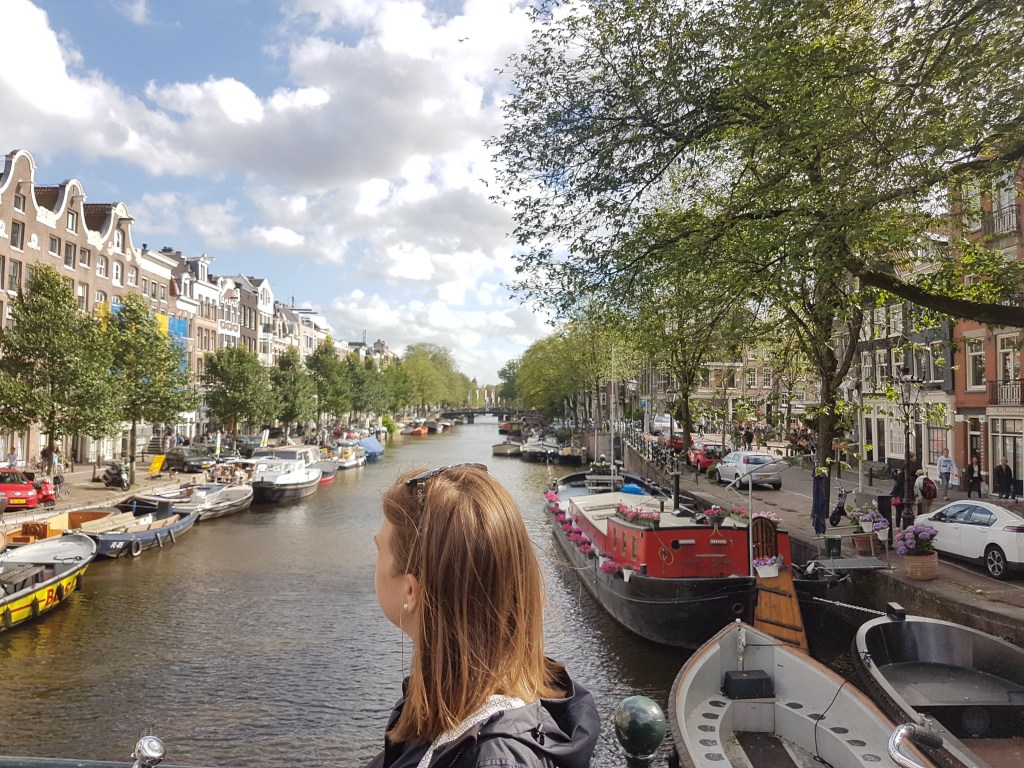
a quick snapshot of houseboats on the canal on our walk home.








 the stories that I'm telling.