Tag: Foodie

  • Day 4 in Madrid: A Full Day of Museums

    Day 4 in Madrid: A Full Day of Museums

    When we woke up on Thursday, I knew we had to allocate much of the day to visiting museums, and we were particularly interested in visiting the Reina Sofia museum, aka the home of Picasso’s Guernica. I’d learned my lesson about waiting in line earlier in the week, and bought our tickets online ahead of time.

    The other lesson I’d learned was the importance of food before going into a museum. We grabbed a quick breakfast snack around the corner, and walked through Retiro Park on our way to the museum.

    We had a few museums on our list that day, but the Reina Sofia was our primary goal, so that’s where we started.

    Officially called the Museo Nacional Centro de Arte Reina Sofía, the Reina Sofia is Spain’s primary destination for 20th century art. The Prado, which we’d already visited, housed many historic Spanish pieces, but anything from the 1900s is in the Reina Sofia (there’s a separate museum for contemporary art, which unfortunately we didn’t have time for).

    The bulk of the collection is by Spanish artists, and the most famous pieces are by Pablo Picasso and Salvador Dali. We were keen to Picasso’s Guernica, and luckily for us the museum had on a special Guernica-themed exhibit that showcased much of Picasso’s works all in one space.

    The Reina Sofia is a very large museum, housed primarily in an old hospital, which means the layout lacks the typical ‘flow’ you encounter in museums. This, combined with incredible size of the museum, meant that by the time we had worked our way through the Guernica exhibit, we gave up on trying to see the regular collection.

    So, the Guernica exhibit. It was both educational and well curated. The exhibit starts out by discussing the 1937 World’s Fair in Paris, for which the painting was created, and then it dives into the history of the Spanish Civil War. Here’s what Wikipedia has to say:

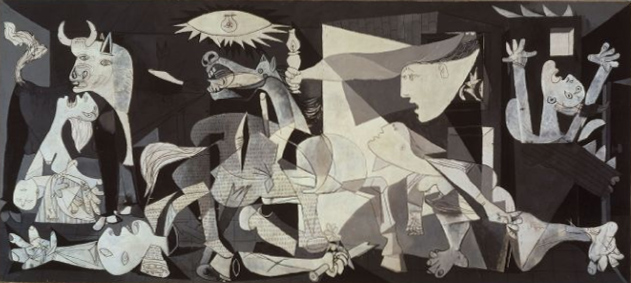
    Guernica is a mural-sized oil painting on canvas by Spanish artist Pablo Picasso completed in June 1937,[1] at his home on Rue des Grands Augustins, in Paris. The painting, which uses a palette of gray, black, and white, is regarded by many art critics as one of the most moving and powerful anti-war paintings in history.[2] Standing at 3.49 meters (11 ft 5 in) tall and 7.76 meters (25 ft 6 in) wide, the large mural shows the suffering of people wrenched by violence and chaos. Prominent in the composition are a gored horse, a bull, and flames.

    The painting was created in response to the bombing of Guernica, a Basque Country village in northern Spain, by Nazi Germany and Fascist Italian warplanes at the request of the Spanish Nationalists. Upon completion, Guernica was exhibited at the Spanish display at the Exposition Internationale des Arts et Techniques dans la Vie Moderne (Paris International Exposition) in the 1937 World’s Fair in Paris and then at other venues around the world. The touring exhibition was used to raise funds for Spanish war relief.[3] The painting became famous and widely acclaimed, and it helped bring worldwide attention to the Spanish Civil War.

    As we learned, the Spanish government commissioned Picasso to create a work of art for the World’s Fair, and it was only after the fact that he decided to create this moving painting, in what could well be described as an act of protest:

    In January 1937, the Spanish Republican government commissioned Picasso to create a large mural for the Spanish display at the Exposition Internationale des Arts et Techniques dans la Vie Moderne at the 1937 World’s Fair in Paris. At the time, Picasso was living in Paris, where he had been named Honorary Director-in-Exile of the Prado Museum. He had last visited Spain in 1934 and never returned.[4] His initial sketches for the project, on which he worked somewhat dispassionately from January until late April, depicted his perennial theme of the artist’s studio.[1] Immediately upon hearing reports of the 26 April bombing of Guernica, the poet Juan Larrea visited Picasso and urged him to make the bombing his subject.[1] However, it was only on 1 May, having read George Steer‘s eyewitness account of the bombing (originally published in both The Times and The New York Times on 28 April), that he abandoned his initial project and started sketching a series of preliminary drawings for Guernica.[5]

    After the bombing, the work of the Basque and Republican sympathizer and The Times journalist George Steer propelled this event onto the international scene and brought it to Pablo Picasso’s attention. Steer’s eyewitness account was published on 28 April in both The Times and The New York Times, and on the 29th appeared in L’Humanité, a French Communist daily. Steer wrote:

    Guernica, the most ancient town of the Basques and the centre of their cultural tradition, was completely destroyed yesterday afternoon by insurgent air raiders. The bombardment of this open town far behind the lines occupied precisely three hours and a quarter, during which a powerful fleet of aeroplanes consisting of three types of German types, Junkers and Heinkel bombers, did not cease unloading on the town bombs weighing from 1,000 lbs. downwards and, it is calculated, more than 3,000 two-pounder aluminium incendiary projectiles. The fighters, meanwhile, plunged low from above the centre of the town to machinegun those of the civilian population who had taken refuge in the fields.”[12]

    We weren’t able to take photos in the exhibit, but here’s what Guernica looks like:
    PicassoGuernica

    Per Picasso’s wishes, the painting itself did not return to Spain until the country enjoyed a republic.

    I was quite excited to see this painting, and it definitely lived up to the hype. As the building used to be a hospital, the overall footprint was not laid out well, but this exhibit was so well curated and included so many incredible pieces from Picasso’s career that it was well worth the visit.

    After 3-4 hours of taking this in, we headed out to get something to eat before hitting up another museum.

    Before we came to Madrid, Zoya sent us a list of restaurants to check out. After ‘starring’ them on our map, we were always able to find a great spot to eat. And once we got there, we referenced her notes on what to order, where to sit, etc. For lunch on this day, we sat at the bar in Mercado de la Reina and ordered amazing tapas dishes that included shrimp and friend artichoke. It was a quick lunch, and one of my favourite spots of the week.

    From there we headed over to the Naval Museum of Madrid:

    The Museo Naval de Madrid —in English, Naval Museum of Madrid— is a national museum in Madrid, Spain. It shows the history of the Spanish Navy since the Catholic Monarchs, in the 15th century, up to the present. The displays set naval history in a wide context with information about Spanish rulers and the country’s former colonies. The collections include navigation instruments, weapons, maps and paintings.

    For a 3 euro entrance fee, this museum is a pretty good deal, but I won’t be rushing back. If you’re really interested in naval history, and models of boats and military seafaring are your thing, then this is the museum for you.

    However, as general students of history and politics, we found the museum a bit lacking.

    To give some context, here’s what Wikipedia has to say about the Spanish Navy:

    The Spanish Navy (Spanish: Armada Española), is the maritime branch of the Spanish Armed Forces and one of the oldest active naval forces in the world. The Spanish navy was responsible for a number of major historic achievements in navigation, the most famous being the discovery of America and the first global circumnavigation by Magellan and Elcano. For several centuries, it played a crucial logistical role in the Spanish Empire and defended a vast trade network across the Atlantic Ocean between the Americas and Europe and across the Pacific Ocean between Asia and the Americas.

    The Spanish Navy was one of the most powerful maritime forces in the world in the 16th and 17th centuries and possibly the world`s largest navy at the end of the 16th century and in the early 17th century. Reform under the Bourbon dynasty improved its logistical and military capacity in the 18th century, for most of which Spain possessed the world’s third largest navy. In the 19th century, the Spanish Navy built and operated the first military submarine, made important contributions in the development of destroyer warships, and achieved the first global circumnavigation by an ironclad vessel.

    The 1820s saw the loss of most of the Spanish Empire in the Americas. With the empire greatly reduced in size and Spain divided and unstable after its own war of independence, the navy lost its importance and shrank greatly.

    During the Spanish–American War in 1898, a badly supported and equipped Spanish fleet of four armored cruisers and two destroyers was overwhelmed by numerically and technically superior forces (three new battleships, one new second class battleship, and one large armored cruiser) as it tried to break out of an American blockade in the Battle of Santiago de Cuba. Admiral Cervera‘s squadron was overrun in an attempt to break a powerful American blockade off Cuba.

    In the Philippines, a squadron, made up of ageing ships, including some obsolete cruisers, had already been sacrificed in a token gesture in Manila Bay. The Battle of Manila Bay took place on 1 May 1898, during the Spanish–American War. The American Asiatic Squadron under Commodore George Dewey engaged and destroyed the Spanish Pacific Squadron under Admiral Patricio Montojo y Pasarón. The engagement took place in Manila Bay in the Philippines, and was the first major engagement of the Spanish–American War. This war marked the end for the Spanish Navy as a global maritime force.

    Currently, the Spanish ‘Armada’ is the third largest navy in Europe, after the British Royal Navy and the French Navy, and the sixth in the world ranking.

    For centuries, Spain was a major naval power, and the museum does a great job of showcasing their strengths. However, the museum does a perplexingly bad job of discussing the decline of the Spanish navy in the 1800s. Case in point? They effectively skip over the destruction of the Spanish Armada, and while they do discuss their colonial expansion, there’s no mention of struggles around decolonization, or of the decisive Spanish American war. If you didn’t know better, the museum would give you the impression that Spain is still a hard-hitting naval power.

    That said, there are approximately a gazillion boat models in this museum, and it’s 10x larger than it seems at  the outset, with over 30 rooms of boats, maps, and artifacts. If you’re even remotely interested in maritime history, this is worth checking out.

    That night, we had plans to eat dinner in northern neighbourhood in Madrid. On our way there, we stopped in at one last museum, the Sorolla Museum. Madrid has a series of museums about Spanish artists, primarily based in the historic home of said artist. In this case, we visited a museum in the home of Joaquin Sorolla:

    The building was originally the artist’s house and was converted into a museum after the death of his widow. Designed by Enrique María Repullés, it was declared Bien de Interés Cultural in 1962.[citation needed] The principal rooms continue to be furnished as they were during the artist’s life, including Sorolla’s large, well-lit studio, where the walls are filled with his canvasses. Other rooms are used as galleries to display Sorolla’s paintings, while the upstairs rooms are a gallery for special exhibitions.

    Our walk to the Sorolla Museum followed a variety of busy streets, which made the walled garden of the home feel like a true oasis. I always really enjoy exploring homes, and this museum didn’t disappoint. Sorolla painted in the impressionist style, and painted beautiful landscapes and portraits. The artwork in the museum showcased his love of painting his family, and of his skill painting light and water. For a small entry fee, the Sorolla Museum was well worth it.

    Dinner itself was a whole other experience, which I’ll save for the next post…

  • Day 3 in Madrid – Lunch at DSTAgE

    Day 3 in Madrid – Lunch at DSTAgE

    Before we came to Madrid, Zoya recommended we splurge on lunch at DSTAgE, a two Michelin star restaurant. She advised we’d need reservations, but when I tried to book us in, they were full.

    So what did Zoya do? She called them. She got us on the wait list for lunch everyday that we were in Madrid. On Tuesday, they called her back while we were in the museum, so we couldn’t go. But on Wednesday, they called her back just as we were waking up from a late slumber. Perfect timing. We got up, we got dressed, and we went to lunch at DSTAgE.

    Before we get into the amazing experience we had, a quick note on Michelin star restaurants.

    The Michelin Guide assigns star ratings (1, 2, or 3 stars) to top quality restaurants in select cities around the world. Receiving a Michelin star rating is considered rather prestigious, as the Michelin Guide is famed for its extremely high standards. Here’s where it all comes from, according to Wikipedia:

    In 1900, fewer than 3,000 cars graced the roads of France. To boost the demand for cars and, accordingly, car tires, brothers and car tire manufacturers Édouard and André Michelin published the first edition of a guide for French motorists, the Michelin Guide.[2] The brothers printed nearly 35,000 copies of this first, free edition of the Michelin Guide, which provided useful information to motorists, such as maps, tire repair and replacement instructions, car mechanics listings, hotels, and petrol stations throughout France. 

    Recognizing the growing popularity of the restaurant section of the guide, the brothers recruited a team of inspectors to visit and review restaurants, who were always careful in maintaining anonymity.[6]

    In 1926, the guide began to award stars for fine dining establishments. Initially, there was only a single star awarded. Then, in 1931, the hierarchy of zero, one, two, and three stars was introduced. Finally, In 1936, the criteria for the starred rankings were published:[3]

    • 1 Michelin star: “A very good restaurant in its category” (Une très bonne table dans sa catégorie)
    • 2 Michelin stars: “Excellent cooking, worth a detour” (Table excellente, mérite un détour)
    • 3 Michelin stars: “Exceptional cuisine, worth a special journey” (Une des meilleures tables, vaut le voyage).[6]

    Michelin reviewers (commonly called “inspectors”) are completely anonymous; they do not identify themselves, and their meals and expenses are paid for by the company founded by the Michelin brothers, never by a restaurant being reviewed.

    The French chef Paul Bocuse, one of the pioneers of nouvelle cuisine in the 1960s, said, “Michelin is the only guide that counts.”[11] In France, each year, at the time the guide is published, it sparks a media frenzy which has been compared to that for annual Academy Awards for films.

    So, that’s what the hype is all about. Accordingly, Michelin star restaurants are also quite expensive to eat at. Zoya and Shrip have found that, relative to other markets, Michelin star eating is a deal in Madrid, yet another reason why they encouraged us to try DSTAgE.

    So, what about DSTAgE itself? The restaurant is typically described as a ‘concept’ restaurant, and its known for experimentation and creativity. The owner and chef, Diego Guerrero, was previously the head chef at a different two Michelin star restaurant, and left to create his own restaurant in contrast to the uptight tradition and style of other high end restaurants in the city.

    According to the Michelin Guide:

    This restaurant has an urban and industrial look and a relaxed feel that reflects the personality of the chef. The name is an acronym of his core philosophy: ‘Days to Smell Taste Amaze Grow & Enjoy’. Discover cuisine that brings disparate cultures, ingredients and flavours together from Spain, Mexico and Japan.

    Now that you’re familiar with the concept of Michelin stars and with DSTAgE in particular, let’s talk about our experience.

    On Wednesday, we woke up to a call from Zoya about our reservation. From there, we got dressed and strolled across the city for lunch.

    One of the most interesting elements of our DSTAgE experience was how specifically everything was timed. When you arrive at the restaurant, you’re escorted to 1 of 2 stations at the bar of the open kitchen.

    There, you meet one of the cooks, who makes and serves you a palette opening dish, following by a palette cleansing drink. In our case, we had shrimps cooked over a Himalayan salt rock, served on a homemade cracker. It was bizarre and delicious, and hit every tastebud. Over the course of our meal, we watched every other group of patrons go through this experience as well.

    From there, you take a seat at your table, and decide how to tackle your meal. You can choose 12, 14, or 17 courses. You can also choose wine pairings for each course. We opted for 14 courses, without the pairings (it was lunch, after all!).

    Our first course was the seafood of the day: “razor clam with celeri dashi, almonds mild and coffee nectar”. The presentation was so cool that we took a video:


    When each course was brought to the table, our server explained how it was made, what is was, and how best to eat it.

    After the razor clams, we had something described to us as “Thailand in one bite”. It was pandan radish with pandan tea, and reminded us so much of the rice we had in Cambodia, which was often served with pandan leaves. Unfortunately we didn’t snap a picture of this one.

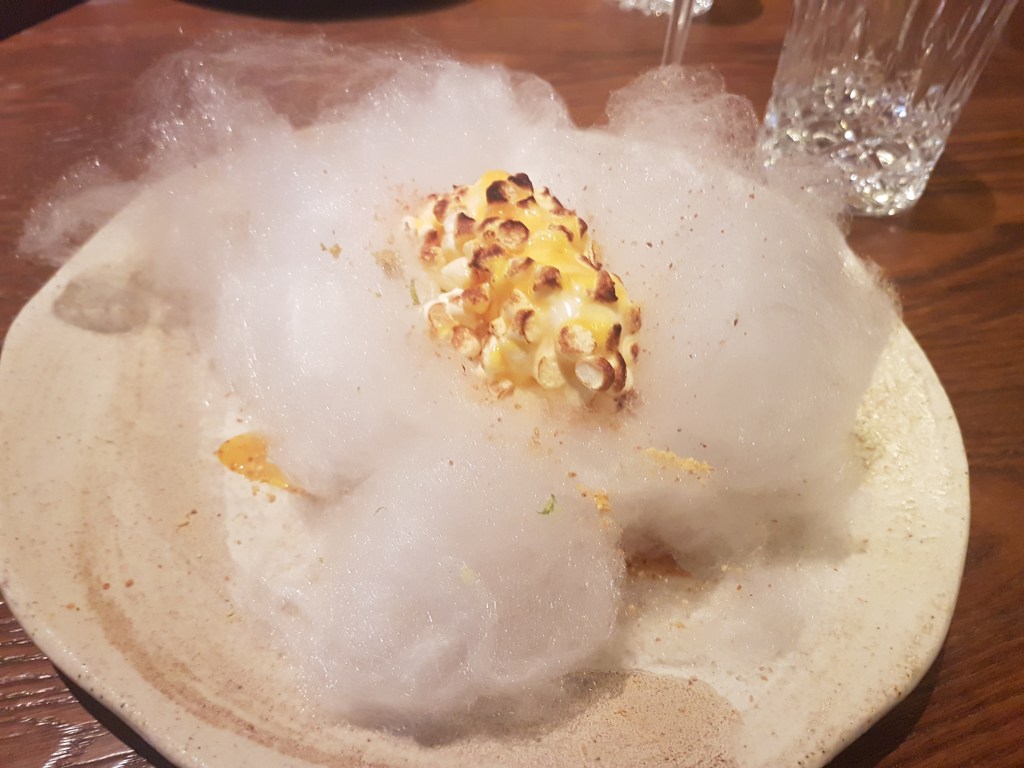
    However, we took photos of every other course, which you can check out below! I’ve added our notes on every dish below as well. As you can see, the amount and variety of food made for an intense experience, but it was absolutely worth it.

    See for yourself below… and then consider adding DSTAgE to the agenda when you’re next in Madrid!


  • Heather and Kevin take Lisbon

    Heather and Kevin take Lisbon

    The main thing that we orient our trips around is eating.

    Good food is a big deal to us, and so we’re often looking to try new restaurants, in hopes that they impress. In Lisbon in particular, where we hadn’t spent much time, we were looking to try new places, in search of some future favourites. We make our choices based on online research, recommendations from friends, and TripAdvisor lists.

    We were in Lisbon for 2 nights, staying in our friend Soledad’s beautiful apartment while she was away on a business trip. After our long drive, we got settled into her apartment, took a quick nap, and then headed into downtown Lisbon for dinner. Kevin knew I was having a bit of a craving for my grandmother’s perogies, so he took me to Stanislav Avenida, a well reviewed new Russian restaurant in town. And let me tell you, those reviews were well-earned. The food was amazing, as was the selection of specialty vodkas.

    Before heading back to the apartment (I’m working, you know!), we took a short walk through Lisbon. Because Kevin and I speak english to each other, we’re often mistaken for foreign tourists. People selling things on the street often call after us in English, and they’re always surprised when Kevin responds in Portuguese.

    On this particular day, this resulted in us getting free entry into the House of the Alentejo (a remote farming province in Portugal, known for being rather traditional). We definitely didn’t expect just how traditional the inside of the club would be. It was like travelling back in time. The decor throughout the building was beautiful, and obviously hadn’t been changed since the decadent days when it was built. And to top it off, upstairs was a dinner with traditional Portuguese dancing. We took a bunch of photos, otherwise we might have thought it was all a dream.

    Despite working till after 4am, we were up bright and early to explore the sites in Lisbon. This was a really fun day for me, because Kevin planned everything and I was just along for the adventure. We started off on the west side of Lisbon, in what’s known as Belem. We saw Lisbon’s famous Jeronimos Monastery, the very old Tower of Belem, and a great big monument built to commemorate Portuguese exploration. After lunch, we headed to the Aquarium, which I’ll write about separately.

    In the afternoon, we went right into Lisbon proper, where we walked, and walked, and walked, and walked. Eventually, we stopped at a pretty unique bar called Pavilhao Chinese. Their claim seems to be ‘collections of stuff’, and they have that in spades. I’ve never seen a bar quite like it, and I definitely recommend stopping in at least once.

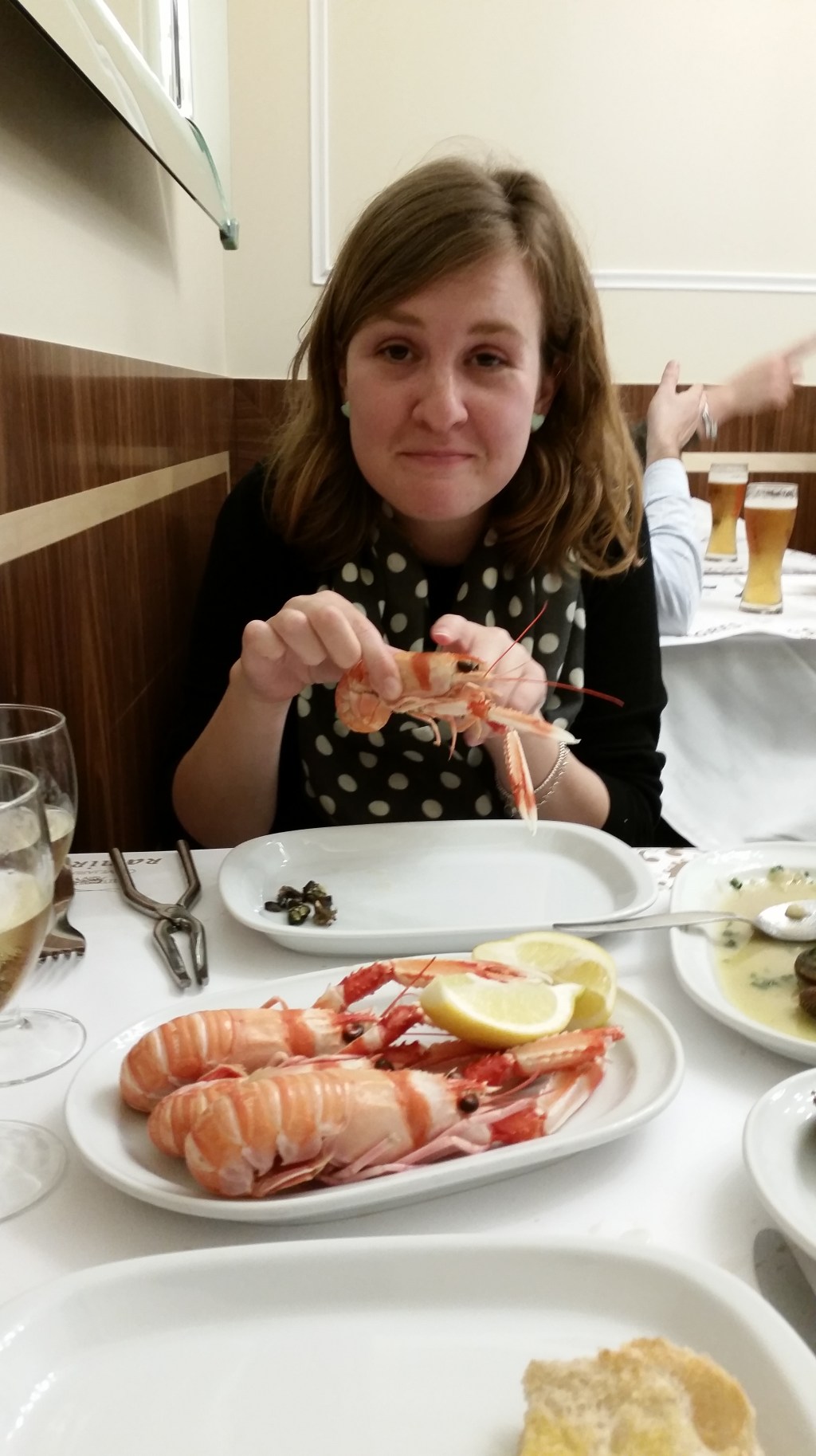
    The last destination on our list that day was obviously dinner, and we had some of the best seafood that Lisbon offers, at Cervejaria Ramiro. Since coming to Portugal, I’ve become a complete and total seafood monster. That night we had goose barnacles, multiple types of shrimp, and clams. And we even met a fellow Canadian!

    After a full day of activities and amazing food we headed back to Soledad’s apartment. Worth noting is that this is probably the cleanest apartment I’ve ever been in. While Kevin slept, I took some of my phone calls in the bathroom, where I spent a lot of time sitting on the floor. If you can keep your bathroom floor spotless, then you’re probably the cleanest person ever. Thanks Soledad!

    If a picture is worth a thousand words, and I’ve already written 600, then you should probably just look at the photos below. They’ll tell you much more about the amazing-ness of our trip to Lisbon!


  • Eating in Cambodia with my brothers

    Eating in Cambodia with my brothers

    If you know my family at all, you know that my brothers are a bit infamous for being picky eaters. Because they’re picky, it’s rare for them to be forced to try new things. In fact, when they were coming here, the number one question people kept asking me what “oh my gosh, what are they going to EAT???”

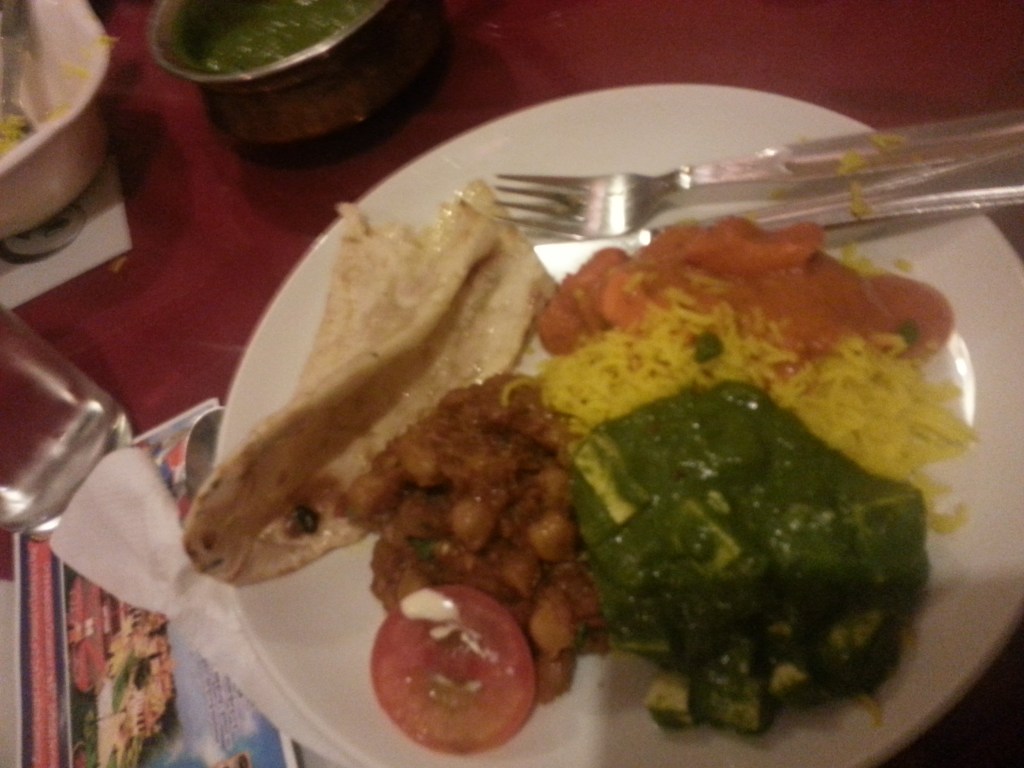
    They survived 10 days here just fine, and they managed to eat (or at least try eating) a variety of things, including:

    • Vietnamese Pho
    • Indian food – butter chicken, palak paneer, chana masala, naan,
    • Khmer food (including the national dish – Fish Amok)
    • Expensive and delicious Italian food
    • Khmer fusion food from a local NGO restaurant, Friends
    • The best pizza and ribs in Phnom Penh, at Brooklyn Pizza
    • Breakfast (pancakes, eggs, bacon, etc)
    • Fruit shakes
    • Western Food, served almost everywhere
    • Ice cream (and lots of it!)

    In particular, we developed a bit of an obsession with Swensen’s ice cream. Swensen’s is an ice cream chain originally founded in San Francisco. It’s really shilling Americana, so much so that we had thought it was a chain from Singapore, but according to Wikipedia, it’s actually owned by a conglomerate headquartered in Markham, ON (apparently Burger King isn’t the only corporation that knows about Canada’s low corporate taxes). In any case, Swensen’s has a sizeable presence in the Asian markets, but sometimes that presents its own challenges, but also leads to hilarity.

    In Siem Reap, we’d seen a sign for Swensen’s, but couldn’t find it on Google Maps. Being North American, I thought “hey! I’ll just check the Swensen’s website!”. Ha! On the Swensen’s website, selecting “Cambodia” opens an email window for you to send an email to the Cambodian franchise owner to find out where they have locations. Not exactly the instant information that I was looking for. Anyways, we ended up finding it by accident, around the corner from our hotel.

    On our first trip there, Kevin and Kristopher were dismayed to learn that they were unable to make a few choice desserts due to lack of supplies (certain chocolate ice creams, and also maltesers). Of course, Kevin solved the latter issue by going to the grocery story, 10 feet away, and buying a pack of maltesers. Much laughter ensued.

    As for our expensive Italian food – after we returned from Siem Reap, I asked (re: instructed) Tyler to choose a place for us to eat dinner the next night. Kevin and I had been doing all the research and making all the decisions, so I figured it would be good for Tyler to get a taste of that. After some research, he recommended we go to Do Forni, an Italian restaurant at Sofitel, a top Phnom Penh hotel. TripAdvisor said it was 2 dollar signs, so away we went. It was very much very fancy. It was maybe 2 dollar signs (out of 5) by Toronto standards, but it was definitely the most expensive restaurant we’ve been to in Phnom Penh (that is, a dish cost between $15 and $30). That said, the food was delicious (we had steak, lobster ravioli, pizza, carpaccio, wine) and the service was also very good. And of course, the restaurant itself was beautiful. Tyler was generous enough to pick up the tab, proving once again that he is the superior sibling in this mix.

    Photos of all this and more, below:


  • Birthday Cake!

    Birthday Cake!

    For the past week, we’ve been in the Philippines, where our internet access has been woefully limited. That said, it’s well worth the isolation, because we’re actually in paradise right now. Google “El Nido, Palawan” and then start planning your own trip. It’s outrageously beautiful here. So, we’ll have many, many photos to share once we’re back in a city, but for now a quick post about my birthday cake.

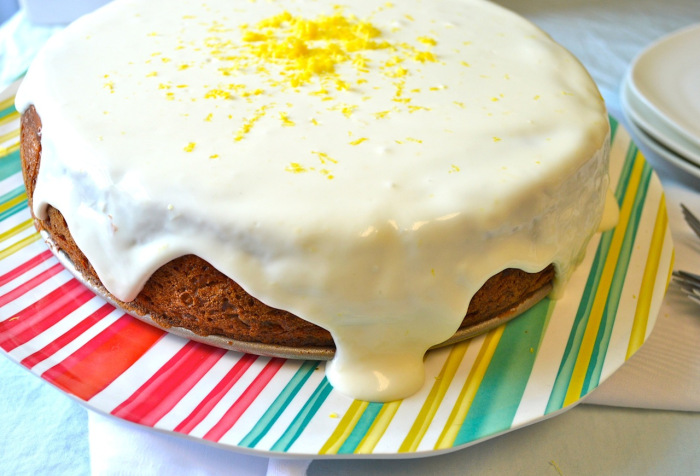
    Those of you who really truly love me know that my birthday was last Saturday, August 2nd. This year on my birthday, I received something truly unique – a birthday cake, a continent away!

    My bff Rebecca writes an awesome food blog over at itsanourishingthing.com and for my birthday she baked me a cake and blogged about it! And not just any cake, but a carrot cake cheesecake. When she asked what my favourite type of cake was, I couldn’t decide whether I preferred carrot cake or mascarpone cheesecake, so she found a way to combine the two. Check out the photos below, and check out her blog as well. It’s a one stop shop for tasty yet healthy recipes that will have you rushing for the kitchen.