Tag: travel tips

  • Welcome to Alte!

    Welcome to Alte!

    Kevin and I have been here in Portugal for awhile, so it’s about time that I let y’all know about exactly where it is we’re staying.

    Both of Kevin’s grandmothers live in the Algarve (southern region of Portugal), which is where they retired after years of working in Canada. I’ll write separate posts about each of them later, but suffice to say that they are two rather feisty, independent women. Kevin’s entire bloodline (pre-parents) come from the Algarve, all within a 30km radius. So the Algarve really is special to him and to his family.

    While one of his grandmothers lives in a mid-sized city, the one that we’re living with, Avo Olimpia, lives in a small town of about 1100 people. When Kevin was growing up, his grandmother would spend 6 months of the year living with his family in Toronto, and the other 6 months would be spent in Alte. As such, Kevin and his brother grew up spending every summer visiting his grandmother here. As much as Kevin is from Toronto, he’s also very much from this small Portuguese village. And it’s obvious every time that we go out, because he knows every. single. person. here.

    But let’s get back to Alte itself. This tiny little village is rather famous, so much so that it has its own Wikipedia article. It’s also extremely popular as a tourist destination, and I found the best Alte description on a website about tourist destinations in the Algarve:

    Considered by many as the most typical algarvean village, Alte is a small village of white-washed houses nestling amidst trees and mountains, the image of old Algarve. Situated in central Algarve, the village dates from Roman times and has a Moorish past that can be observed in the detail filigree chimneys that adorn the houses.

    In the centre of the village you will find the Church dating from the 13th century, the chapel houses some very special hand painted pieces dating from the 16th century. There is also an old water mill which also dates from the 13th century.

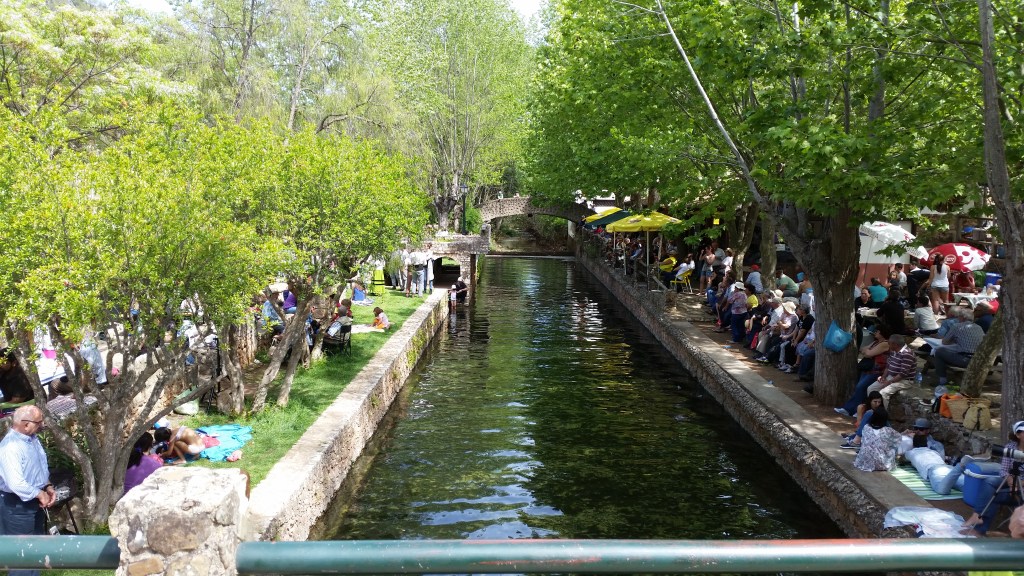
    The focal point of Alte are the two springs. Fonte Pequena and Fonte Grande (Small Spring and Big Spring). In the olden days the women of the village gathered at the springs to fill their pitchers and wash the laundry. Now, the springs are the ideal place to enjoy a relaxing picnic in the calm tranquillity of this village.

    My friend Anne recently visited us here, and she describes this place as a fairytale. It really does have everything: beautiful water features, a waterfall, super old/beautiful churches, cobblestone streets, the view of a town built into a hillside, and the most relaxing sounds. There’s hardly any traffic, so most of day all you hear are the stream flowing and the birds chirping. There’s an interesting array of stray cats (all fed by grandmothers) and other wildlife. In the stream behind the house you can see ducks, geese, fish, and turtles. And in a tree beside the Fonte Pecana you’ll find a couple of chickens and a rooster. There are also horses. Sometimes you see people riding them through the streets!

    Aside from the natural beauty of Alte, there’s the beauty of the community itself. When you go out here, it’s important to always says “good morning” (bom dia), “good afternoon” (boa tarde), or “good evening” (boa noite) to each person you encounter. Basic manners in a small town, I guess. And half the time, that person knows Kevin and/or his family, and will stop to chat. Kevin’s family is rather well-known here, and having spent his summers here, Kevin himself is rather well known. He actually has life-long friends here, which is pretty cool. You’re hard pressed to find someone who won’t describe knowing Kevin when he was just small child.

    I thought that growing up in Grimsby gave me a small town experience? Kevin’s life in Alte is actually as small town as it gets. And not in an unpleasant way. Yes, when you go for coffee or go to the pharmacy, everyone asks about Kevin or his teeth or his grandmother. Yes, people know things about you and talk about what you’re up to. But it’s because the people here are pleasant and nice. Because they’re invested in knowing each other. The people are relaxed and they’re interested in having a good time.

    Case in point? There are SO many events that happen in this small town, all of which involve lots of eating and drinking. In fact, the last festival I went to, we ran into some old family friends. What started as a lively conversation ended with shots of medronho (local fancy moonshine).

    Here’s a quick rundown of the some of the events we’ve been to here (pictures included below):

    – Festa do Chourica (Festival of Chorizo, a version of Portuguese sausage): This was a lively festival held beside the older, smaller church in Alte. We had bread, chourica, and beer. (Of course, we got less bread than the others, because the lady giving out he bread knows that Kevin and I aren’t big bread-eaters, because his grandmother told her). There was also an auction, where we ‘won’ a jar of honey.

    – Alte BTT: this is a bike race that kicks off the cultural week in Alte. It’s organized by a local bike club, and the starting line is right in front of Kevin’s grandmother’s house. We were able to get a great view from the balcony.

    – Semana Cultural – the cultural week included live music, a comedy night, public art, dancing, and an artisanal marketplace (with great desserts)

    – Folk Festival – This took place on the ending weekend of the cultural week. It was a huge event that began on the Friday, which was a holiday. The Fonte Grande was packed with tables and people who were enjoying food and beer while watching a typical folk dancing competition. The weather was beautiful, so we were able to get lots of great photos.

    Lots of photos below, enjoy!

  • A long-winded collection of tips & tricks for travelling without tribulations

    A long-winded collection of tips & tricks for travelling without tribulations

    As some of you may know, we’re currently in Laos. For those of you who didn’t know, we’re in Laos! We’re in the beautiful capital city of Vientiane. Here’s a map for some geographical context:

    images (11)
    We’ve been here about a week so far, and plan to be here a few more days. I totally love it here, but I’ll save all my gushing for another post.

    The other day, our friend saw our hotel room, and he was teasing us about how it looks like we’re quite settled in, because our stuff is absolutely everywhere. I assured him with an oft-heard Heather Page refrain: “don’t worry, I have a system”. But the thing is, I totally *do* have a system. And a few months into this work/travel lifestyle, it’s gotten pretty darn good.

    So, with the aim of sharing my knowledge and experience with others, here’s a run down of the tools and habits/systems that we swear by in order to cut the stress out of travelling:

    Tools

    • Agoda.com – this is the site of choice for booking accommodations when travelling in South East Asia. There are tons of listings for hostels and hotels, and they usually have really good flash deals/discounts
    • GoogleMaps – Probably the most important tool that we use. Kevin has an Android phone, so he’s able to pre-load maps. How? He views the whole geographical area on the map, and then types “ok maps” into the search bar, and clicks “enter”. This downloads the whole map onto his phone, so he can access it without wifi, allowing us to navigate with only his GPS. Pretty darn convenient. You can also star locations on googlemaps (on the phone or in your browser), and it will remember them.
    • TripAdvisor – Y’all already know that I’m crazy about Trip Advisor. Before we head to a new destination, I’ll go through the top 30 listings or so, and look at locations near our hotel. From there, I’ll make a list of places we’re checking out.
    • Wikitravel: a real-life travel guide to cities written by fellow travelers. This advice on this site tends to be realistic, honest, and super practical. Some articles are  better than others, but Wikitravel is a great, simple resource for answering questions about cell phone service, neighbourhood dynamics, and transit.

    Habits/Systems

    The most important thing, that I cannot stress enough, is that for Kevin and I, travelling has become a serious team effort. We both do research that we share with each other, and we each execute different parts of our systems. A lot of our strategies are things that one of us learned or came up with separately, and then brought to our collective system of travel survival. Anyways, here are some things we do to keep ourselves in order.

    Habits: 

    • Cash: When we travel, always make sure we have at least a bit of cash. That way, we can exchange a bit of it in the airport and enter a country prepared.
    • SIM Cards: One of the first things we do is purchase new SIM cards, get them into our phones, and then save each other’s new phone numbers. This is a big one for safety and convenience
    • Bring a pen: This is simple but super useful. When flying into a new country, you have to fill out paperwork. They’ll give you this paperwork on the plane, but they rarely have writing utensils. If you don’t have a pen, you either have to borrow a pen from a neighbour, of you have to wait until you get to the airport and use the pens there. By bringing a pen, you save yourself a ton of time going through Passport Control/Customers. Essentially, be prepared and get to the front of the line.
    • Know what you’re doing and where you’re going: Don’t wander out of the airport looking lost or confused. Know where you need to go, and have studied a map well enough to know what direction it’s in. This isn’t the most important thing of all time, but it’s a good rule of thumb for keeping safe and not getting ripped off.

    Systems: 

    Packing our suitcase

    • Packing clothes: I usually end up packing a variety of clothes, many of which I’m conscious of wrinkling (unless, of course, I just leave all of Kevin’s dress shirts in our closet, in which case wrinkling is the least of our worries). The best strategy I’ve followed so far is to just roll things up: dress pants, dress, shirts, etc.
    • Packing non-clothing items: It’s all about Ziploc bags. I can never have enough Ziploc bags: the medium and large sizes. Somehow when I was packing to come to Asia, I brought 6 or 7 bags, and I am SO grateful that I did. I use them for all of my non-clothing packing needs. It’s a great way to keep the suitcase clean while also keeping things organized, and knowing where things are. On top of that, it makes re-packing that much easier when getting ready to leave. Combined with my 2 makeup bags, it’s my best system yet:
      • Makeup bag: larger products that will mostly be used only by me, like large makeup stuff, hair products, bobby pins/elastics (in their own smaller bag, of course), contact lens solution. Toothpaste and toothbrushes usually go in here as well.
      • Medium Size Ziploc Bag: Anything remotely medicinal. This includes Advil, bug repellant, Tiger Balm, polysporin, band-aids, medical tape, cough drops, Imodium, among other things
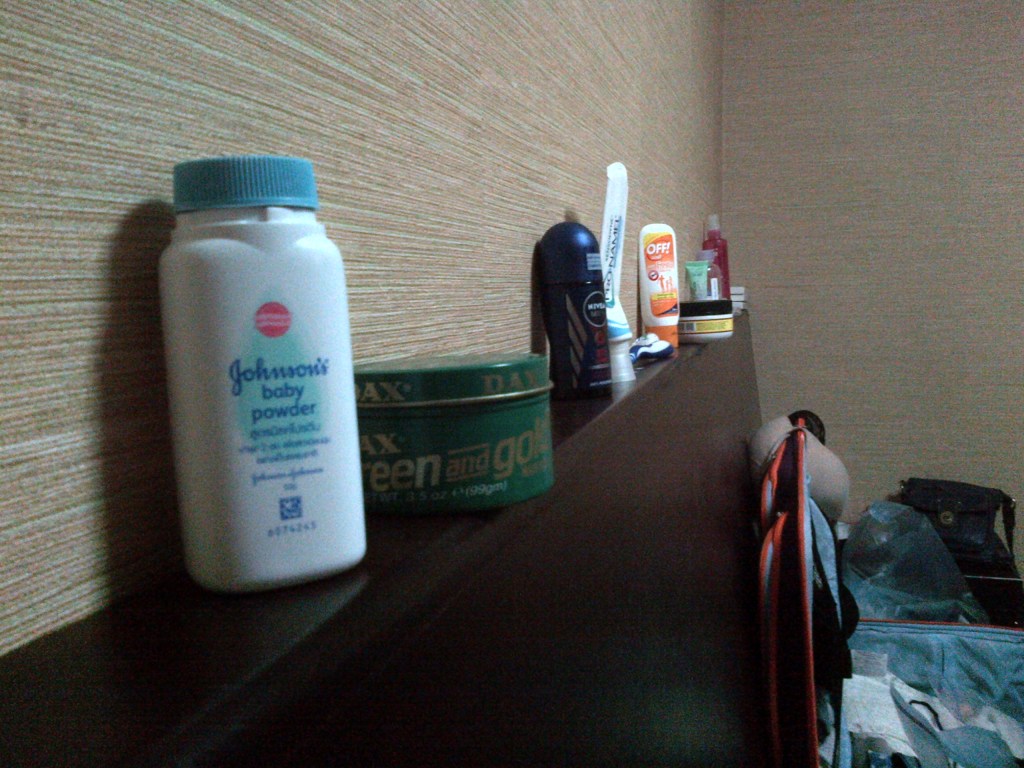
      • Large Ziploc Bag: Things Kevin uses. This includes his infamous hair wax, baby powder, nail clippers, a comb, asthma puffers, and anything else he might look for over the course of a trip.
      • Other Larage Ziplock Bag: this one rarely has much in it. I usually keep 1 additional bag available while I’m packing. As I wrap up, I sometimes notice a few random items that I’ve forgotten, and I’ll toss these in the bag. The purpose here is to pack small things without losing them in the process. By tossing small but necessary random items into a bag, they become less lose-able.

    Manageable Unpacking

    • Okay. We packed the suitcase, made it swiftly through the airport, and arrived at the hotel. What’s next? Some preparatory unpacking
      • Step 1: Sit the suitcase on something (a suitcase holder, or a bench, a chair, anything will do) and open it up
      • Step 2: Take out the dress shirts and pants, unroll them, and hang them up. Most hotels have at least 3 hangers. If they don’t, go ask the front desk for hangers. 3 is always enough to layer all Kevin’s shirts and pants in the closet, to avoid wrinkling. If there’s an extra couple of hangers for my dresses, that’s a bonus.
      • Step 3: Release the bags! I open the bags and move all related items to the right place. My makeup bag goes straight for the bathroom, along with half the stuff in the “Kevin” bag. The other bags sit in the suitcase, piled beside stacks of shirts and pants. All shoes are removed and placed near the entryway.

    Other tips

    • Check the bed sheets and mattress for bed bugs. Not sure of strategy here. This is a Kevin-led process
    • Make sure the air conditioner works. You can also open the air conditioner and clean out/dust off the filter for max A/C. Again, not sure of strategy.
    • Get your electronic chargers out and ready, so they’re already there when you need them. There’s nothing worse than forgetting to charge your phone because you were in a foreign space. If you need an adapter and don’t have one, sort that out right away. Ask the front desk, as they usually have spares, and if they don’t, they can point you to the nearest convenience store to pick one up.
    • Check the WiFi and make sure it works. If it doesn’t, start figuring out where the nearest good WiFi spot will be. Pre-travel research is super helpful in this case.
    • Keep photo copies of your passport with you. If you have a travel visa, get a copy of that as well.
    • Don’t let the front desk keep your passport. When you check in, they’ll want to take a copy of your passport. From my experience, this is usually non-negotiable, though sometimes they’ll accept a drivers license. If they ask to just keep it and give it back to you later, insist that they instead make a copy right away. Make it clear that you don’t mind waiting, and you won’t leave without it.
    • Be mindful of the weight of your bag, and repack as needed. This is especially important if you’re travelling with a non-rolling suitcase and/or going somewhere that rolling isn’t always an option. We always travel with backpacks, which we use to carry heavier items.
    • Be patient with each other. Travelling is stressful. Be forgiving and be willing to help the other person, because in the long run it will make everyone’s travel experience better.

    That’s all I can think of for now. Did I miss anything? Have questions? What other strategies do y’all follow? Comment away!

    Also, here are some photos of our packing strategy in action: