Tag: Travel

  • A Trip to the Algarve – A Culinary Experience

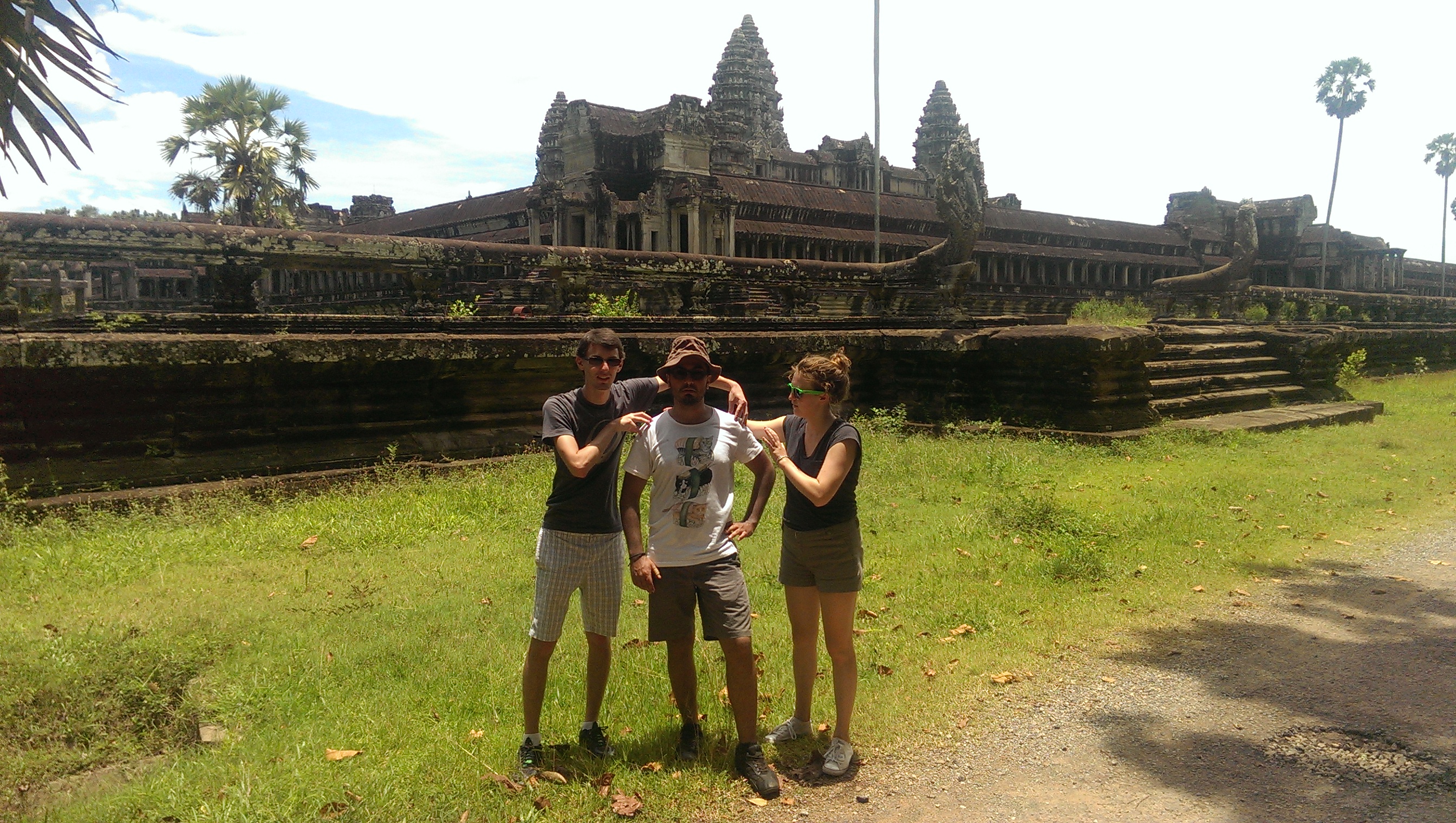
    So…hey there. I’m Tyler, one of Heather’s (decidedly larger) little brothers. Last year when Heather was on her Asian tour I stopped by for a visit in Cambodia. And here’s the thing, if you ever get the chance to vacation with Heather and Kevin, take it! A trip with these two is truly a vacation experience. They find all the most interesting people, order the best food, plan the best day trips, and before you know it you’re staging ridiculous photo-ops in front of Ancient World Wonders.
    2014-08-23 01.22.36
    Angkor Watt with these two (and KP), a world away – nice hat Kevin

    So when I got the offer to come visit in Alte, I took it! And in April, I met Heather and Kevin in Lisbon, kicking off a two week adventure of history, roadtrips, and wine.

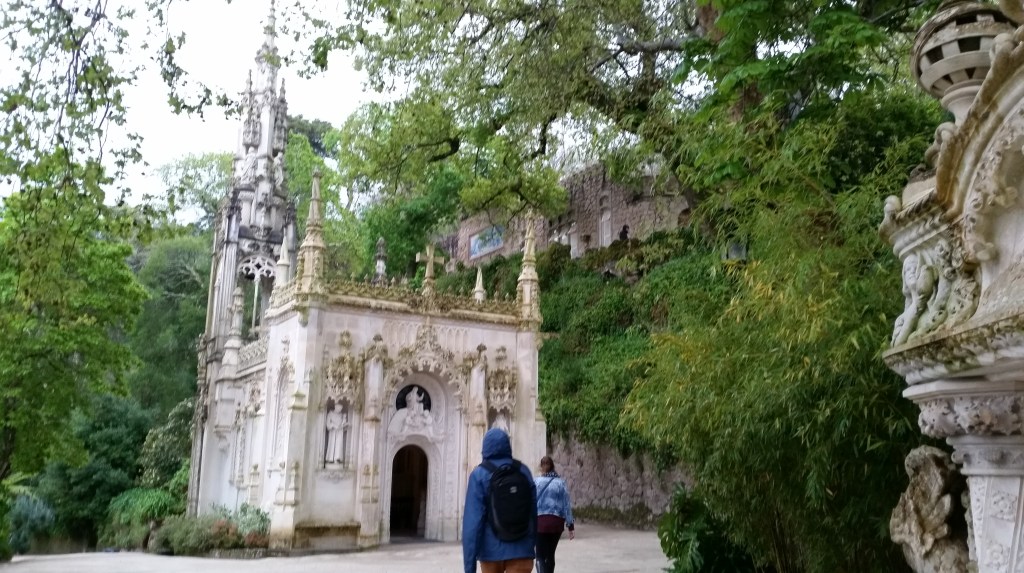
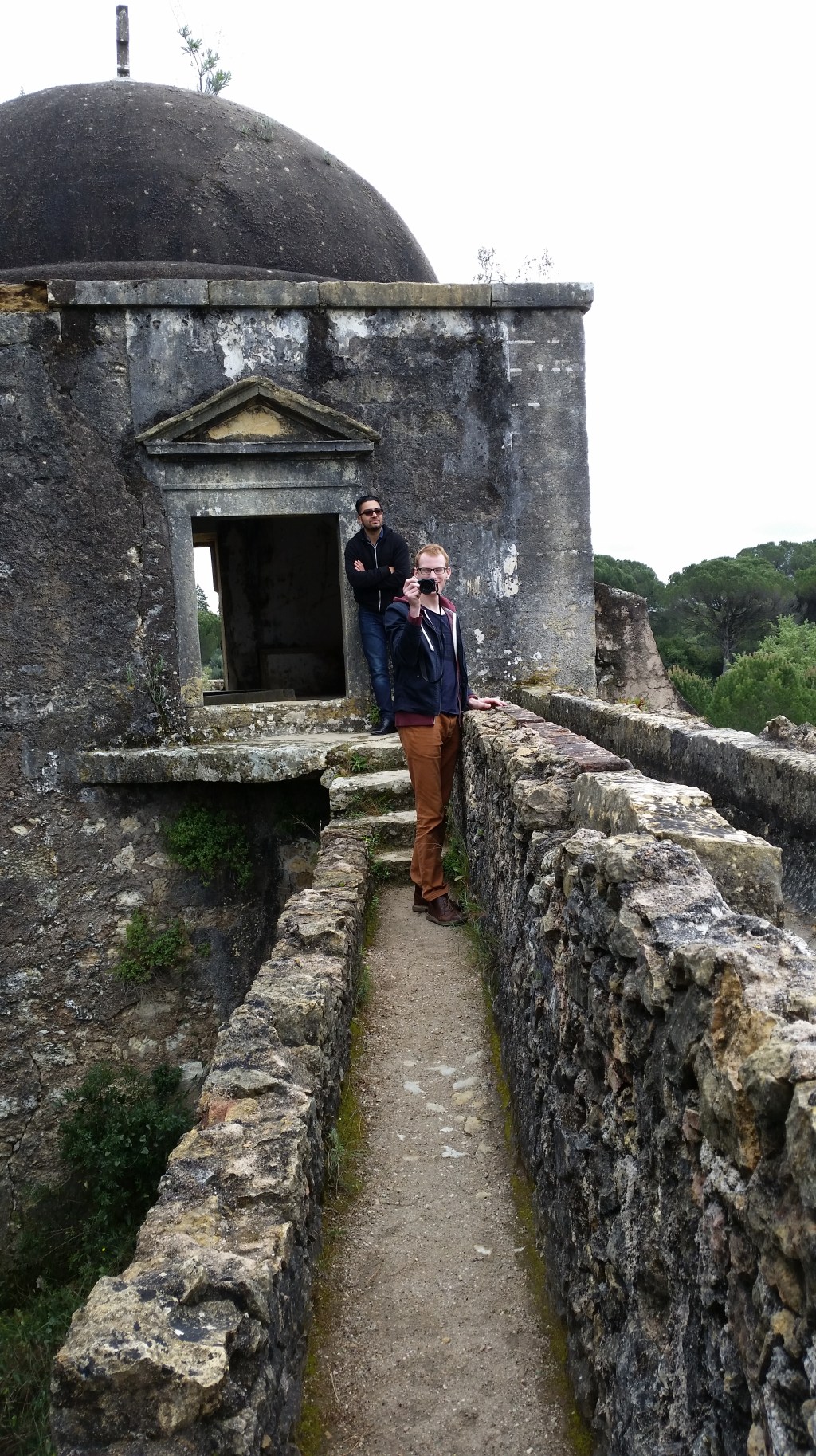
    And what a trip. These two know road-trips. In Cambodia it involved a motorcycle ride through the dusty backroads to Angkor Watt. For Portugal it was slightly more tame but just as scenic; stops in Sintra (possibly my favourite place on Earth), Piodao (an incredible mountain town lost in time) and Marvao (where I rolled my ankle, but still got to see a medieval style castle), driving over mountains and through clouds, with Kanye West on repeat for 2 days, before finally arriving in Alte.

    While the road-trip was great (and Heather can discuss more), spending a week in the Algarve with Kevin was the most uniquely relaxing time I’ve ever had. We explored the area (which I’ll talk more about later) learning a good deal about Alte, the Algarve, Kevin’s family, and in true European fashion, we ate some great food along the way!

    2015-04-15 17.14.18

    You may recall previous concerns about picky eating, and they’re fairly justified. I’ve never really been described as “vegetable friendly” or “likes to try new food”, nope, just pizza and peanut butter please and thank you! However, travelling with Heather and Kevin involves visiting some pretty great restaurants, as they take their reviewing pretty seriously, so we worked on expanding our horizons…or waistlines. Here are some the things I picked up along the way:

    1. Portuguese take their french fries seriously

    Spending the week in the Algarve we visited a few local, family owned restaurants. All the food is freshly caught or hunted and cooked, the wines are usually local, service is friendly (helps that Kevin knows everyone). One thing stood out – the fries are delicious. These aren’t you’re frozen then deepfried run-of-the-mill fries; no, every cook here has their own recipe and technique. At one meal we even ended up in a 30 minute discussion on the finer points of potato choice, oil temperature, and crispness. Lines were drawn. Sides were chosen. Accusations were flung. We all had some more wine. Very serious indeed.

    2. Always order the special

    We travelled out to the coast one morning (afternoon) to see Henry the Navigator’s navigation school, and stopped for lunch at a nearby restaurant. The restaurant, being right across from the ocean, was of course a seafood restaurant and the special was whatever they caught that morning. I believe we had originally wanted goose barnacles (percebes), but the water had been choppy that morning so none were caught. So we made due with what was available.

    While people around us enjoyed chicken fingers and spaghetti (tourists!) we were treated to clams (in garlic & butter – awesome!), prawn stew, fresh fish (Dourada aka Sea Bream), and some wine. Everything was fantastic. The clams disappeared quickly, Kevin de-boned the fish for us, and even the prawns (despite looking gross) were delicious. We even ended up ordering dessert!

    We must have made a scene enjoying everything, enough so that eventually the owner took notice and paid us a visit. Evidently he was glad to see someone enjoying his food so much, and, when he found Kevin was from Alte, even had drink with us (his own medronho – Portuguese moonshine – cleared Heather’s migraine real quick), and let us know we were the “table of the day”! It was a pretty cool meal, and a great introduction to seafood.

    3. Crab is delicious…

    …but a lot of work. On one of our last Algarve meals we made a two-hour trek to yet another seafood place, right on the coast. It’s fairly popular among locals, so we were lucky to get in without a reservation, and it turned out to be another meal worth the adventure! We enjoyed clams again (I’m a lifetime fan now), and some shrimp (had to actually tear them apart ourselves – gross!) to start.

    For our main course, we actually got to pick which crab we wanted to eat (sort of morbid) and they served it fresh! [side note: up to this point Kevin had been telling me at every meal to use a fork & knife, not fingers, lest I embarrass him] I’d never had crab before, but got a quick run down: crack open the legs, pull out the meat, eat it quick before Kevin takes all the good parts! I was surprised at first because every other meal involved taking a lot more care, but eating crab was a messy, delicious, affair. At different points crab leg bits ended hitting Kevin in the face (he retaliated, and I got hit too), the table, the floor, a different table, and a window. Worth it.

  • Roadtrip Day 1: We went to the edge of continental Europe!

    Roadtrip Day 1: We went to the edge of continental Europe!

    A quick post today before we head out to the beach. This post is a bit late coming, but Kevin’s best friend Mark is currently visiting, so we’ve been out and about (we also drove to Lisbon to pick him up 2 days in a row, because the first day we drove up we were a day too early).

    Anyways, when Tyler was here, our post-Lisbon road trip began with a drive to Cabo da Roca, a lighthouse at the westernmost point of continental Europe. Perhaps not the coolest claim to fame of all time, but it was gorgeous nonetheless.

    The western coast of Portugal is dotted with gorgeous cliffs, and Cabo da Roca is no exception. It’s a popular tourist attraction in the picturesque Sintra-Cascais Natural Park, and was the first of many beautiful spots that we saw in Sintra that day. Because it was March, we were 3 of maybe 8 people there that day. Being along the cliffs, with the beautiful green fields behind us felt magical. It was a great to start to an excellent day.

    See below for the photos!


  • Did you know that Tyler came to visit?

    Did you know that Tyler came to visit?

    While Kevin and I were in Cambodia, my brothers trekked halfway around the globe to visit us for a 10 day extravaganza.

    We managed to convince Tyler to come on a similar adventure, this time in Portugal. Kevin put weeks of planning into a road trip that took us all around Portugal, where we saw some incredible sites, ate some incredible food, and laughed incredibly hard.

    He came to visit us for 10 days in the middle of April. We started with nights out in Lisbon, followed by a 3 day roadtrip that was cut short by illness. We then spent the rest of the trip in the Algarve, where we showed him this sites, relaxed among the orange trees, and convinced him to eat all kinds of amazing seafood.

    Inspired by our former roommate, Dragan, the motto of the entire trip was “turn down for what” (really, inspired by this most amazing music video), and Tyler did his very best to turn up all the time.

    We did it up pretty big, which is to say that we spared no expense and never said ‘no’ to anything.

    As a result, there are lots of photos and videos and stories to share. I expect they’ll take up the next 2 weeks worth of posts (including a couple written by Tyler himself!), so be sure to check the blog often!

    Below are a few photos of what’s to come – enjoy!

  • Heather and Kevin take Lisbon

    Heather and Kevin take Lisbon

    The main thing that we orient our trips around is eating.

    Good food is a big deal to us, and so we’re often looking to try new restaurants, in hopes that they impress. In Lisbon in particular, where we hadn’t spent much time, we were looking to try new places, in search of some future favourites. We make our choices based on online research, recommendations from friends, and TripAdvisor lists.

    We were in Lisbon for 2 nights, staying in our friend Soledad’s beautiful apartment while she was away on a business trip. After our long drive, we got settled into her apartment, took a quick nap, and then headed into downtown Lisbon for dinner. Kevin knew I was having a bit of a craving for my grandmother’s perogies, so he took me to Stanislav Avenida, a well reviewed new Russian restaurant in town. And let me tell you, those reviews were well-earned. The food was amazing, as was the selection of specialty vodkas.

    Before heading back to the apartment (I’m working, you know!), we took a short walk through Lisbon. Because Kevin and I speak english to each other, we’re often mistaken for foreign tourists. People selling things on the street often call after us in English, and they’re always surprised when Kevin responds in Portuguese.

    On this particular day, this resulted in us getting free entry into the House of the Alentejo (a remote farming province in Portugal, known for being rather traditional). We definitely didn’t expect just how traditional the inside of the club would be. It was like travelling back in time. The decor throughout the building was beautiful, and obviously hadn’t been changed since the decadent days when it was built. And to top it off, upstairs was a dinner with traditional Portuguese dancing. We took a bunch of photos, otherwise we might have thought it was all a dream.

    Despite working till after 4am, we were up bright and early to explore the sites in Lisbon. This was a really fun day for me, because Kevin planned everything and I was just along for the adventure. We started off on the west side of Lisbon, in what’s known as Belem. We saw Lisbon’s famous Jeronimos Monastery, the very old Tower of Belem, and a great big monument built to commemorate Portuguese exploration. After lunch, we headed to the Aquarium, which I’ll write about separately.

    In the afternoon, we went right into Lisbon proper, where we walked, and walked, and walked, and walked. Eventually, we stopped at a pretty unique bar called Pavilhao Chinese. Their claim seems to be ‘collections of stuff’, and they have that in spades. I’ve never seen a bar quite like it, and I definitely recommend stopping in at least once.

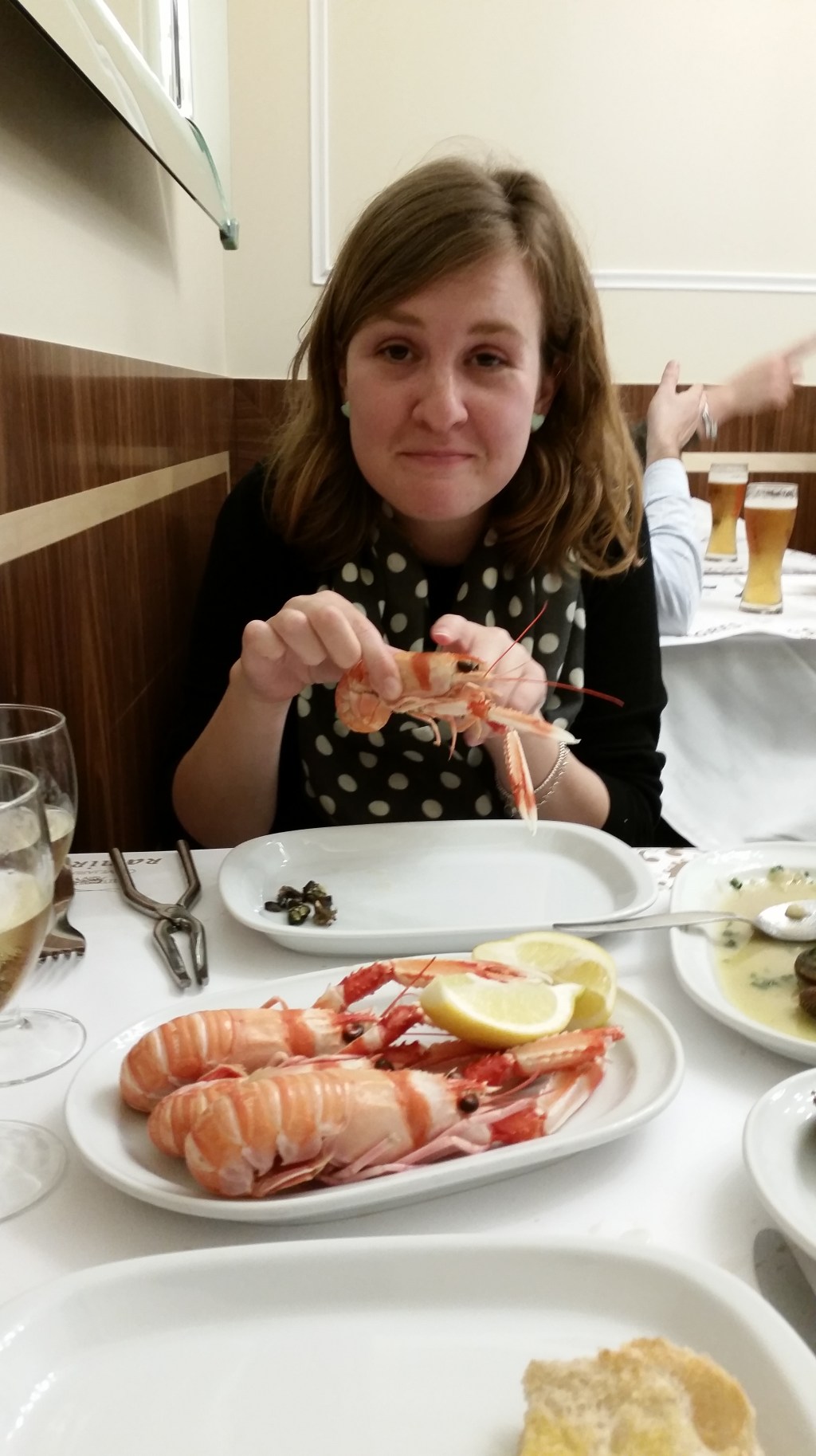
    The last destination on our list that day was obviously dinner, and we had some of the best seafood that Lisbon offers, at Cervejaria Ramiro. Since coming to Portugal, I’ve become a complete and total seafood monster. That night we had goose barnacles, multiple types of shrimp, and clams. And we even met a fellow Canadian!

    After a full day of activities and amazing food we headed back to Soledad’s apartment. Worth noting is that this is probably the cleanest apartment I’ve ever been in. While Kevin slept, I took some of my phone calls in the bathroom, where I spent a lot of time sitting on the floor. If you can keep your bathroom floor spotless, then you’re probably the cleanest person ever. Thanks Soledad!

    If a picture is worth a thousand words, and I’ve already written 600, then you should probably just look at the photos below. They’ll tell you much more about the amazing-ness of our trip to Lisbon!


  • Welcome to Alte!

    Welcome to Alte!

    Kevin and I have been here in Portugal for awhile, so it’s about time that I let y’all know about exactly where it is we’re staying.

    Both of Kevin’s grandmothers live in the Algarve (southern region of Portugal), which is where they retired after years of working in Canada. I’ll write separate posts about each of them later, but suffice to say that they are two rather feisty, independent women. Kevin’s entire bloodline (pre-parents) come from the Algarve, all within a 30km radius. So the Algarve really is special to him and to his family.

    While one of his grandmothers lives in a mid-sized city, the one that we’re living with, Avo Olimpia, lives in a small town of about 1100 people. When Kevin was growing up, his grandmother would spend 6 months of the year living with his family in Toronto, and the other 6 months would be spent in Alte. As such, Kevin and his brother grew up spending every summer visiting his grandmother here. As much as Kevin is from Toronto, he’s also very much from this small Portuguese village. And it’s obvious every time that we go out, because he knows every. single. person. here.

    But let’s get back to Alte itself. This tiny little village is rather famous, so much so that it has its own Wikipedia article. It’s also extremely popular as a tourist destination, and I found the best Alte description on a website about tourist destinations in the Algarve:

    Considered by many as the most typical algarvean village, Alte is a small village of white-washed houses nestling amidst trees and mountains, the image of old Algarve. Situated in central Algarve, the village dates from Roman times and has a Moorish past that can be observed in the detail filigree chimneys that adorn the houses.

    In the centre of the village you will find the Church dating from the 13th century, the chapel houses some very special hand painted pieces dating from the 16th century. There is also an old water mill which also dates from the 13th century.

    The focal point of Alte are the two springs. Fonte Pequena and Fonte Grande (Small Spring and Big Spring). In the olden days the women of the village gathered at the springs to fill their pitchers and wash the laundry. Now, the springs are the ideal place to enjoy a relaxing picnic in the calm tranquillity of this village.

    My friend Anne recently visited us here, and she describes this place as a fairytale. It really does have everything: beautiful water features, a waterfall, super old/beautiful churches, cobblestone streets, the view of a town built into a hillside, and the most relaxing sounds. There’s hardly any traffic, so most of day all you hear are the stream flowing and the birds chirping. There’s an interesting array of stray cats (all fed by grandmothers) and other wildlife. In the stream behind the house you can see ducks, geese, fish, and turtles. And in a tree beside the Fonte Pecana you’ll find a couple of chickens and a rooster. There are also horses. Sometimes you see people riding them through the streets!

    Aside from the natural beauty of Alte, there’s the beauty of the community itself. When you go out here, it’s important to always says “good morning” (bom dia), “good afternoon” (boa tarde), or “good evening” (boa noite) to each person you encounter. Basic manners in a small town, I guess. And half the time, that person knows Kevin and/or his family, and will stop to chat. Kevin’s family is rather well-known here, and having spent his summers here, Kevin himself is rather well known. He actually has life-long friends here, which is pretty cool. You’re hard pressed to find someone who won’t describe knowing Kevin when he was just small child.

    I thought that growing up in Grimsby gave me a small town experience? Kevin’s life in Alte is actually as small town as it gets. And not in an unpleasant way. Yes, when you go for coffee or go to the pharmacy, everyone asks about Kevin or his teeth or his grandmother. Yes, people know things about you and talk about what you’re up to. But it’s because the people here are pleasant and nice. Because they’re invested in knowing each other. The people are relaxed and they’re interested in having a good time.

    Case in point? There are SO many events that happen in this small town, all of which involve lots of eating and drinking. In fact, the last festival I went to, we ran into some old family friends. What started as a lively conversation ended with shots of medronho (local fancy moonshine).

    Here’s a quick rundown of the some of the events we’ve been to here (pictures included below):

    – Festa do Chourica (Festival of Chorizo, a version of Portuguese sausage): This was a lively festival held beside the older, smaller church in Alte. We had bread, chourica, and beer. (Of course, we got less bread than the others, because the lady giving out he bread knows that Kevin and I aren’t big bread-eaters, because his grandmother told her). There was also an auction, where we ‘won’ a jar of honey.

    – Alte BTT: this is a bike race that kicks off the cultural week in Alte. It’s organized by a local bike club, and the starting line is right in front of Kevin’s grandmother’s house. We were able to get a great view from the balcony.

    – Semana Cultural – the cultural week included live music, a comedy night, public art, dancing, and an artisanal marketplace (with great desserts)

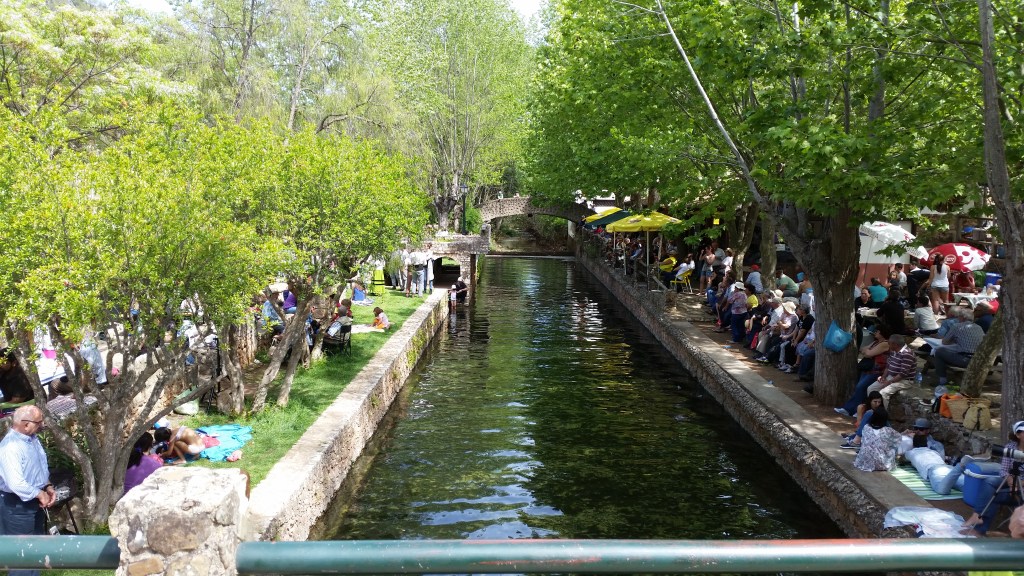
    – Folk Festival – This took place on the ending weekend of the cultural week. It was a huge event that began on the Friday, which was a holiday. The Fonte Grande was packed with tables and people who were enjoying food and beer while watching a typical folk dancing competition. The weather was beautiful, so we were able to get lots of great photos.

    Lots of photos below, enjoy!

  • January 2015: Heather & Kevin spent 1.5 days sightseeing in Lisbon.

    January 2015: Heather & Kevin spent 1.5 days sightseeing in Lisbon.

    Julie’s flight from Lisbon onward to Prague left quite early in the morning. That left Kevin and I with another day and a half in Lisbon before carpooling down to the Algarve with his godfather.

    While our few days with Julie had been about relaxation and exploratory walks throughout the city, Kevin and I knew that without direction we’d end up spending the next 36 hours napping.

    While we did make time for some naps, I also busted out my trusty ol’ pal, TripAdvisor, for some advice on what to see in the neighbourhood. The result was lots of walking and lots of looking at neat things.

    We started the day with breakfast at a truly Lisbon-esque spot. The thing about Lisbon is it’s filled with parks and cafes. And you’ll never, ever find a park that doesn’t have its own little cafe-stand. Just up the street from the place where we stayed, there was a large park that had 2 cafe stands AND a restaurant. This casually beautiful restaurant doesn’t even have a TripAdvisor review. In Toronto, a place this cool would have a 2 hour brunch line up, but in Lisbon? No big deal.

    Once we were properly fed and caffeinated, we headed to our first destination: Reservoir of the Mae d’Agua das Amoreiras and the Aguas Livres Aqueduct. Both of these are part of the Lisbon Museum of Water, which also includes an additional water reservoir, located underneath a fountain in the park where we’d eaten breakfast. The aqueduct was built beginning in the mid 1700s, and it provided the northern neighbourhoods of Lisbon with water up until the 1960s! (Fun/not-so-fun/actually-sad-and-gross fact: the aqueduct was the preferred site/tool of a serial killer in the 1800s)

    As it goes in Europe, the aqueduct was tucked in behind a bunch of other buildings in a less-travelled area of Lisbon. After some walking, Kevin and I rounded the corner and saw the aqueduct crossing a road and spanning (yet another) park. After taking a bunch of photos and freaking out about the wonders of engineering, we wanted to go inside the reservoir, but it was closed for lunch (lunch is a BIG deal in Portugal).

    We opted to return later, and headed off on another walk. Our walk took us through one of the main roundabouts in Lisbon, placed between the enormous Edward VII Park (named after a British dude!) and the Avenue of Freedom (Avenida da Liberdade). West of the park is the Estufa Fria, or “Cold Greenhouse”. Essentially, it’s large indoor garden that isn’t hot like a greenhouse. It includes a grotto, some ponds, and a host of interesting plants. Kevin and I enjoyed a leisurely walk through the garden, stopping to read our e-readers, like a couple of nerds.

    Finally, we headed back to the reservoir to see the inside. Now, I had read online that it was possible to walk through the aqueduct by entering the reservoir. We didn’t get to do that, because the gate was locked, but I would imagine it’s possible if you book your trip ahead of time.

    The Mae d’Agua das Amoreiras Reservoir, (mother of water of the Amoreiras neighbourhood reservoir, or something like that) is incredibly beautiful. It is not, however, a particularly well presented exhibit. It’s also rather expensive. When you go inside, there’s a desk where a person is working. You pay that person 5 euros each, and then walk over to get a better view of the reservoir.

    Water pours from the top of the aqueduct into the reservoir pool. The light that shines in reflects off the water, making for a beautiful visual effect to accompany the sound of the water. On top of the water, there’s actually a floating platform that you can walk on. I can imagine that it must be a great place for events, and I hope that the people of Lisbon take advantage of a cool space like that. It’s basically begging to have concerts and yoga classes and weddings on it.

    Behind the pool is a staircase that takes you to the roof of the reservoir. When you’re walking up the stairs, you can see into the aqueduct, which seems like it’d be a cool walk if it were open. From the rooftop, you get a view of the aqueduct and the city of Lisbon. 5 euros each felt like a bit of a scam, but I honestly think that the reservoir was one of the prettiest buildings/spaces that I’ve ever been in. I highly recommend checking this place out if you’re in Lisbon.

    After our sightseeing, we met up with Kevin’s godfather for lunch, ran some errands, and generally enjoyed being in Lisbon. The next day we woke up, had breakfast, lazed about, napped, and eventually drove to the Algarve, where the adventure continues…

    As always, photos below!


  • Back to the beginning: a few days in Lisbon

    Back to the beginning: a few days in Lisbon

    Back in December, when Kevin and I were in Canada for Christmas, we planned out a trip that would involve a couple of weeks in Lisbon followed by travels through Spain, all the way to Paris, where we’d then fly back to Cambodia.

    We booked plane tickets to Lisbon, Portugal for January 4th.

    Back in November, I’d been planning a January trip to Vietnam with two of my lady friends, Julie & Komal. Due to the complications of life and travel visas, that hadn’t worked out. However, Julie planned to be in Lisbon for 2 days along with Kevin and I.

    When Kevin was hit in the mouth with a hockey stick on January 2nd, I was admittedly freaking out. Not only had we booked tickets to Lisbon, but my friend had booked a trip to meet us there. Needless to say, we didn’t miss our flight. I hopped Kevin up on pain killers and got him on the plane to Lisbon. His godfather met us there, and showed us to an incredibly wonderful few days in one of my favourite cities that I’ve been to yet.

    Many photos are attached, because we were able to cram lots of fun into a few short days. One of the most important things to note is how much we were able to do while also being completed relaxed. Julie was coming off a serious bout of food poisoning, and Kevin was obviously also in quite a bit of pain. However, Lisbon is such a welcoming and easy-to-access, non-touristy, relaxed place that were able to really make the most of our time there.

    Rather than crash at a hotel, we rented an AirBnB through a group called Travel & Tales. The fine gentlemen who run Travel & Tales, Pedro & Duarte, rent out a series of apartments in the chic Lisbon neighbourhood of Principe Real.

    One of the most bizarre things about Lisbon is how similar (also better than) it is to San Francisco. Hills are one such similarity, and when Kevin’s godfather drove us up into Principe Real, and then parked on one of the steepest hills imaginable, I knew we were in for an authentically Lisbon experience. Pedro helped us check in and hooked us up with some free SIM cards for our phones, and we were off on an adventure. Oh, and the apartment we were renting? Absolutely beautiful. Historical. Interesting. Clean. Well-located. I cannot say enough good things. It really represented the best of what Lisbon has to offer.

    Relative to other European capital cities, Lisbon is geographically small and rather inexpensive. And yet, as the capital city of the once-massive Portuguese empire, it’s jam-packed with history, old-world beauty, and remnants of the colonial wealth that created it.

    The city has many interesting neighbourhoods, and an hour or two of walking can really take you through a great cross-section of the best of Lisbon. We walked everywhere and saw a lot. It also helps that the hills of Lisbon mean you’re never far from an incredible, heightened view of the city. From old plazas with fountains and monuments galore, to the city’s oceanfront, where colonial ships once presented their wealth to kingdom, to ruins, and one of the first elevators in Europe, we walked and saw it all.

    Kevin took a couple of much-needed naps, as well as an afternoon trip to a private hospital to see if his lip was actually recovering, so Julie and I also had a couple of long exploratory jaunts. On one occasion we hopped in a cab to the Belem neighbourhood. There, we sat by waterfront along the Tagus river and enjoyed some lovely January sunshine. We also saw the Jeronimos Monastery, and the “Monument to the Discoveries”. We also caught a glimpse of the Ponte de 25 April (April 25th Bridge), which is essentially Lisbon’s version of the Golden Gate Bridge in San Francisco. It’s 27th largest suspension bridge in the world. I highly suggest you click on all those links and read what Wikipedia has to say about all these sights. So many interesting things to learn! On another jaunt, we decided to start walking and just see where we ended up. Turns out that we ended up at a lookout point behind a neighbourhood that had enticed us with a long yet lovely staircase. It was the perfect spot to watch the sunset, though regrettably I didn’t have my camera. That type of magical experience is exactly what makes Lisbon so enchanting.

    With all that walking, we obviously needed to eat, and Lisbon had us covered there as well. Because Lisbon is so old, almost every building is special in some way, which makes dining that much more interesting. We opted for a couple of low-key local places for lunch, and tried some fancier dining at night. Portuguese food is simple yet delicious, and I think that would describe our Lisbon culinary experience as well.

    If you can’t already tell, I’m a big fan of Lisbon. More than that, I’m a big fan of spending time with the people who I care about. I’ll let you see more of what we did by perusing the photos below. What really made this trip special was getting to explore a beautiful city with Kevin and my dear friend Julie. If you’ve never considered visiting Lisbon, I suggest that you add it to your to-do list, but more than that, I hope that you make the time to have interesting experiences with the people who you love.


  • Imagining history at St Augustine’s Abbey

    Imagining history at St Augustine’s Abbey

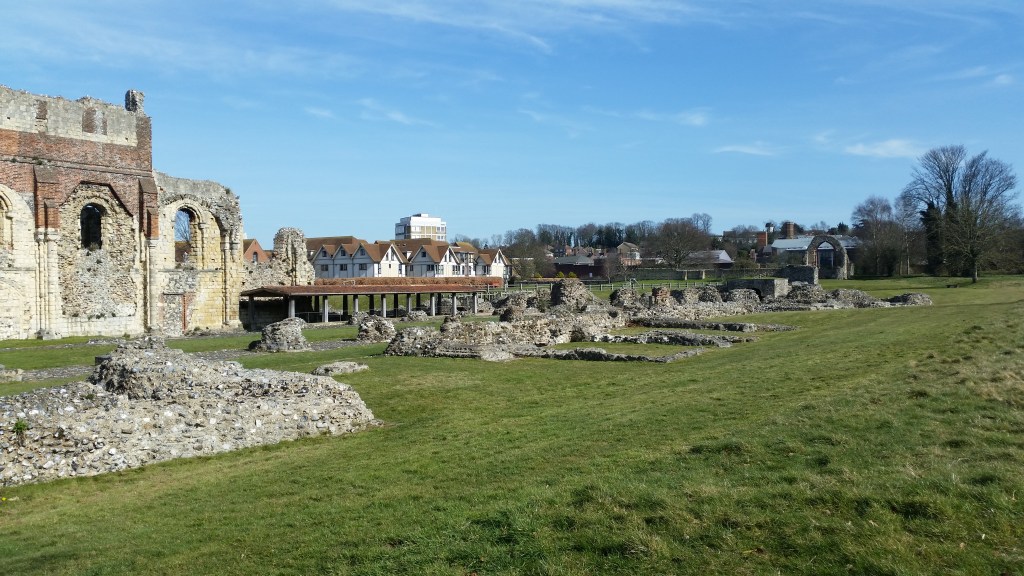
    Thursday (2 weeks ago) was my last full day in Canterbury, and it was a good one.

    After sleeping in a bit, Nana Ev and I set off to see a site that neither she nor anyone else in my family had seen. It was a site of church ruins that had been closed and under renovation for the past couple of years.

    We woke up to a bright, sunny day and walked across town to the ruins of St Augustine’s Abbey. When we got there, the museum was closed. However, the gate to the yard was open. Since we were more interested in seeing ruins than paying for admission or buying coffee cups, we walked through the open gate, feeling like a couple of rebels.

    As a total museum-loving nerd, I’m always interested to see how different exhibits are presented. That is, is the information helpful? Are there useful images? Is it clear what I should be looking at when? Has walking flow been taken into consideration? I’m pleased to say that this exhibit gets 5 stars across the board. Without a guide, without a pamphlet, and with very little preparatory knowledge, we were able to explore and understand the entire site. The exhibit was so well set up that we were able to complete envision what this site must have looked like back in its heyday.

    Wait a second, what’s the exhibit again?

    Right. Saint Augustine’s Abbey was an abbey built around the same time as the original old-timey sections of Canterbury Cathedral. Officially speaking, it was a Benedictine Monastery completed in 598 CE (that’s current era, for you old folks who are used to AD). As usual, Wikipedia breaks it down for us:

    In 597, Augustine arrived in Anglo-Saxon England, having been sent by the missionary-minded Pope Gregory I to convert the Anglo-Saxons. The King of Kent at this time was Æthelberht or Ethelbert. Although he worshipped in a pagan temple just outside the walls of Canterbury to the east of the city, Ethelbert was married to a Christian, Bertha. According to tradition, the king not only gave his temple and its precincts to St Augustine for a church and monastery, he also ordered that the church to be erected be of “becoming splendour, dedicated to the blessed apostles Peter and Paul, and endowed it with a variety of gifts.” One purpose of the foundation was to provide a residence for Augustine and his brother monks. As another, both King Ethelbert and Augustine foresaw the abbey as a burial place for abbots, archbishops, and kings of Kent.

    William Thorne, the 14th century chronicler of the abbey, records 598 as the year of the foundation. The monastic buildings were most likely wooden in the manner of Saxon construction, so they could be quickly built. However, building a church of solid masonry, like the churches Augustine had known in Rome, took longer. The church was completed and consecrated in 613. Ca. 624 a short distance to the east, Eadbald, son and successor of Ethelbert, founded a second church, dedicated to Saint Mary which also buried Kentish royalty. The abbey became known as St Augustine’s after the founder’s death.

    For two centuries after its founding, St Augustine’s was the only important religious house in the kingdom of Kent.[9] The historian G. F. Maclear characterized St Augustine’s as being a “missionary school” where “classical knowledge and English learning flourished.”

    The monastery was of fairly simple construction, and much smaller than what eventually sat on this site. Because of course the Normans eventually invaded. The liked to worship at church as well, but didn’t think that the existing Abbey was fancy enough to pay proper respects to God. And so they built a much larger and much fancier Romanesque building. There was great expansion and attention from the Pope at this time, during which “[t]he cloister, frater (refectory) and kitchen were totally rebuilt. A new abbot’s lodging and a great hall were added. In the early 14th century, land was acquired for a cellarer’s range (living and working quarters for the cellarer who was responsible for provisioning the abbey’s cellarium), a brewhouse, a bakehouse, and a new walled vineyard. A Lady chapel was built to the east of the church. (Wikipedia)

    This was all well and good until everyone’s least favourite, King Henry VIII, came along and replaced Catholicism with Anglicism. No Catholics means no Catholic Abbeys. In 1541, St Augustine’s was partially dismantled/sold off, and partially turned into a new royal residence for King Henry VIII himself. After being passed along as a royal residence, the estate here was eventually rented out to a series of Noblemen. As time separated this succession of residences from the history of this place, the old structures were further dismantled and the stone was sold off. New gardens were built over the original abbey, a lawn bowling green was installed, etc. As I’m sure someone said back then, “kids these days just don’t appreciate history”.

    It wasn’t until 1844 that one such kid did appreciate history, and he bought the property in order to conserve what was left, turning it into a school for missionaries. After a German Blitz, the buildings were so badly destroyed that the school closed.

    The King’s School now uses some of the existing structures, while the rest are cared for by English Heritage, and protected as a UNESCO World Heritage Site.

    Now, all these facts I confirmed with Wikipedia, but I was able to learn most of this stuff from our self-guided tour. Helpful and well-placed placards helped us understand how to interpret ruins upon ruins, while guiding us helpfully along. By the time we reached the end, we were really able to envision where the churches had been, and which parts of the landscape had continued as royal residences, and which parts had been covered over by gardens, etc. This was especially interesting to me: it was not just the history of the buildings that we were trying to interpret, but the history of the very landscape itself. As I realize more each time that I travel, the end landscape always is mother nature’s own garden. For me, that’s a nice idea.

    Take a look at the pictures from our day and see if you can see what we saw!

  • The wall around Canterbury and the old castle

    The wall around Canterbury and the old castle

    Remember when we tried to go to Dover Castle? When we took a bus, walked up and down hills, and walked across the town of Dover to get a bus back to Canterbury? Yeah, that was only the first half of our adventures that day.

    Once we arrived back in Canterbury, it was time for a lunch break. We went to lunch at a restaurant we’d never been to before, called Deeson’s Restaurant. It was a delight. Wanting to treat ourselves, but not being that hungry, we opted for light appetizers, along with some very lovely desserts. The food was creative and delicious. Considering what you got on your plate, it was a bit over priced, but a tasty meal is a tasty meal. And dessert! Oh, dessert! In Portugal they make something called “pera bebde” which translates to “drunken pear”. Deeson’s Restaurant made a version of this that was oh so fancy and oh so delicious: a pear soaked in mulled wine, served with crunchy toffee, salted caramel, and a brownie! See the photo for full effect.

    And after lunch, we kept going, as we do. We walked along the ancient city walls, and explored the ruins of a castle was built hundreds of years ago, and was part of the inner city walls.

    The Canterbury city walls are another thing that dates back to the days of the Romans. While little of the Roman construction remains today, the location of the Roman walls was maintained as later medieval and modern civilizations built and re-built the walls in the same spots. Here’s what Wikipedia has to say:

    Canterbury city walls are a sequence of defensive walls built around the city of Canterbury in Kent, England. The first city walls were built by the Romans, probably between 270 and 280 AD. These walls were constructed from stone on top of an earth bank, and protected by a ditch and wall towers … With the collapse of Roman Britain, Canterbury went into decline but the walls remained, and may have influenced the decision of Augustine to settle in the city at the end of the 6th century. The Anglo-Saxons retained the defensive walls, building chapels over most of the gates and using them to defend Canterbury against Viking incursions.

    The Norman invaders of the 11th century took the city without resistance, and by the 12th century the walls were ill-maintained and of little military value. Fears of a French invasion during the Hundred Years’ War led to an enquiry into Canterbury’s defences in 1363. The decision was taken to restore the city walls and for around the next thirty years the old Roman defences were freshly rebuilt in stone, incorporating the older walls where they still remained … Parts of the wall were deliberately damaged by Parliament during the English Civil War of the 17th century and the doors to the city’s gates burnt; with the restoration of Charles II in 1660, new doors were reinstalled.

    During the 18th and 19th centuries, Canterbury’s city walls came under extensive pressure from urban development. All the gates but one, West Gate, were destroyed and extensive parts of the walled circuit were knocked down to make way for new roads and buildings. German bombing during the Second World War caused further damage. Despite this, the remaining walls and gatehouse survived post-war redevelopment intact and some portions were rebuilt entirely. Over half the original circuit survives, enclosing an area of 130 acres (53 ha), and historians Oliver Creighton and Robert Higham consider the city wall to be “one of the most magnificent in Britain”.

    Again, that’s some pretty old stuff! After lunch we walked through a lovely park to reach the walls, and then walked along the walls towards the ruins of an old castle. On the way there, I took a quick detour to walk up the Dane John Mound. A former Roman cemetery, it’s now a mound/mini-hill in a lovely park. I jaunted up to the top of the mound to catch a good view, but as you’ll see in the photos, it was  mostly a view of surrounding suburbs on the one side, and then a view of Canterbury (and the cathedral,obviously) on the other. As a tourist destination, it wasn’t great, but it was obviously a favourite relaxation spot with the locals, because it was packed with students hanging out and enjoying the view.

    From there, we carried along on our walk. We walked all the way to the ruins of Canterbury Castle. Fortunately, this one was open. Canterbury Castle is a Norman castle that dates back to 1066, when William the Conqueror (according to my Nana Ev’s research, my 82nd great grandfather) was busy conquering England. King Henry I then turned that lowly wooden castle into the fancy stone castle that stands today.

    Of course, it’s not standing too fancy, and here’s one of the reasons why:

    By the 19th century it had been obtained by a gas company and used as a storage centre for gas for many years, during which time the top floor was destroyed.

    Yikes. Smooth move, gas company.

    Anyways, the castle ruins are open, which means we were able to walk around inside, seeing the remnants of a well which brought water throughout the castle; the remaining few stairs to once took you to the top of the castle, and I even climbed the last remaining sets of stairs, enjoying a heightened view of the whole place. All that and more in the photos below!


  • We went to Dover Castle … sort of.

    We went to Dover Castle … sort of.

    On Friday, I arrived in Canterbury. I emailed my family a photo of Nana and I together, letting them know I’d arrived safely. Everyone responded quickly with well wishes, and suggestions for all the things I should do while there (context: this is the third year that Nana Ev has come to stay in Canterbury for several weeks. Both my aunt and my parents have previously visited during this trip).

    On Saturday, Nana Ev and I FaceTimed with my parents and Kristopher. On Sunday we FaceTimed with my Aunt Elaine and Uncle Joe.

    On both calls, we were asked a variation of this question: “so, have you done [insert activity] yet?” “did you go [insert location] here yet”.

    Nana and I could not stop laughing. These questions were hilariously ill-timed, considering I’d barely just arrived.

    In their enthusiasm about the many things to do in Canterbury, my Dad absolutely insisted that we must go to Dover Castle. We hadn’t initially planned to do this, because it was a bit more complicated to get to Dover without a car, but since my Dad insisted it was such a must-do activity, we figured out how to take the bus there.

    So, this morning we got up bright and early. We got on the bus, and headed for Dover Castle, a lovely 40 minute ride away.

    Quick facts on Dover Castle, courtesy of my fave, Wikipedia:

    Dover Castle is a medieval castle in Dover, Kent. It was founded in the 12th century and has been described as the “Key to England” due to its defensive significance throughout history. It is the largest castle in England.

    The site may have been fortified with earthworks in the Iron Age or earlier, before the Romans invaded in AD43. This is suggested on the basis of the unusual pattern of the earthworks which does not seem to be a perfect fit for the medieval castle. Excavations have provided evidence of Iron Age occupation within the locality of the castle, but it is not certain whether this is associated with the hillfort. There have also been excavations on the mound which the church and Roman Pharos are situated on, which has been discovered to be a Bronze Age mound.

    Our bus driver let us know when to get off the bus, and told us we had to walk a bit down the hill to get to the entrance (Keep in mind that Dover Castle sits atop a massive hill, which is why we were skeptical of making this trip sans car). Needless to say, when the bus driver said that the return bus stop was further up the hill, while the entrance to the castle was further down, we weren’t impressed.

    Thus, we walked down the hill, only to find another hill we needed to walk up in order to reach the castle. As we approached the gate, I began to question our decisions. The gate looked closed. I thought perhaps I wasn’t seeing things right, until I was standing in front of the locked gate, looking at a ticket booth that was very much closed.

    Well, shit. Now what? We sure didn’t see this coming. We also weren’t sure if the Castle was closed, or if just that particular entrance. We decided to walk further down the hill to reach the car entrance, hoping that might be open. Turns out, it wasn’t. The “Closed” sign was well visible from across the street.

    Not wanting to walk back up that darn hill, we continued to walk down. Eventually we were back in the lovely town of Dover. Also, we had no real idea where we were going, other than knowing we needed to get back on a bus. After asking a couple of people for directions (all of whom confirmed that it was unusual for the castle to be closed), we eventually found a bus stop. When we asked the bus driver if his particular bus would take us to the main station, he told us that it would, but so would a 5 minute walk through the park behind us. Obviously, we opted for the latter.

    Another 10 minutes of waiting, and we were back on the bus to Canterbury! As soon as we were in wifi range, we looked up Dover Castle’s hour. Indeed, it is only open on the weekends this month. Truly bizarre, because the sign on site said otherwise.

    Anyways, here are the pictures we took on our adventure to see Dover Castle. We did the Castle, though we didn’t get inside. Consider it the unsuccessful invaders’ version of the tour. Tres vintage.