Tag: Travel

  • #tbt – My friend Anne came to visit us in Portugal!

    #tbt – My friend Anne came to visit us in Portugal!

    One of the loveliest benefits of spending time in Portugal was the proximity to some of my fellow Canadian friends. One such friend, Anne, was working in London for the first half of 2015. Before she headed back to Canada, she took a quick jaunt to Alte, where we spent a few days enjoying the sunshine.

    Between her travels and my travels, Anne and I don’t get to see each other too often. And yet, we’ve been friends since we were 11, and that means that when do get together, it’s like we were never apart. I was acutely reminded of this when she came to visit us in Portugal. With Kevin laid up in bed, suffering through his recent implants surgery, Anne and I had plenty of time to explore Alte together. Activities included long walks, sitting in the sun, and drinking espressos, going for a trail run, and talking constantly.

    Despite being in pain and needing rest, Kevin was also generous enough to drive us for a wonderful sunset/dinner combination. Kevin is an outstanding host, who puts quite a bit of thought into showing guests the very best of the Algarve, so we were lucky that he got out of bed to entertain us. The next day we spent laying out on the beach with several of our Portuguese friends, which is a classic Algarve experience. In retrospect, it was asking way too much of Kevin to take us around like this. Never have I regretted so much my inability to drive standard/manual.

    In any case, Anne’s visit was a lot of fun. With Kevin’s injuries/dental work, our time in Portugal was a bizarre combination of amazing and stressful. It was so relaxing for me to have one of my oldest friends check in help me review all the things that were on my mind. Moral of the story? Never underestimate the the goodness your friends can bring to your own mental health. With this experience in mind, I was so stoked when Kevin’s best friend Mark came to visit a couple of months later – and for that, I actually did learn to drive standard. There’ll be much more on that adventure soon 🙂

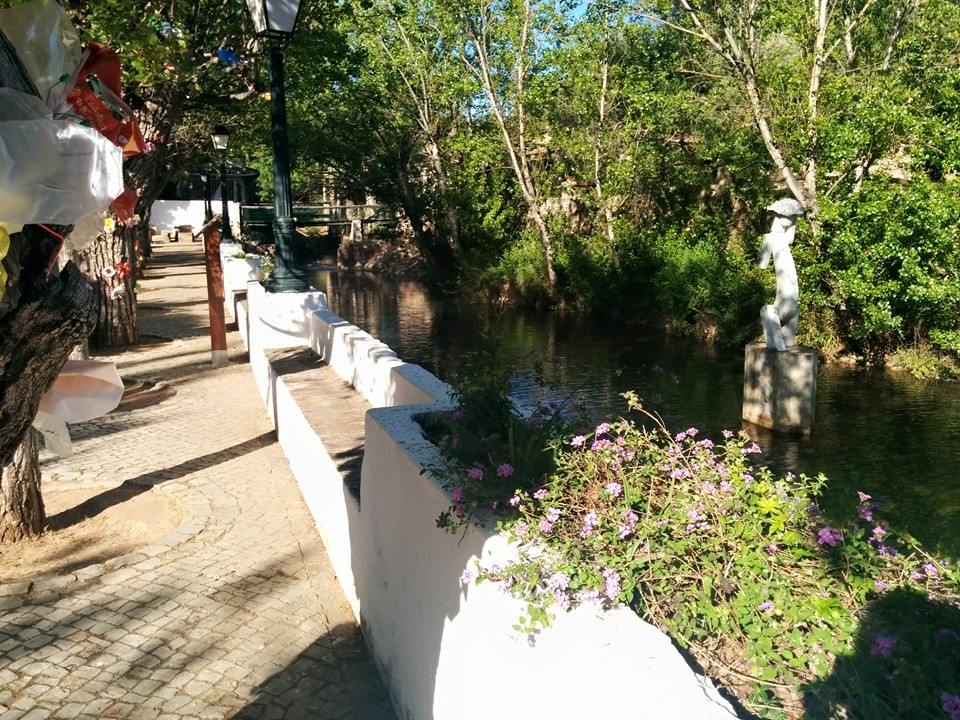
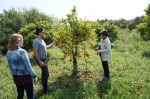
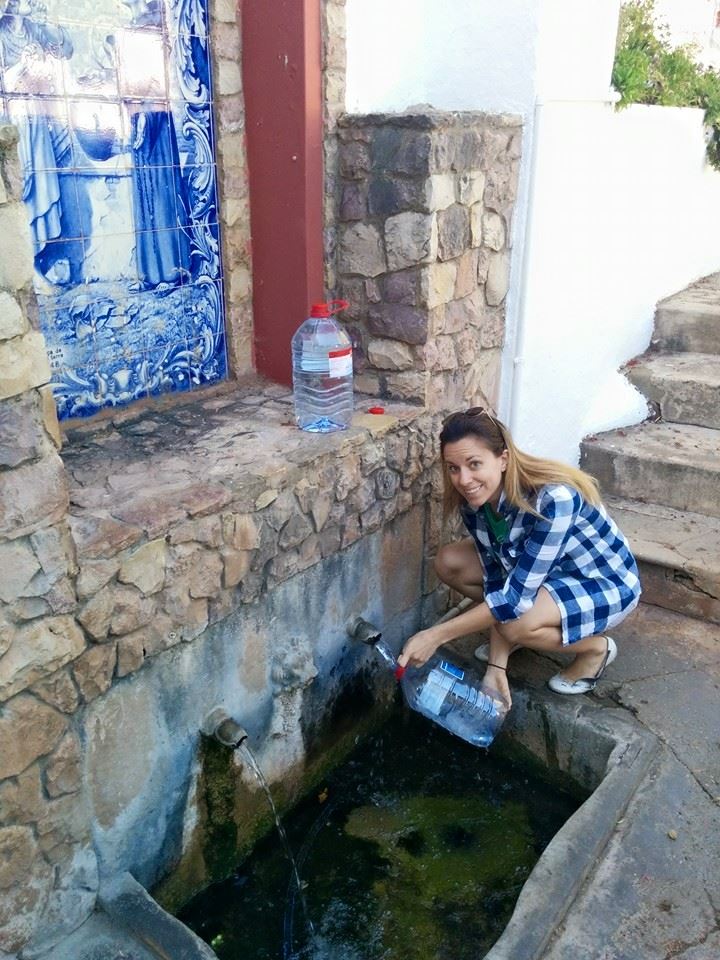
    Anne and I were having too much fun to take many photos, but I’ve snagged a few of Anne’s from Facebook, which you can see below:

  • Back in Grimsby :: An update on what’s happening with this here blog

    Back in Grimsby :: An update on what’s happening with this here blog

    If you’re reading closely, 2 things are clear:

    1. Kevin and I are back in Canada
    2. Most of the posts about our travels are describing things have taken place a few months ago

    At the end of July, Kevin and I booked one-way tickets back to Canada. We’d been in Portugal since early 2015, and had been travelling/living in Southeast Asia before that.

    We didn’t anticipate coming back to Canada nearly this soon, but here we are. So, what happens to a travel blog when you’re no longer “travelling”?

    The immediate plan is to continue writing. There are still tons of photos and stories to share from our adventures in the first half of 2015. I’ll be posting those as a “Throwback Thursday” entry, once a week.

    Alongside the Thursday posts, I’ll be writing about what we’re doing and exploring in Canada, along documenting with any other shorter trips that we get to.

    When we left Toronto and set out on our ‘big international adventure’, we chose to plan a long period of travel because we like to take our time. In Portugal, we *really* took our time, exploring many nooks and crannies of the Algarve, often seeing the same place or thing many times, and yet appreciating it all the same.

    One thing that we learned very quickly is that it’s next to impossible to see all the incredible and beautiful and interesting things/places out there, because the opportunities to do so are limitless. If the opportunities to explore beautiful experiences abroad are so numerous, it stands to reason that the same thing applies wherever life finds us. Right now, we’re living in Grimsby, the quickly growing small-ish town where I grew up. Much to my surprise, there are plenty of things to see and explore here, as long as you look for such opportunities.

    As someone who has started and abandoned many projects, I’m still a bit shocked that I’ve maintained this blog for so long. Though I’m geographically back where I started, I’ll keep documenting Kevin’s photos and our stories. (Beside, this blog was started to share our adventures with friends and family. With most of our friends in Toronto, being in Grimsby can feel so far away that we might as well still be in a foreign country 😉 )

    I’m not at all looking forward to winter, but Kevin and I will be doing our best to get into some winter sports and activities, making sure we get the most out of the unique experience of a Canadian winter.

  • Visiting Sagres

    Visiting Sagres

    Throughout the duration of Tyler’s trip to Portugal, I was incredibly ill. I slept most of the time and felt terribly shivery and gross for most of the time that I wasn’t sleeping. As a result, I didn’t get out for too many excursions, and Tyler’s blog posts have covered the majority of his second week with us in Portugal, where we relaxed in the Algarve.

    There was one trip for which I did manage to drag myself out of bed: a day trip to the Fort at Sagres.

    Sagres is the most south-west point of Portugal, with a large landmass that juts out into the ocean. The Fort of Sagres occupies this space, a place connected to Portugal’s history of exploration. The Fort may or may not have been connected to the work for Portuguese Prince Henry the Navigator:

    It is traditionally suggested that Henry gathered at his villa on the Sagres peninsula a school of navigators and map-makers. However modern historians hold this to be a misconception. He did employ some cartographers to chart the coast of Mauritania after the voyages he sent there, but there was no center of navigation science or observatory in the modern sense of the word, nor was there an organized navigational center.[7]

    Referring to Sagres, sixteenth century Portuguese mathematician and cosmographer, Pedro Nunes, remarked, “”from it our sailors went out well taught and provided with instruments and rules which all map makers and navigators should know.”[8]

    The view that Henry’s court rapidly grew into the technological base for exploration, with a naval arsenal and an observatory, etc., although repeated in popular culture, has never been established.[9][10][11] Henry did possess geographical curiosity, and employed cartographers. Jehuda Cresques, a noted cartographer, has been said to have accepted an invitation to come to Portugal to make maps for the infante. This last incident probably accounts for the legend of the School of Sagres, which is now discredited. (Wikipedia)

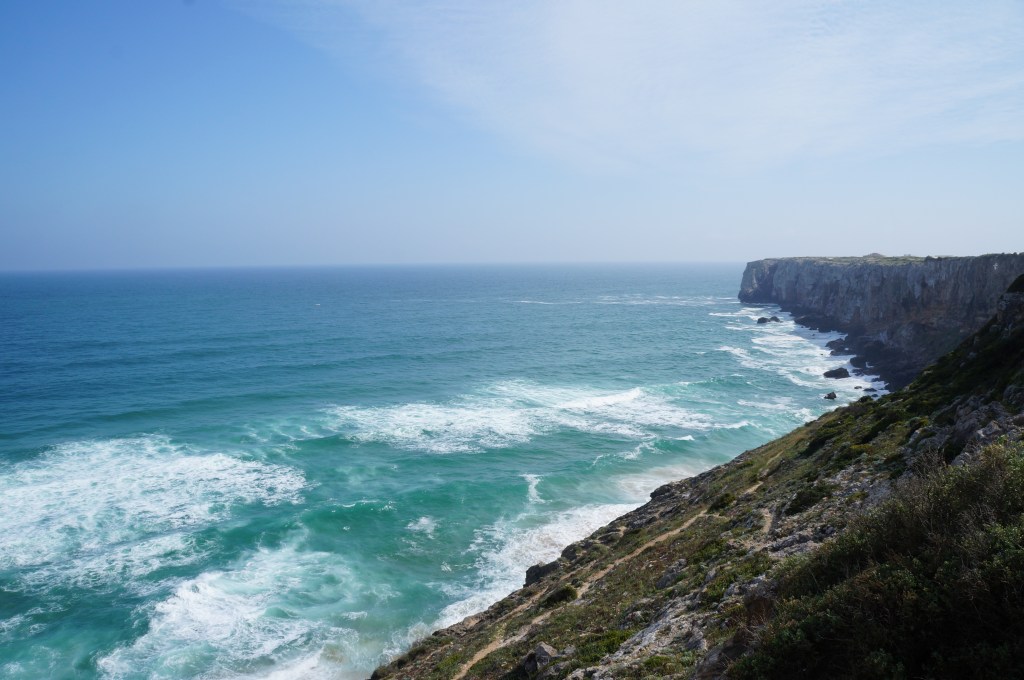
    The location was stunning. Walking along the cliffs, watching birds fly above the waves, and looking back at the rather flat, open space of the fort, it was a beautiful scene. As far as museums go, it was fairly unimpressive. Very little information was offered about what we were looking at, though Wikipedia has suggested that the Fort’s importance is up for debate, which may explain the lack of concrete information at the site.

    In either case, it was a lovely day, made even better by a really fantastic seafood lunch. We dined at A Sagres, the closest restaurant to the Fort. While those around us were eating spaghetti and other such nonsense, we requested the daily specials, and were treated to an amazing seafood stew and freshly caught fish.

    On the way home we took a scenic route along the coast. We stopped at a beautiful beach, and took a detour for a supposed ‘archaeological site of interest’ that was actually just a field.

    Check out our photos to enjoy the view:

  • Road Trip Day 3: Evora & Illness & the Algarve

    Road Trip Day 3: Evora & Illness & the Algarve

    After waking up in Marvao and spending our morning exploring, we set off to Evora. Of course, Tyler rolled his ankle on those beautiful cobblestone streets the night before, and I woke up feeling the beginning of a fever. Still, we had 2 more stops on our road trip, beginning with the city of Evora, followed by the nearby Monsaraz, then the city of Beja. By the time we had lunch, Kevin realized his couple of Pages were too ill, and he promptly drove us the last 3 hours home to the Algarve.

    Before our trip was cut short, we did get to explore Evora. We also had an incredible lunch at a restaurant that only serves 9 people at a time. “Botequim da Mouraria” is run by a welcoming Portuguese couple. In their small restaurant, there’s bar seating only, which means that we were incredibly lucky to arrive in time for lunch and find 3 empty chairs waiting for us. The service and the food were excellent. This was one of those places Kevin had found in the course of his detailed research, and it was very much worth the hype.

    After lunch, we explored Evora and its incredible history. A very old city, Evora still has Roman ruins and an incredible variety of historic architecture. On all our other stops, I read aloud to the guys various historical fun facts. Being sick in Evora meant that I didn’t really do this, and so we learned a bit less there than everywhere else. The city is more than 2000 years old, and was occupied by the Celts and the Moors before becoming the #2 city in Portugal for a time, becoming the site of much lavish spending on the behalf of Portuguese rulers.

    Here are a couple of other fun facts about Evora:

    Évora has a history dating back more than two millennia.

    It was known as Ebora by the Celts, a tribal confederacy, south of the Lusitanians (and of Tagus river), who made the town their regional capital.

    The etymological origin of the name Ebora is from the ancient Celtic word ebora/ebura, plural genitive of the word eburos (yew), name of a species of tree, so its name means “of yew tree.” The city of York, in northern England, at the time of the Roman Empire, was called Eboracum/Eburacum, named after the ancient Celtic place name Ebora Kon (Place of Yew Trees), so the old name of York is etymologically related to the city of Évora.[6]

    (Wikipedia)

    Évora is also remarkable for reasons other than its monumental heritage related to significant historic events. The 16th century was a time of major urban planning and great intellectual and religious influence. While Évora also has many noteworthy 16th-century patrician houses (Cordovil house, the house of Garcia de Resende), the unique quality of the city arises from the coherence of the minor architecture of the 16th, 17th and 18th centuries. This unity finds its overall expression in the form of numerous low whitewashed houses, decorated with Dutch tiles and wrought-iron balconies and covered with tile roofs or terraces which line narrow streets of medieval configuration and which in other areas bears witness to the concentric growth of the town until the 17th century. It also served to strengthen the fundamental unity of a type of architecture that is perfectly adapted to the climate and the location.

    Évora remained mainly undamaged by the great earthquake of 1755 that destroyed many towns in Portugal, including Lisbon. The monuments of the Historic Centre of Évora bear witness to their profound influence on Portuguese architecture in Brazil.

    (UNESCO)

    In retrospect, while we recognized how beautiful Evora was, I was a bit too sick to recognize and appreciate the signs of its long storied history. It was also clearly packed with tourists from all of the world, which became a bit of a distraction itself. All the same, we managed to take a few photos. Enjoy!


  • Roadtrip Day 2: Piodao

    Roadtrip Day 2: Piodao

    When I say that Kevin researched and planned our road trip with Tyler, I don’t mean that lightly. As soon as Tyler booked his tickets to visit, the research began. And not just some simple google searches of ‘best sights in Portugal’. If Kevin has ever helped you with anything, you know that his research-style is all-in and he stops at nothing to get the best possible outcome. Nothing exemplifies this more than our stop off in Piodao.

    A few weeks before the trip, Kevin showed me a photo of a place that looked amazing, and told me that it was a must-do stop. When I convinced him to shorten the road trip from 6 days to 3, Piodao was one of those places that was a must-see, not to be compromised. And he was so, so right.

    After our morning at the Knights Templar’s Convent of Christ in Tomar, we got back into the truck and embarked on what I can honestly say is the wildest, most breathtaking and most nerve-racking road trip of my life. Before I get into too many road trip details, let’s talk about why Piodao is special and worth seeing.

    Piodao, known as the “nativity village” is a small collection of stone buildings, tucked into a mountain side. Unlike most of the places we’ve visited on this trip, Piodao, due to its remote geographic location, was almost entirely disconnected from Portuguese history. How disconnected? This village didn’t have electricity until the 1970s. This geographic isolation is what makes Piodao so unique – because they were limited to local resources, which is reflected in the architecture of the town itself, their traditions were well-preserved over the years, due to a lack of outside influences. Entering Piodao, picturesquely placed in between 2 hills in a mountain range, feels like entering a fairy tale. As you stand on the hillside, you can even hear the echo of jingling bells from the goat herds. My only regret of this entire trip is that we didn’t stay longer.

    Now, about that road trip. It was long and a bit harrowing. And as the trip went on, we felt increasingly alone. There were long stretches (on this 2.5 hour drive) without seeing other people and cars, though we did see a herd of goats crossing the road. We climbed up into the mountaintops, driving along winding roads, on the edge of cliffs, surrounded by clouds. I was both in awe of the view and in awe of Kevin’s patience & composure while navigating these roads. There’s absolutely no way that a bus could have made this journey.

    Visiting Piodao was a truly surreal and magical experience. I recommend it very much. And beyond being beautiful, the town itself offers great food and friendly people. Check out our many photos below!

  • Roadtrip Day 2: An Aqueduct “just around the corner”

    Roadtrip Day 2: An Aqueduct “just around the corner”

    While we were visiting the Convent of Christ in Tomar, the map of the site said that there was an aqueduct attached. Tyler was pretty excited about this, never having seen a real aqueduct. Kevin and I had seen some in Lisbon, but agreed that it was pretty cool.

    While Tyler and I searched for the aqueduct ruins (which we found outside, attached to the Castle of Tomar), Kevin searched on Google. When we were done at the Castle/Convent, Kevin said he had one more stop he wanted to make. He handed me the phone with a seemingly random spot marked on the map nearby. He told me what we were up to but hadn’t said anything yet to Tyler.

    5 minutes of driving later, we came to the Pegoes Aqueduct, to which the aqueduct ruins at the castle were attached.

    But rather than just a couple of arches, what we saw was a full aqueduct crossing a valley. And the best part? It was open and also empty! From where we parked, we walked just a few steps to climb up onto the aqueduct through an old water inspection station. In the silent countryside, we walked along an ancient aqueduct, just the 3 of us.

    A quick little surprise, and one of the highlights of our trip. Enjoy the photos below!

  • Roadtrip Day 1 (still!): Quinta da Regaleira

    Roadtrip Day 1 (still!): Quinta da Regaleira

    If you’ve ever read this blog, you know that we typically take our travel slowly. Even if that means we miss out on some possible sites, we always try to spend the maximum amount of time in our travel pursuits, in an attempt to really understand where it is that we’re visiting. Clearly we didn’t quite take that approach on our road trip, where we packed quite a bit of stuff in. I mean, we’re now 3 posts into Day 1 of our Sintra road trip, and yet we still drove another 2+ hours on this day!

    Our wonderful friend, Soledad, insisted that we visit “Quinta da Regaleira”. It roughly translates to being “Estate of Regaleira” (the land was once owned by the wealthy Regaleira family from Northern Portugal). Soledad told us that this was her favourite place in the world, and once we arrived we realized why. We also very much regretted not budgeting more time to be here. There was so much to see, and we certainly didn’t let the rain slow us down!

    The Quinta da Regaleira is essentially an estate that was once owned by a rich guy with big dreams of making something fancy. And this guy, António Carvalho Monteiro (actually nicknamed Moneybags Monteiro) sure achieved his goal. He was an eccentric guy who leveraged his family fortune to become a coffee tycoon in Brazil, then returned to Portugal study everything from law to bugs.

    After purchasing the land in 1892, he spent until 1910 creating a magical villa and gardens, a neo-Manueline extravaganza all dreamed up by Italian opera-set designer Luigi Manini (Lonely Planet).

    Despite the rain, we spent most of our time exploring the extensive gardens. This place is a landscape architect’s dream, boasting arches, gazebos, grottos, aquariums, gardens, patios, paths, fountains, tunnels, bridges, and more. The highlight is almost certainly what’s known as the “Initiation Wells”. We spent at least 30 minutes trying to find them, and it was well worth the effort. Here’s some background info, courtesy of our friends at Ancient-Origins.net:

    The pair of wells, known as the ‘Initiation Wells’ or ‘Inverted Towers’, consist of ‘winding stair’ architecture, which carries symbolic meaning including the death/rebirth allegory common to many hermetic traditions.

    One of the wells contains nine platforms, which are said to be “reminiscent of the Divine Comedy by Dante and the nine circles of Hell, the nine sections of Purgatory and the nine skies which constitute Paradise.” A smaller well, called the “Unfinished Well,” contains a set of straight staircases, connecting the ring-shaped floors to one another. It is believed that the spacing of the landings, as well as the number of steps in between were dictated by Masonic principles.

    The two wells are connected to a series of underground tunnels and caves. Once we entered the primary initiation well, we descended deep underground.

    To our great delight, we ended up in passing through the other well and entering a grotto/lake/waterfall area. We were beyond thrilled at this turn of events. We’d been freaking out about the beauty of this site all day, but this discovery topped them all, and we immediately agreed that Soledad was right about this place.

    The inside of the mansion was pretty cool as well, but nothing close to the outdoor gardens and its secrets. If you plan to visit this site, give yourself at least 3 hours to see everything!

    Check out the photos to see all this beauty for yourself (some are a bit blurry due to the rain – we were completely soaked, as was the phone!):


  • Roadtrip Day 1: A Moorish Castle and Palace of Pena

    Roadtrip Day 1: A Moorish Castle and Palace of Pena

    We typically take our sweet, sweet time when doing anything, but because we were on a road trip, we had certain goals for where to be and when to be there by. We were also exploring unfamiliar territory, and perhaps underestimated how much time we’d want to spend in certain places.

    That said, everything that we saw on the first day of our Road trip was within the magical area known as Sintra, where castles and natural beauty abound. There are tons and tons of incredible sites to see in Sintra, but we oriented our trip to the advice of our friend Soledad, and selected those she described as ‘must-see’ items.

    We visited 2 different castles on that day, and they couldn’t have been more different: The Moorish Castle, and Palace of Pena.

    Let’s start with the Moorish Castle.

    The Moorish Castle was the decidedly more ruin-y of the two. It is a military fort built around the 10th century by the Muslim populations that occupied the Iberian peninsula. It acted as a control tower for the Atlantic coast and land to the north, serving as an outpost for the city of Lisbon.

    For a building that’s more than 1000 years old, it was in pretty decent shape. All of the exterior castle walls remain, and we were able to walk up, down, all around, and catch amazing views throughout. From the top of the castle walls, you can see all that’s built up in the Park in the centuries since: a town, castles, mansions, etc. And yet, you can imagine how it felt 1000 years ago to look out and see no evidence of other people. Placed atop a large hill, this place is definitely an impressive and well planned military location.

    And not *just* military either. After the large castle walls had been built, people began to settle just outside of them. A “second circle of walls” was later built to protect these settlements.

    If you’re interested in the nitty gritty history timeline for the Castle of the Moors, check out Wikipedia.

    After the Castle of the Moors, we headed to the Palace of Pena.

    While it was cool, the Palace of Pena (Palacio da Pena) is one road trip stop we could’ve done without. We crammed a lot of sites into this road trip. That’s not usually our style, but we went a bit overboard with expectations for what we wanted to see. In its defense, it’s part of a large garden complex, but we only saw the castle itself, because it was raining and we were rushing to see another place afterwards (more on that later this week!). By rushing to see the Palacio, we cost ourself some appreciation of its history. The routinely under-informational museum pamphlet also didn’t give us the full story of site.

    Here’s what Wikipedia has to say:

    The palace’s history started in the Middle Ages when a chapel dedicated to Our Lady of Pena was built on the top of the hill above Sintra. According to tradition, construction occurred after an apparition of the Virgin Mary.

    In 1493, King John II, accompanied by his wife Queen Leonor, made a pilgrimage to the site to fulfill a vow. His successor, King Manuel I, was also very fond of this sanctuary, and ordered the construction of a monastery on this site which was donated to the Order of Saint Jerome. For centuries Pena was a small, quiet place for meditation, housing a maximum of eighteen monks.

    In the 18th century the monastery was severely damaged by lightning. However, it was the Great Lisbon Earthquake of 1755, occurring shortly afterwards, that took the heaviest toll on the monastery, reducing it to ruins. Nonetheless, the chapel escaped without significant damage.

    For many decades the ruins remained untouched, but they still astonished young prince Ferdinand. In 1838, as King consort Ferdinand II, he decided to acquire the old monastery, all of the surrounding lands, the nearby Castle of the Moors and a few other estates in the area. King Ferdinand then set out to transform the remains of the monastery into a palace that would serve as a summer residence for the Portuguese royal family. The commission for the Romantic style rebuilding was given to Lieutenant-General and mining engineer Baron Wilhelm Ludwig von Eschwege. Eschwege, a German amateur architect, was much traveled and likely had knowledge of several castles along the Rhine river. The construction took place between 1842–1854, although it was almost completed in 1847: King Ferdinand and Queen Maria II intervened decisively on matters of decoration and symbolism. Among others, the King suggested vaul tarches, Medieval and Islamic elements be included, and he also designed an ornate window for the main façade (inspired by the chapter house window of the Convent of the Order of Christ in Tomar).

    Having done my Wikipedia research, it’s clear that this place’s history actually fits well with many of the other sites that we saw in Sintra and in Tomar. That information was definitely not in the pamphlet we received upon entering, but either way we had a fun time. It’s by far the most colourful castle I’ve ever seen, which gives it an almost-comical appearance.

    All this site-seeing constituted just part of our day. Enjoy the photos below, there’s more to come from our final (and favourite!) stop coming soon.


  • A Trip to the Algarve – Kevin’s backyard

    A Trip to the Algarve – Kevin’s backyard

    The moment I told Kevin I’d booked my flight, he went into trip planning mode. Two weeks was a lot of time to fill, but it got booked up fairly quickly. We considered and rejected visiting the North & Porto (too far), some additional castles (I rolled my ankle), another historical town (Heather got sick), and a winery (we slept in). But still we ended up seeing a lot. A couple days sightseeing in Lisbon, a few days on the road being steeped in history, and finally a full week exploring the Algarve.

    2015-04-17 21.07.10
    🎶 “…One is a genius, the other’s insane” 🎶

    As Heather has recapped some of the Lisbon tour and the road trip, I’ll share a couple of our day trips exploring the Algarve.

    Avo Olimpia & Exploring Town

    Because Heather works remotely and at night (Australia hours) we usually get a pretty late start our day. We typically didn’t wake up, shower, have breakfast (a Canadian tradition apparently) and a cafe [Editor’s note, we now refer to ‘coffee’ in Portuguese, hence ‘cafe’], and head out until at least noon. Avo Olimpia, on the other hand, is much busier in the morning. Everyday when I would wander downstairs to scrounge up some breakfast around 10am, she would be well into her day – a trip to the market complete, laundry washed-dried-folded, and soap-opera watched. I’d get a “bon dia, bread’s on the table” and she’d be off yet again, now to the cafe with friends. She’s always on the move, and we rarely knew where to.

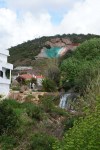
    One day I got the grand tour of the town and Kevin’s childhood playground. We walked to the pool, fed ducks in the creek, and saw the old-old church, the new-old church and pointed out every coffee place in town (there were many). There were some really cool sights too! Other than the history (“so the Romans built those walls”, “this buidling pre-dates Canada” etc.) my favourite sight was the giant Portuguese flag overlooking the entire town. Apparently during a previous World Cup (soccer…er I mean, football) some kids had scaled a nearby hill and painted a Portugese flag to cheer on their nation. This act of fan-dalism has since remained, and honestly looks pretty great!

    I thought Grimsby (pop 20,000) was a small town where everyone knows everyone, but Alte puts it to shame. Throughout the week of exploring we rarely walked down the street without stopping to chat with a neighbour, old friend, or relative because everyone knows each other. Case in point: Alte, it turns out, is so small you can accidently run into family. On one of our urban tours we stumbled upon Avo. We chatted for a bit with her friends (all in Portuguese so have no idea what was said, but assume my height and fair skin were questioned) but she was too busy for us (going dancing?) and we each continued on our separate ways.

    All in all I enjoyed seeing this small town.

    Avo Maria, The Farm, and the old House

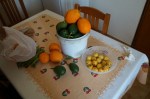
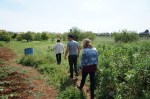
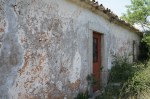
    While we spent the week with Avo Olimpia, one of our day trips included a visit to see Avo Maria and some of the family farm land. If it was nice having fruit trees in the yard for fresh juice, then visiting Avo Maria was a delight. She has fruit trees as far you can see – grapefruits, oranges, lemons, limes, whatever – just sitting there ready to be picked! I got a tour of the farm (included more Kevin stories “used to climb this tree”, “had a tire swing here”) and we loaded up on fruit, all while dodging chickens underfoot.

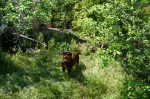
    The most hilarious part of this day trip was meeting Daisy. Daisy is Avo Maria’s older but still very much active dog. She followed us around for the whole tour, chasing chickens and keeping us entertained. As we got back to the house though, she surprised all of us by hunting down and catching a pigeon out of mid-air before scampering off to finish her treat!

    The Beach

    One of my favourite Algarve day trips included visiting a beach hidden from the mainroads and mostly known to locals. Here we got to walk the beach for a little while with the sand, sun, and ocean breeze all to ourselves. Kevin knows about the place because he used to visit with his grandfather and fish for clams in the summer. We got a full theatrical explanation of how he would walk in neck deep water (“it was up to here!”) trying to keep up with his grandfather while fighting the ocean (“current was trying to suck me out the whole time!”) so they could eat fresh seafood for dinner. It was a neat story which gave a beautiful pit-stop all the more meaning.

    As were leaving the beach we noticed it had rained earlier (sidenote – apparently it rained so much during my visit I’m not allowed back, bad luck) and the dirt parking lot was now filled with mud. So while Heather rolled her eyes Kevin and I hooked up the camera and drove circles through the mud having a blast! Check it out:

    Doesn’t get any better than that.

  • Roadtrip Day 1: Exploring the Convent of the Capuchos

    Roadtrip Day 1: Exploring the Convent of the Capuchos

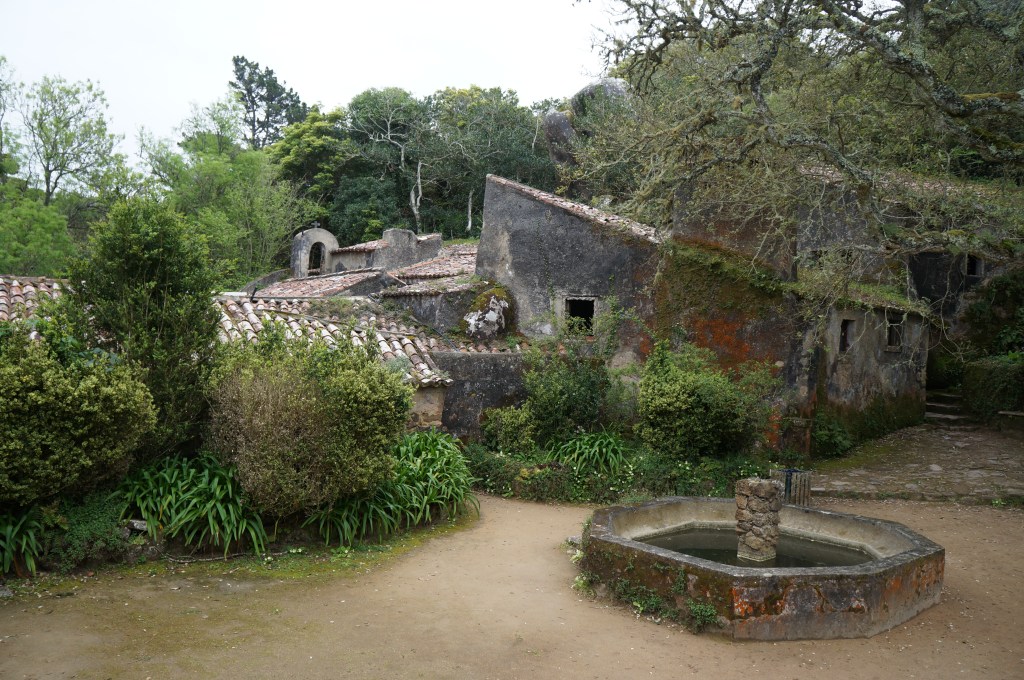
    After stopping at the Cabo da Roca, we drove back into the Sintra-Cascais Natural Park. The drive alone was incredible: beautiful trees, winding roads that twisted up a hillside. Our next stop was at ruins of the centuries old Convent of the Capuchos.

    Literally translating to the “Cork Convent”, its name comes from the insulation used in the construction of the buildings here. It was first formed in the mid-1500s, and according to the lovely brochure that I’ve been saving for this exact occasion,

    The Cork Convent was built in accordance with a philosophy that stressed harmony between human and divine works, for which reason the building merges inseparably with nature and the surrounding vegetation, incorporation enormous granite boulders. Through the exercise of contemplation, fulfilling the teachings of Saint Francis of Assisi, the friars worshipped the Creator through what they considered to be His greatest work; the natural world”

    Though the convent has ceased to be operated as such, and is now simply a series of ruins to be toured by visitors, you can easily see the convent’s philosophy at work. It’s impossible to wander through the small buildings, built into the side of a hill, without reflecting on the beauty and calming effects of nature. The smell and feel in the air of so much nature all in one place was truly magical. And this magical place really was the perfect start to a magical day in magical Sintra.

    We spent about an hour exploring all the nooks and crannies of these small, simple buildings. We snapped some great photos, and also some “band photos”. There were lots of laughs at this early point in our roadtrip, and that continued on throughout the day.

    Check out the photos below!